 뒤로
Fundamentals of the Nervous System and Nervous Tissue
스터디 가이드 - 스마트 노트
 자료에 맞춘 맞춤형 노트, 핵심 정의, 예시, 맥락을 확장해 제공합니다.
The Nervous System: Overview
Master Controlling and Communicating System
The nervous system is the primary system responsible for controlling and communicating within the human body. It utilizes both electrical and chemical signals to transmit information rapidly and specifically, often resulting in immediate responses.
Electrical and chemical signals: Used for communication between cells.
Rapid and specific: Ensures quick and targeted responses.
Immediate effects: Most responses occur almost instantly.

Functions of the Nervous System
Sensory Input, Integration, and Motor Output
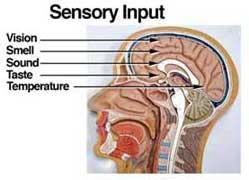
The nervous system performs three main functions that overlap to maintain homeostasis and respond to environmental changes:
Sensory input: Gathering information from sensory receptors about internal and external changes.
Integration: Processing and interpreting sensory input to determine the appropriate response.
Motor output: Activating effector organs (muscles and glands) to produce a response.
Structural Divisions of the Nervous System
Central Nervous System (CNS)
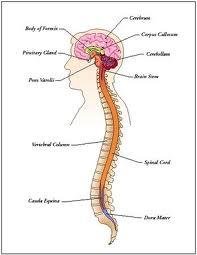
The CNS consists of the brain and spinal cord, located in the dorsal body cavity. It serves as the integration and control center, interpreting sensory input and dictating motor output.
Brain: Main organ for processing and integration.
Spinal cord: Conducts signals between the brain and peripheral body.
Peripheral Nervous System (PNS)
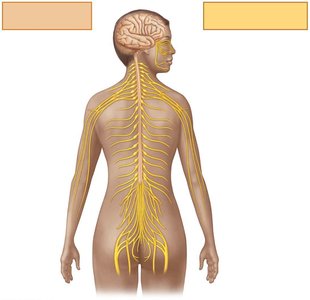
The PNS comprises all nervous tissue outside the CNS, including cranial and spinal nerves. It connects the CNS to the rest of the body.
Spinal nerves: Carry signals to and from the spinal cord.
Cranial nerves: Carry signals to and from the brain.
Functional Divisions of the Peripheral Nervous System
Sensory (Afferent) Division
The sensory division transmits information from sensory receptors to the CNS.
Somatic sensory fibers: Convey impulses from skin, skeletal muscles, and joints.
Visceral sensory fibers: Convey impulses from visceral organs.
Motor (Efferent) Division
The motor division transmits impulses from the CNS to effector organs (muscles and glands).
Somatic nervous system: Voluntary control of skeletal muscles.
Autonomic nervous system (ANS): Involuntary control of smooth muscle, cardiac muscle, and glands.
Divisions of the Autonomic Nervous System
The ANS is further divided into:
Sympathetic division: Mobilizes body systems during activity (fight or flight).
Parasympathetic division: Conserves energy and promotes housekeeping functions during rest.
Cells of Nervous Tissue
Neuroglia (Glial Cells)
Neuroglia are supporting cells that surround and wrap neurons, providing structural and metabolic support.
Astrocytes: Most abundant, support neurons, regulate chemical environment, guide neuron migration.
Microglial cells: Defensive cells, phagocytize microorganisms and debris.
Ependymal cells: Line CNS cavities, circulate cerebrospinal fluid (CSF).
Oligodendrocytes: Form myelin sheaths in CNS.
Neuroglia of the PNS
Satellite cells: Surround neuron cell bodies in PNS, similar function to astrocytes.
Schwann cells: Form myelin sheaths in PNS, vital for regeneration of damaged nerve fibers.
Neurons (Nerve Cells)
Neurons are the structural units of the nervous system, specialized for conducting impulses.
Extreme longevity: Can last a lifetime.
Amitotic: Most do not divide after development.
High metabolic rate: Require continuous supply of oxygen and glucose.
Structure: Consist of a cell body and one or more processes (dendrites and axons).
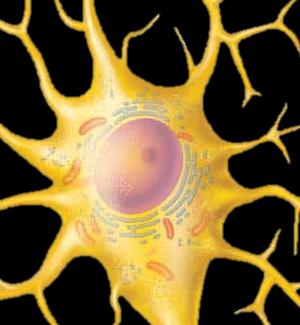
Neuron Structure and Function
Neuron Cell Body
The cell body contains the nucleus and most organelles. In the CNS, clusters are called nuclei; in the PNS, clusters are called ganglia.
Neuron Processes
Dendrites: Short, branched processes that receive signals and convey them toward the cell body as graded potentials.
Axon: Long process that conducts impulses away from the cell body to axon terminals, where neurotransmitters are released.

Myelination
Myelin Sheath Structure and Function
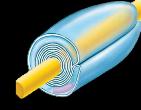
Myelin is a whitish, protein-lipid substance that insulates axons, increasing the speed of impulse transmission.
Myelinated fibers: Segmented sheath surrounds most long or large-diameter axons.
Nonmyelinated fibers: Lack sheath, conduct impulses more slowly.
Myelination in the PNS
Formed by Schwann cells wrapping around the axon.
Each cell forms one segment of myelin sheath.
Myelin sheath gaps (nodes of Ranvier) exist between adjacent Schwann cells.
Myelination in the CNS
Formed by oligodendrocytes processes.
Each cell can wrap up to 60 axons.
White matter: regions with dense collections of myelinated fibers.
Gray matter: mostly neuron cell bodies and nonmyelinated fibers.
Summary Table: Organization of the Nervous System
Division | Structure | Function |
|---|---|---|
Central Nervous System (CNS) | Brain, Spinal Cord | Integration and control center |
Peripheral Nervous System (PNS) | Cranial nerves, Spinal nerves | Communication between CNS and body |
Sensory (Afferent) Division | Somatic and visceral sensory fibers | Conducts impulses to CNS |
Motor (Efferent) Division | Motor nerve fibers | Conducts impulses from CNS to effectors |
Somatic Nervous System | Somatic motor fibers | Voluntary control of skeletal muscles |
Autonomic Nervous System (ANS) | Visceral motor fibers | Involuntary control of smooth muscle, cardiac muscle, glands |
Sympathetic Division | - | Mobilizes body systems during activity |
Parasympathetic Division | - | Conserves energy, housekeeping during rest |
Key Terms and Definitions
Neuron: Excitable cell that transmits electrical signals.
Neuroglia: Supporting cells in nervous tissue.
Myelin: Insulating material around axons.
Axon: Long process conducting impulses away from cell body.
Dendrite: Short process receiving signals toward cell body.
Central Nervous System (CNS): Brain and spinal cord.
Peripheral Nervous System (PNS): Nerves outside CNS.
Somatic Nervous System: Voluntary control of skeletal muscles.
Autonomic Nervous System (ANS): Involuntary control of organs.
Important Equations
Resting Membrane Potential
The resting membrane potential of a neuron is determined by the difference in ion concentrations across the membrane:
Where is the membrane potential, is the gas constant, is temperature, is Faraday's constant, and and are the potassium ion concentrations outside and inside the cell, respectively.
Example: Sensory Input and Motor Output
When you touch a hot object, sensory receptors in your skin send signals via sensory neurons to the CNS. The CNS processes this information and sends motor commands via motor neurons to your muscles, causing you to withdraw your hand.
Summary
The nervous system is a complex network responsible for rapid communication and control throughout the body. Its structural and functional divisions ensure efficient processing of sensory information and execution of motor responses, supported by specialized cells and myelination for optimal signal transmission.
