 뒤로
Host-Microbe Relationships and Pathogenesis: Anatomy & Physiology Study Guide
스터디 가이드 - 스마트 노트
 자료에 맞춘 맞춤형 노트, 핵심 정의, 예시, 맥락을 확장해 제공합니다.
Host-Microbe Relationships
Normal Microflora
Normal microflora, also known as normal flora, are microorganisms that reside in and on the human body without causing disease. They play a crucial role in maintaining health by competing with pathogenic microbes, a process known as microbial antagonism.
Definition: Microorganisms that live symbiotically with the host, often providing benefits.
Examples: Escherichia coli and other enteric bacteria in the gut.
Benefits: Prevent colonization by pathogens, aid in digestion, and stimulate the immune system.
Portals of Entry
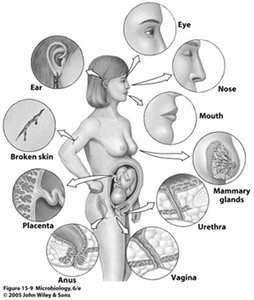
Pathogens enter the human body through specific anatomical sites known as portals of entry. These sites are often associated with mucous membranes or breaks in the skin.
Common Portals: Eye, ear, nose, mouth, broken skin, placenta, mammary glands, urethra, vagina, anus.
Significance: Pathogens are often adapted to specific portals, influencing their ability to cause disease.
Portals of Exit
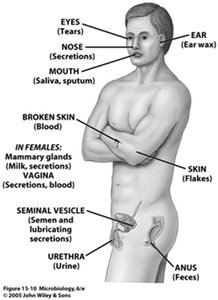
Portals of exit are anatomical sites where pathogens leave the host, typically associated with body secretions.
Examples: Tears, ear wax, nasal secretions, saliva, sputum, blood, skin flakes, milk, vaginal secretions, semen, urine, feces.
Importance: Understanding portals of exit is essential for controlling the spread of infectious diseases.
Infectious Dose and Transmission
Infectious Dose
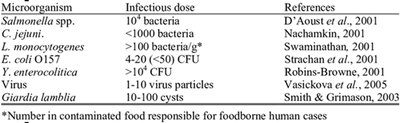
The infectious dose is the minimum number of microorganisms required to cause infection in a host. This varies by pathogen and mode of transmission.
Foodborne Transmission: Pathogens can be transmitted via contaminated food, with varying infectious doses.
Microorganism | Infectious Dose | References |
|---|---|---|
Salmonella spp. | 106 bacteria | D'Aoust et al., 2001 |
C. jejuni | <1000 bacteria | Nachamkin, 2001 |
L. monocytogenes | >100 bacteria | Swaminathan, 2001 |
E. coli O157 | 4-20 (<50) CFU | Strachan et al., 2001 |
Y. enterocolitica | >104 CFU | Robins-Browne, 2001 |
Virus | 1-10 virus particles | Vasickova et al., 2005 |
Giardia lamblia | 10-100 cysts | Smith & Grimason, 2003 |
Reservoirs and Transmission
Reservoirs are sources of infectious agents, which can be endogenous (self) or exogenous (environment, other people). Transmission depends on hygiene, anatomical differences, and medical interventions.
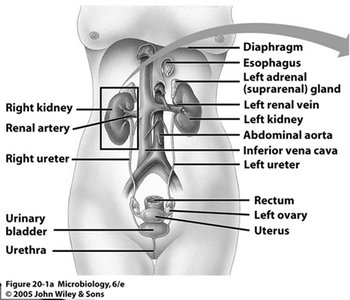
Urinary Tract Infection (UTI): E. coli is the most common etiologic agent.
Risk Factors: Poor hygiene, incomplete bladder emptying, anatomical differences (shorter urethra in females), enlarged prostate in older men, urinary catheters.
Pathogenesis and Virulence Factors
Virulence Factors
Virulence factors are characteristics of microorganisms that enable them to cause infection and disease. These include mechanisms for attachment, invasiveness, tissue damage, and toxin production.
Attachment: Pili and capsules help bacteria adhere to host tissues.
Invasiveness: Enzymes such as hyaluronidase break down tissues, allowing pathogens to invade deeper.
Tissue Damage: Enzymes like coagulase, streptokinase, leukocidins, and hemolysins damage host cells and tissues.



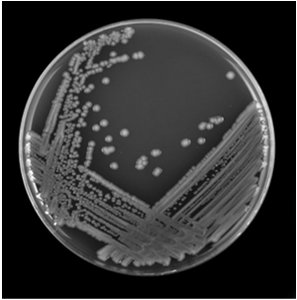
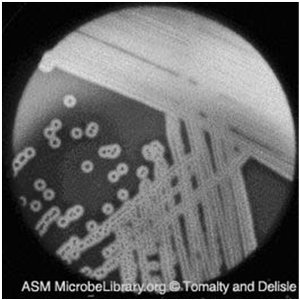
Hemolysins and Blood Agar
Hemolysins are enzymes that lyse red blood cells (RBCs). Blood agar is used to identify hemolysin types and differentiate bacterial species.
Alpha-hemolysis (α): Partial lysis, greenish zone.
Beta-hemolysis (β): Complete lysis, clear zone.
Gamma-hemolysis (γ): No lysis, no zone.


Diagnosis and Treatment of Infectious Diseases
Diagnosis
Diagnosis of infectious diseases often involves culturing organisms, microscopic examination, and rapid antigen tests.
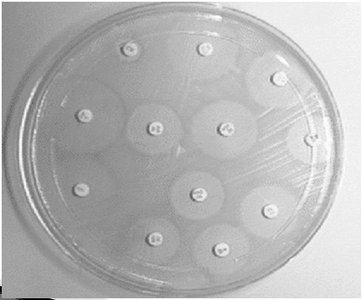
Urine Culture: Used for UTIs; organisms are grown and identified, and antibiotic susceptibility is tested.
Throat Swab: Used for diagnosing strep throat; β-hemolysis on blood agar indicates Streptococcus pyogenes.
Rapid Antigen Test: Detects strep antigens; positive result confirms strep, negative requires follow-up culture.
Treatment and Prevention
Treatment typically involves antibiotics, while prevention includes hygiene, proper medical procedures, and vaccination.
Antibiotics: Used to treat bacterial infections; medication may be adjusted based on susceptibility testing.
Vaccines: Prevent diseases such as tetanus.
Hygiene: Essential for preventing transmission.
Bacterial Toxins
Exotoxins and Endotoxins
Bacterial toxins are classified as exotoxins (secreted by living cells) and endotoxins (released when cells die). Exotoxins may target specific tissues, such as neurotoxins and enterotoxins.
Exotoxins: Highly potent, act on specific tissues.
Endotoxins: Released from cell wall of Gram-negative bacteria upon cell death.
Botulism
Botulism is caused by Clostridium botulinum, which produces a neurotoxin leading to flaccid paralysis.
Transmission: Improperly canned food, spores germinate and produce toxin.
Symptoms: Flaccid paralysis, respiratory failure.
Treatment: Antitoxin, maintain respiration; antibiotics are ineffective against toxin.
Prevention: Proper canning, boiling home-canned food.
Tetanus
Tetanus is caused by Clostridium tetani, which produces a neurotoxin resulting in spastic paralysis.
Transmission: Puncture wounds contaminated with spores.
Symptoms: Muscle spasms, "lockjaw".
Treatment: Antitoxin, supportive care.
Prevention: Vaccination (boosters every 10 years).
Emerging Infectious Diseases
West Nile Fever
West Nile fever is an emerging infectious disease caused by the West Nile virus, transmitted by mosquitoes.
Reservoir: Infected birds.
Transmission: Mosquito vector; can infect birds, mammals, reptiles.
Symptoms: Most cases asymptomatic; fever, joint pain, encephalitis in severe cases.
Diagnosis: Blood test for antibodies.
Treatment: No cure; treat symptoms, mosquito control, vaccine for horses.
Summary Table: Bacterial Virulence Factors
Virulence Factor | Mechanism | Effect |
|---|---|---|
Pili/Capsule | Attachment | Adherence to host tissues |
Hyaluronidase | Invasiveness | Breaks down connective tissue |
Coagulase | Tissue Damage | Clots blood, protects bacteria |
Streptokinase | Tissue Damage | Dissolves blood clots |
Leukocidins | Tissue Damage | Destroys white blood cells |
Hemolysins | Tissue Damage | Lyses red blood cells |
Exotoxins | Toxin Production | Specific tissue damage |
Endotoxins | Toxin Production | General inflammation |
Key Equations and Concepts
Infectious Dose: = Number of organisms required to infect 50% of exposed hosts
Hemolysis Types: Alpha (), Beta (), Gamma ()
Additional info:
Some content inferred from context and standard academic knowledge of Anatomy & Physiology and Microbiology.
