 뒤로
Influenza Virus: Structure, Pathogenesis, and Clinical Features
스터디 가이드 - 스마트 노트
 자료에 맞춘 맞춤형 노트, 핵심 정의, 예시, 맥락을 확장해 제공합니다.
Influenza Virus: Etiology and Structure
Etiologic Agent and Viral Structure
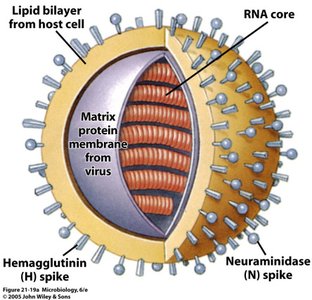
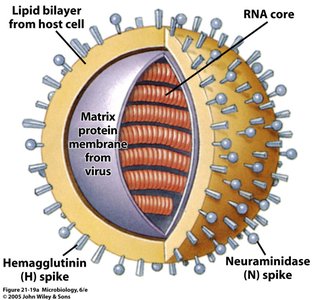
The influenza virus is a single-stranded RNA (s.s. RNA) virus belonging to the Orthomyxoviridae family. It is enveloped and possesses distinctive surface spikes, which play crucial roles in infection and immunity.
Hemagglutinin (H) spike: Facilitates viral entry by binding to host cell receptors.
Neuraminidase (N) spike: Assists in viral release from infected cells.
Lipid bilayer: Derived from the host cell membrane, surrounds the viral core.
Matrix protein membrane: Provides structural integrity.
RNA core: Contains the genetic material of the virus.
Types of Influenza Virus
Influenza A: Infects humans, birds, swine, and other vertebrates; many subtypes (e.g., H1N1, H3N2); can cause pandemics.
Influenza B: Infects humans only; causes limited epidemics.
Influenza C: Infects humans; rarely diagnosed as a clinical problem.
Transmission and Reservoirs
Reservoirs
Primary reservoir: Infected humans.
Other reservoirs: Birds, swine, and other vertebrates (mainly for Influenza A).
Transmission
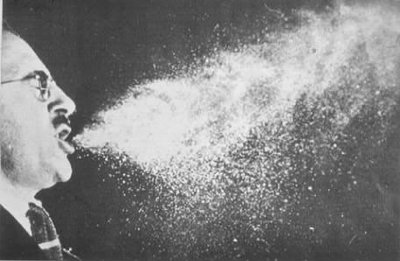
Influenza virus is primarily transmitted via aerosol droplets produced by coughing, sneezing, or talking. The virus can survive outside the body for approximately 24 hours.
Pathogenesis of Influenza
Initial Infection
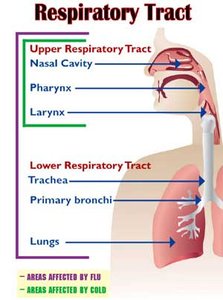
The virus first invades the respiratory epithelial cells of the upper respiratory tract (URT), including the nasal cavity, pharynx, and larynx.
Cellular Damage and Secondary Infection
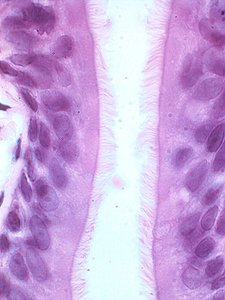
Destruction of mucous and ciliated cells: Occurs in the lower respiratory tract (LRT), including the trachea, bronchi, and lungs.
Loss of host defenses: Damaged ciliated cells impair the clearance of pathogens, increasing susceptibility to secondary bacterial infections such as pneumonia.
Clinical Features and Diagnosis
Symptoms
Incubation period: 36–48 hours.
Common symptoms: Fever, chills, headache, malaise, muscle soreness, cough, runny nose, sore throat.
In children: May include gastroenteritis.
Fatigue and weakness: Can persist for several weeks.
Viral shedding: Occurs for about one week.
Diagnosis
Clinical symptoms: Used for initial assessment.
Swab sample: Nasal swab preferred over throat swab due to higher viral load.
Rapid test: Confirms infection.
Treatment and Prevention
Treatment
Antiviral drugs: Effective if administered within 48 hours of symptom onset; some viruses may develop drug resistance.
Prevention
Vaccination: Annual vaccines are available as killed virus (injection) or live attenuated virus (nasal spray).
Live virus nasal spray: Recommended for ages 2–49, not for pregnant individuals; not recommended in certain flu seasons if ineffective.
Antigenic Variation: Drift and Shift
Antigenic Drift
Minor mutations in the hemagglutinin (H) and neuraminidase (N) spikes result in new viral strains each year, accounting for seasonal influenza outbreaks.
Antigenic Shift
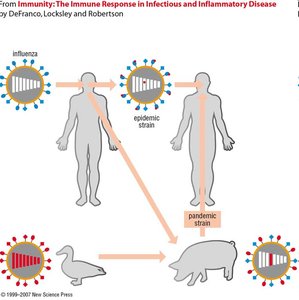
Major genetic reassortment leads to dramatic changes in viral antigens, often preceding major epidemics or pandemics. This process can occur when different influenza viruses infect the same host, such as swine or birds, acting as "mixing vessels."

Comparison of Cold, Influenza, and Pneumonia
Clinical Differences
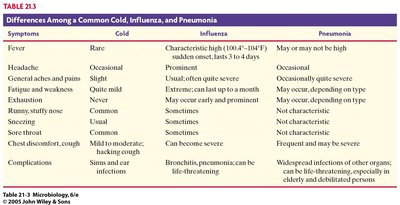
The table below summarizes the key differences among the common cold, influenza, and pneumonia based on symptoms and complications.
Symptoms | Cold | Influenza | Pneumonia |
|---|---|---|---|
Fever | Rare | Characteristic high (104°F–105°F), sudden onset, lasts 3–4 days | May or may not be high |
Headache | Occasional | Prominent | Occasional |
General aches and pains | Slight | Usual, often quite severe | Occasionally quite severe |
Fatigue and weakness | Quite mild | Extreme; can last up to a month | May occur, depending on type |
Exhaustion | Never | Early and prominent | May occur, depending on type |
Runny, stuffy nose | Common | Sometimes | Not characteristic |
Sneezing | Usual | Sometimes | Not characteristic |
Chest discomfort, cough | Mild to moderate; hacking cough | Can be severe | Frequent and may be severe |
Complications | Sinus and ear infections | Bronchitis, pneumonia; can be life-threatening | Widespread infections of other organs; can be life-threatening, especially in elderly and debilitated persons |
Summary
Influenza is a highly contagious respiratory virus with significant clinical and epidemiological impact. Understanding its structure, transmission, pathogenesis, and antigenic variation is essential for effective diagnosis, treatment, and prevention.
