 뒤로
Introduction to Anatomy & Levels of Organization
스터디 가이드 - 스마트 노트
 자료에 맞춘 맞춤형 노트, 핵심 정의, 예시, 맥락을 확장해 제공합니다.
Introduction to Anatomy
Definition and Scope of Anatomy
Anatomy is the scientific study of the structure of living organisms, focusing on both internal and external body structures. It also examines the relationships between these structures, such as how bones and muscles interact to produce movement.
Anatomy: Study of body structure and the relationships among body parts.
Example: The interaction between bone and muscle enables movement.
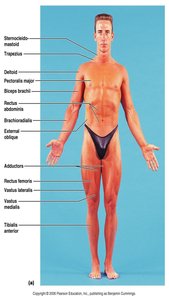
Subdivisions of Anatomy
Anatomy is divided into two main branches: microanatomy and gross anatomy. Each branch focuses on different levels of structural detail.
Microanatomy: Requires a microscope to study structures not visible to the naked eye.
Cytology: Study of internal structures of individual cells.
Histology: Study of tissues, which are groups of similar cells.
Gross Anatomy: Study of structures visible to the naked eye, such as bones, heart, and stomach.
Body Cavities: Includes cranial, thoracic, and abdominopelvic cavities.
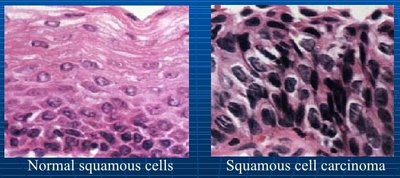
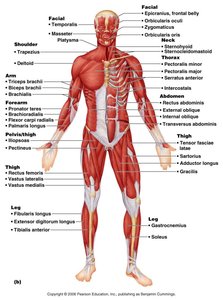
Levels of Organization in the Human Body
Overview of Hierarchical Structure
The human body is organized into a hierarchy of structural levels, from the simplest chemical components to the complex organism. Each level builds upon the previous one, forming the foundation for life and function.
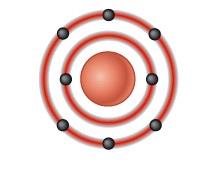
Chemical Level: Atoms and molecules form the basis of all living matter.
Cellular Level: Molecules combine to form organelles, which make up cells—the basic unit of structure and function.
Tissue Level: Groups of structurally similar cells with a common function.
Organ Level: Two or more tissues working together for a common function.
Organ System Level: Several related organs working together to accomplish a common purpose.
Organismal Level: All systems function together to maintain life.
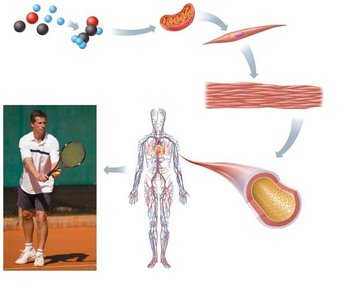
Chemical Level
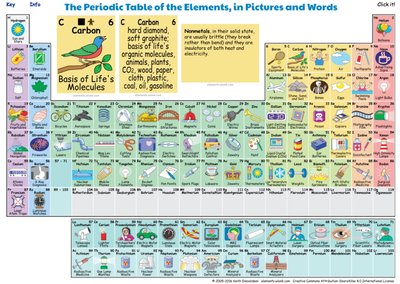
The chemical level is the most basic, consisting of atoms and molecules. Atoms such as hydrogen (H) and oxygen (O) combine to form molecules like water (H2O).
Atoms: Smallest units of matter (e.g., H, O).
Molecules: Atoms joined together (e.g., H2O).
Example: Water molecule is formed by two hydrogen atoms and one oxygen atom.
Cellular Level
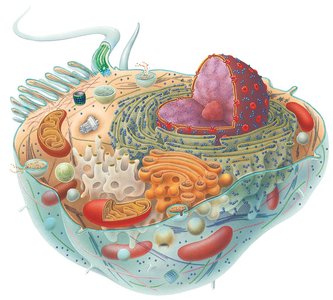
At the cellular level, molecules form organelles, which in turn form cells. Cells are the basic unit of structure and function in the body. Different types of cells have specialized functions, such as erythrocytes (red blood cells), neurons, and muscle cells.
Cell: Basic unit of structure and function.
Organelles: Specialized structures within cells (e.g., mitochondria, nucleus).
Example: Erythrocytes transport oxygen; neurons transmit electrical signals.
Tissue Level
Tissues are groups of structurally similar cells with a common function. There are four major types of tissues in the human body:
Epithelial Tissue: Lines GI tract, hollow organs, and skin surface (epidermis).
Connective Tissue (CT): Includes bones, tendons, fat, and other soft padding tissue.
Muscle Tissue: Skeletal, cardiac, and smooth muscle types.
Nervous Tissue: Brain, spinal cord, and nerves.
Organ Level
Organs are composed of two or more types of tissues working together for a common function. For example, the stomach is made up of all four major tissue types and its primary function is digestion.
Organ: Structure composed of multiple tissue types.
Example: Stomach, heart, lungs.
Organ System Level
Organ systems consist of several related organs that work together to accomplish a common purpose. For example, the respiratory system includes the lungs and trachea, and its function is respiration.
Organ System: Group of organs working together.
Example: Cardiovascular system, digestive system, respiratory system.
Organismal Level
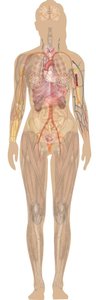
The organismal level represents the highest level of organization, where all organ systems function together to maintain life. The human organism is a complex integration of all these levels.
Organism: All systems functioning together.
Example: The human body.
Hierarchy of Levels
Each level of organization contains those below it, forming a hierarchy from atoms to the complete organism. This hierarchical structure is fundamental to understanding how the human body functions.
Hierarchy: Atoms → Molecules → Organelles → Cells → Tissues → Organs → Organ Systems → Organism
Summary Table: Levels of Organization
Level | Description | Example |
|---|---|---|
Chemical | Atoms and molecules | H2O (water) |
Cellular | Organelles and cells | Neuron, erythrocyte |
Tissue | Groups of similar cells | Muscle tissue |
Organ | Two or more tissues | Stomach |
Organ System | Group of organs | Respiratory system |
Organism | All systems together | Human body |
Key Terms and Concepts
Anatomy: Study of structure
Microanatomy: Study of microscopic structures
Gross Anatomy: Study of visible structures
Cytology: Study of cells
Histology: Study of tissues
Hierarchy: Levels of organization in the body
Additional info:
Each higher level of organization is composed of one or more units from the level below.
Understanding the levels of organization is essential for comprehending how the human body functions as a whole.
