뒤로
뒤로Introduction to Anatomy & Physiology: Foundational Concepts and Organization
스터디 가이드 - 스마트 노트
 자료에 맞춘 맞춤형 노트, 핵심 정의, 예시, 맥락을 확장해 제공합니다.
Introduction to Anatomy and Physiology
Levels of Organization in the Human Body
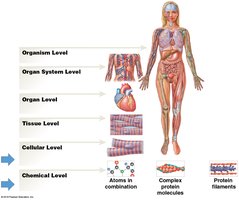
The human body is organized into a hierarchy of structural levels, each building upon the previous one to form a complete organism. Understanding these levels is fundamental to the study of anatomy and physiology.
Chemical Level: Atoms combine to form molecules, which are the building blocks of all matter.
Cellular Level: Molecules combine to form cells, the basic units of life.
Tissue Level: Similar cells work together to perform a specific function, forming tissues.
Organ Level: Different tissues combine to form organs, each with specialized functions.
Organ System Level: Organs work together in organ systems to perform complex functions.
Organism Level: All organ systems function together to maintain the life and health of the organism.
Homeostasis and Homeostatic Regulation
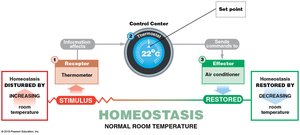
Homeostasis is the maintenance of a stable internal environment within the body. It is essential for survival and proper functioning. Homeostatic regulation involves physiological adjustments to preserve homeostasis in changing environments. Failure to maintain homeostasis can result in illness or death.
Receptor (Sensor): Detects changes in the environment (stimuli).
Control Center: Processes information from the receptor and determines the appropriate response.
Effector: Carries out the response to restore homeostasis by opposing the stimulus.
Example: Regulation of room temperature using a thermostat as an analogy for homeostatic control.
Anatomical Terminology and Body Organization
Superficial and Regional Anatomy
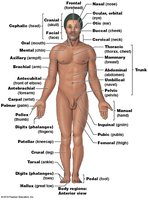
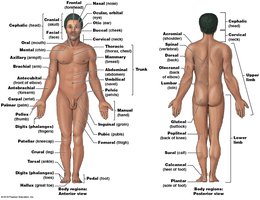
Understanding anatomical terms is crucial for effective communication in healthcare and science. The anatomical position is the standard reference position for the body: standing upright, hands at the sides, palms facing forward, and feet together and facing forward.
Regional Terms: Specific names are given to different regions of the body (e.g., cephalic for head, brachial for arm).
Abdominopelvic Quadrants and Regions
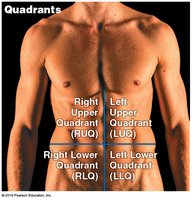
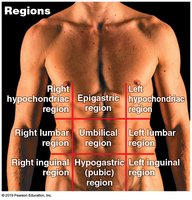
The abdominopelvic area is divided into quadrants and regions to help clinicians and anatomists describe locations of pain, injuries, or internal organs.
Quadrants: Four quadrants (RUQ, LUQ, RLQ, LLQ) formed by perpendicular lines intersecting at the navel.
Regions: Nine regions provide more precise localization (e.g., right hypochondriac, epigastric, left lumbar).
Directional and Sectional Terms
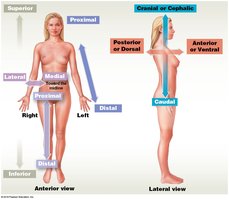
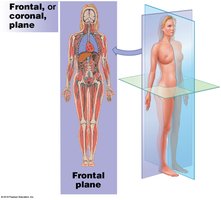
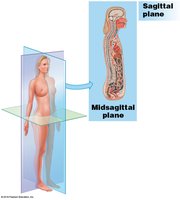
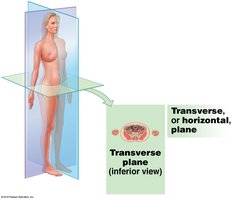
Directional terms describe the positions of structures relative to each other (e.g., superior, inferior, anterior, posterior, medial, lateral, proximal, distal). Sectional terms refer to the planes used to divide the body:
Frontal (Coronal) Plane: Divides the body into anterior and posterior portions.
Sagittal Plane: Divides the body into right and left portions (midsagittal is exactly at the midline; parasagittal is off the midline).
Transverse (Horizontal) Plane: Divides the body into superior and inferior portions.
Body Cavities
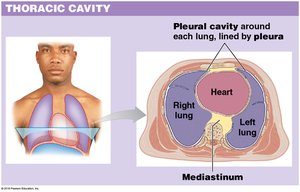
The body contains internal cavities that protect organs and allow for changes in organ size and shape. The thoracic cavity is a major body cavity located deep to the chest wall and contains:
Pleural Cavities: Each surrounds a lung and is lined by pleura.
Mediastinum: Contains connective tissue and the pericardial cavity (which contains the heart).