 뒤로
Joints and Muscles: Structure, Classification, and Movement
스터디 가이드 - 스마트 노트
 자료에 맞춘 맞춤형 노트, 핵심 정의, 예시, 맥락을 확장해 제공합니다.
Introduction to Joints and Muscles
Overview of Locomotion
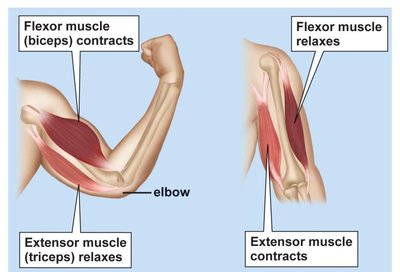
Locomotion in humans is achieved through the coordinated action of the muscular and skeletal systems, collectively known as the musculoskeletal system. Muscles pull on bones to produce movement, enabling various activities such as walking, running, and grasping.
Musculoskeletal System: Muscles contract to move bones at joints.
Movement: Requires both muscle contraction and joint flexibility.
Classification of Joints
Functional Classification
Joints are classified based on their degree of movement and stability.
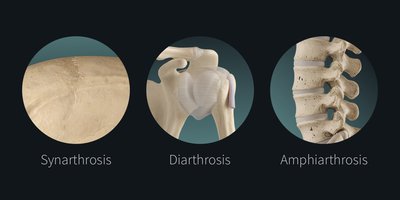
Synarthrosis: No movement; provides maximum stability (e.g., skull sutures).
Amphiarthrosis: Slight movement; provides significant stability (e.g., intervertebral discs).
Diarthrosis: Freely movable; provides least stability (e.g., shoulder joint).
Structural Classification
Joints are also classified by the type of connective tissue and the presence of a joint cavity.
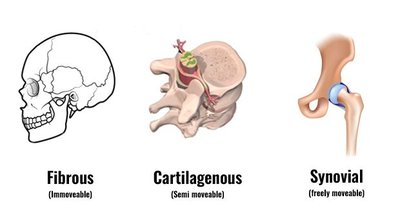
Fibrous Joints: United by dense connective tissue; no joint space; mostly immovable.
Cartilaginous Joints: Bones connected by cartilage; no joint space; slightly movable.
Synovial Joints: Have a joint cavity filled with fluid; freely movable.
Types of Synovial Joints and Movements
Types of Synovial Joints
Synovial joints allow a wide range of movements and are classified by their shape and movement capabilities.
Ball-and-socket: Movement in all directions (e.g., shoulder, hip).
Hinge: Bending and straightening (e.g., elbow, knee).
Pivot: Rotational movement (e.g., neck).
Saddle: Back-and-forth and side-to-side movement (e.g., thumb).
Condyloid: Movement without rotation (e.g., wrist).
Plane (Gliding): Limited movement (e.g., wrist).
Types of Movements at Joints
Movements at synovial joints are categorized as gliding, angular, and rotational.
Gliding: Flat bone surfaces slide over each other (e.g., intercarpal joints).
Angular: Change in angle between bones (flexion, extension, hyperextension, abduction, adduction, circumduction).
Rotation: Bone turns around its own axis (medial and lateral rotation).
Gliding Movements
Gliding occurs when one flat bone surface moves over another, as seen in the wrist and ankle. 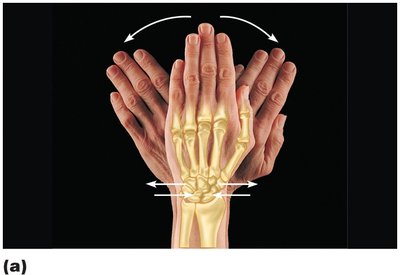
Angular Movements
Angular movements include flexion, extension, and hyperextension (sagittal plane), as well as abduction, adduction, and circumduction (frontal plane).
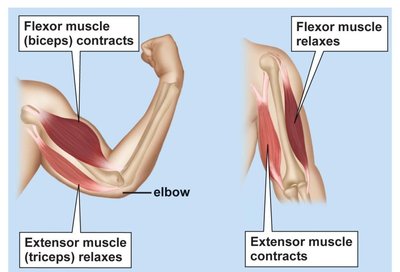
Flexion: Decreases the angle between bones.
Extension: Increases the angle between bones.
Hyperextension: Extension beyond anatomical position.
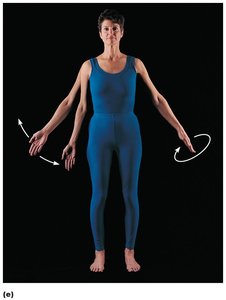
Abduction: Movement away from the midline.
Adduction: Movement toward the midline.
Circumduction: Limb moves in a cone-shaped path.
Rotational Movements
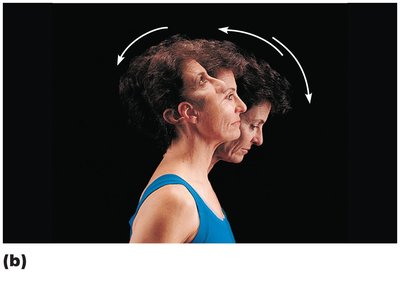
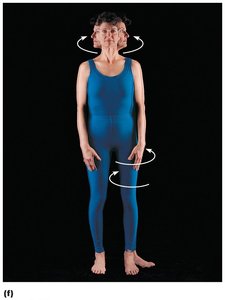
Rotation involves turning a bone around its axis, such as the head, neck, or limbs.
Medial Rotation: Toward the midline.
Lateral Rotation: Away from the midline.
Tendons and Ligaments
Structure and Function
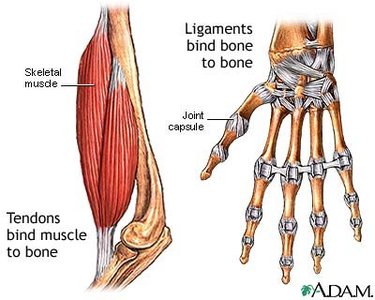
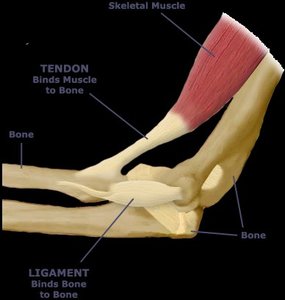
Tendon: Tough connective tissue cord that connects muscle to bone, enabling movement.
Ligament: Fibrous connective tissue that attaches bone to bone, providing joint stability.
Origin and Insertion of Muscles
Definitions
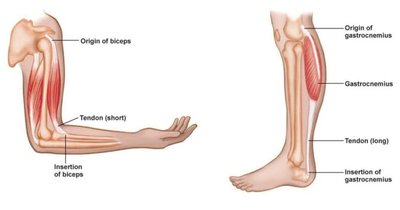
Origin: The fixed attachment point of a muscle; does not move during contraction.
Insertion: The movable attachment point; moves when the muscle contracts.
Naming Skeletal Muscles
Criteria for Naming
Skeletal muscles are named based on several criteria:
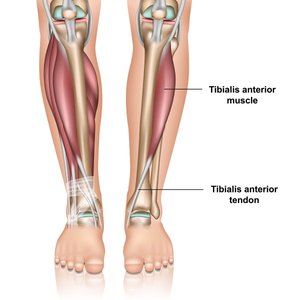
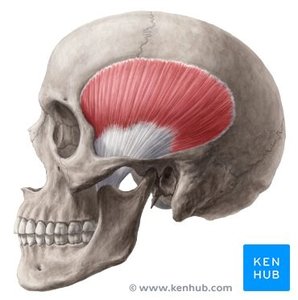
Location: Associated bone or region (e.g., tibialis, temporalis).
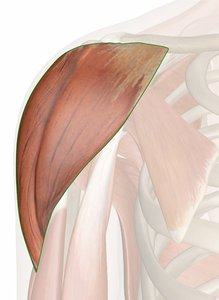
Shape: Descriptive of muscle form (e.g., deltoid = triangular).
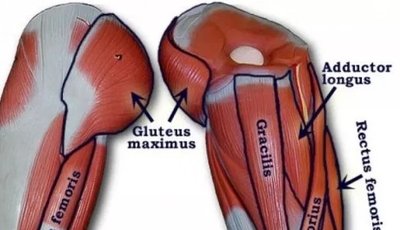
Size: Relative size (e.g., maximus = largest, minimus = smallest).
Direction of fibers: Orientation of muscle fibers (e.g., rectus = straight, transversus = right angles, oblique = angled).
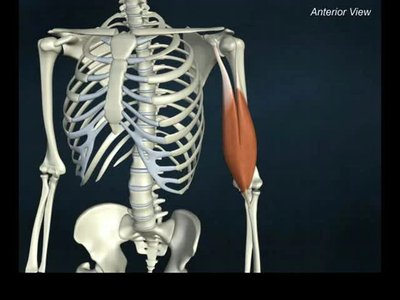
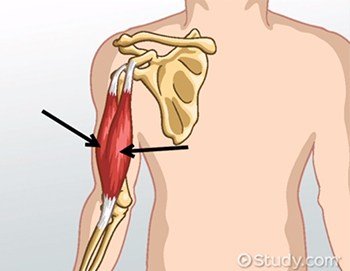
Number of origins: Number of attachment points (e.g., biceps = two, triceps = three).
Location of attachments: Named for origin and insertion.
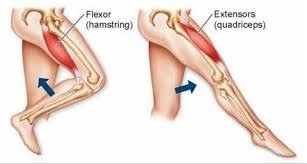
Action: Function of the muscle (e.g., flexor, extensor).
Examples
Size: Gluteus maximus (largest gluteal muscle).
Shape: Deltoid (triangular-shaped muscle).
Direction of fibers: Rectus abdominis (straight fibers).
Location: Temporalis (muscle over temporal bone).
Number of origins: Biceps (two heads), triceps (three heads).
Action: Flexor and extensor muscles (flex or extend bones).
Summary Table: Joint Classification
Classification | Movement | Example |
|---|---|---|
Synarthrosis | Immovable | Skull sutures |
Amphiarthrosis | Slightly movable | Intervertebral discs |
Diarthrosis | Freely movable | Shoulder joint |
Summary Table: Structural Classification
Type | Connective Tissue | Movement | Example |
|---|---|---|---|
Fibrous | Dense collagenous | Immovable | Skull sutures |
Cartilaginous | Cartilage | Semi-movable | Intervertebral discs |
Synovial | Joint cavity with fluid | Freely movable | Hip joint |
Summary Table: Muscle Naming Criteria
Criterion | Example |
|---|---|
Location | Temporalis |
Shape | Deltoid |
Size | Gluteus maximus |
Direction of fibers | Rectus abdominis |
Number of origins | Biceps, triceps |
Action | Flexor, extensor |
Conclusion
Understanding the classification, structure, and function of joints and muscles is essential for comprehending human movement and stability. The naming conventions for muscles provide insight into their anatomical features and actions, aiding in identification and study. Additional info: Academic context was added to clarify joint and muscle classification, movement types, and naming conventions.
