 뒤로
뒤로Meiosis, Gamete Formation, and Apoptosis: Study Notes for Anatomy & Physiology
스터디 가이드 - 스마트 노트
 자료에 맞춘 맞춤형 노트, 핵심 정의, 예시, 맥락을 확장해 제공합니다.
Meiosis: Cell Reproduction and Gamete Formation
Introduction to Meiosis
Meiosis is a specialized form of cell division that reduces the chromosome number by half, resulting in the production of haploid gametes (sperm and egg). This process is essential for sexual reproduction in multicellular eukaryotes and ensures genetic diversity among offspring.
Diploid to Haploid: Meiosis reduces the chromosome number from diploid (2n) to haploid (n).
Genetic Variation: Meiosis shuffles genetic material, creating variation through random separation and crossing-over.
Controlled Process: Ensures each gamete receives one copy of every homologous chromosome pair.
Overview of Meiosis
Meiosis consists of two consecutive cell divisions: Meiosis I and Meiosis II. Each division has distinct phases that contribute to the reduction and rearrangement of genetic material.
Meiosis I: Separates homologous chromosome pairs.
Meiosis II: Separates sister chromatids.
Final Products: Four haploid gametes, each genetically unique.
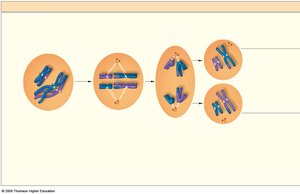
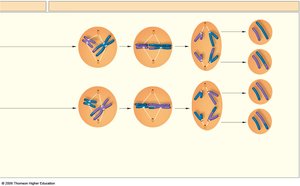
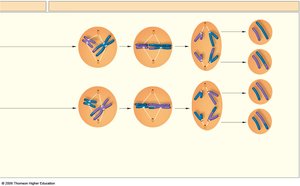
Stages of Meiosis
The process of meiosis is divided into several stages, each with specific events.
Preparation: DNA replication and cell growth occur, similar to interphase in mitosis.
Meiosis I: Homologous chromosomes are separated.
Meiosis II: Sister chromatids are separated.
Prophase I
Chromosomes condense and become visible as "X" shapes. The nuclear envelope begins to disappear, and homologous chromosomes pair up. 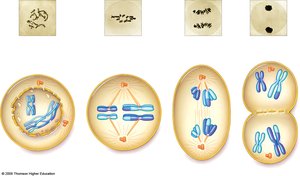
Metaphase I
Homologous pairs of chromosomes align along the cell's midline, differing from mitosis where individual chromosomes align. 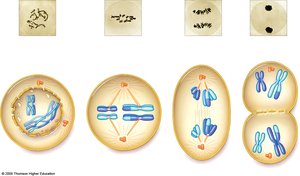
Anaphase I
Homologous chromosomes are pulled to opposite poles of the cell. Chromosomes remain double-stranded, and the nucleus does not reform. 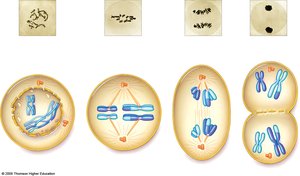
Telophase I
The cell divides, trapping one set of chromosomes in each new cell. Chromosomes are still in the "X" shape. 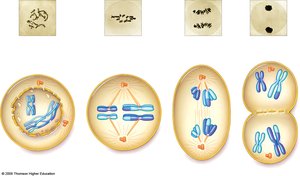
Prophase II
The process restarts to separate sister chromatids. 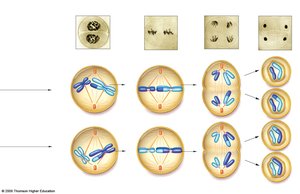
Metaphase II
Chromosomes line up at the midline, similar to mitosis. 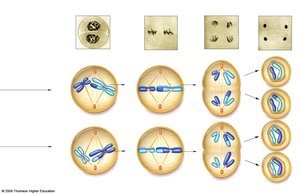
Anaphase II
Centromeres pull the sister chromatids apart, again like mitosis. 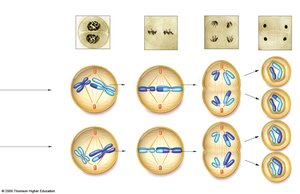
Telophase II
New cell membranes separate the chromatids, and new nuclei begin to form. Four gamete cells are produced, each haploid and genetically unique. 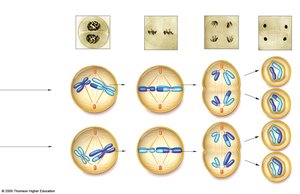
Genetic Variation: Crossing Over
Definition and Process
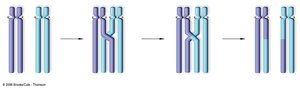
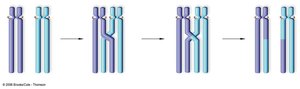
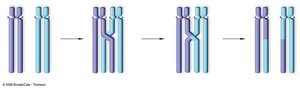
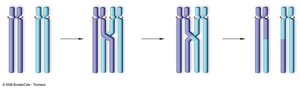
Crossing over is a process during Prophase I where homologous chromosomes exchange segments, increasing genetic diversity.
Homologous Chromosomes: Chromosomes that have the same genes but may carry different alleles.
Alleles: Different versions of a gene.
Result: New combinations of alleles on each chromosome.
Gametes: Sperm and Egg
Definition and Characteristics
Gametes are haploid cells produced by meiosis, essential for sexual reproduction.
Haploid: Contains half the adult chromosome number.
Sperm: Male gamete, motile, small, carries DNA and minimal cytoplasm.
Egg: Female gamete, large, provides organelles and cytoplasm for the zygote.
Sperm in Animals
Sperm are motile cells with a plasma membrane, flagella, nucleus, and mitochondria. Only DNA and a small amount of cytoplasm merge with the egg during fertilization. 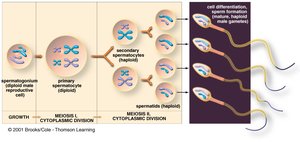
The Egg in Animals
After meiosis, only one of the four cells survives, receiving most of the cytoplasm and organelles. The egg is significantly larger than the sperm and provides all organelles for the new individual. Mitochondrial DNA is inherited maternally. 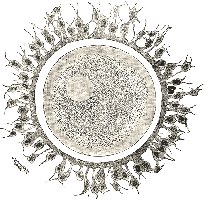
Apoptosis: Programmed Cell Death
Definition and Process
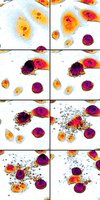
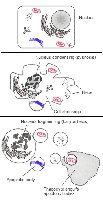
Apoptosis is a controlled process by which cells undergo self-destruction when they are no longer needed or are damaged.
Purpose: Removes unnecessary or damaged cells, maintaining tissue health.
Process: Cell shrinks, DNA fragments, and cell components are packaged for removal by immune cells.
Summary Table: Comparison of Mitosis and Meiosis
The following table summarizes key differences between mitosis and meiosis:
Feature | Mitosis | Meiosis |
|---|---|---|
Number of Divisions | 1 | 2 |
Number of Daughter Cells | 2 | 4 |
Chromosome Number | Diploid (2n) | Haploid (n) |
Genetic Variation | None (identical cells) | High (unique cells) |
Function | Growth, repair | Gamete production |
Example: Application of Meiosis
Human Reproduction: Meiosis produces sperm and egg cells, which fuse during fertilization to restore the diploid chromosome number.
Genetic Disorders: Errors in meiosis can lead to conditions such as Down syndrome (trisomy 21).
Additional info:
Meiosis is covered in Anatomy & Physiology under chapters related to cell division, reproduction, and heredity.
Apoptosis is relevant to tissue health and development, as well as disease prevention.
