 뒤로
Metabolism and Nutrition: Cellular Respiration and Energy Pathways
스터디 가이드 - 스마트 노트
 자료에 맞춘 맞춤형 노트, 핵심 정의, 예시, 맥락을 확장해 제공합니다.
Metabolism and Nutrition
Introduction to Metabolism
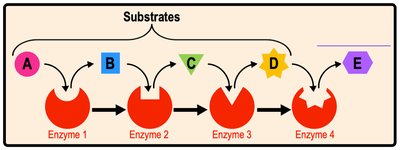
Metabolism refers to the sum of all chemical reactions occurring within an organism. These reactions are organized into metabolic pathways, where a substrate is modified through a series of enzymatic steps to yield a final product. Each step is catalyzed by a specific enzyme, ensuring efficiency and regulation.
Metabolic Pathway: A sequence of chemical reactions, each catalyzed by a different enzyme, transforming a starting molecule into a final product.
Example: The conversion of substrate A to E through a series of enzyme-catalyzed steps.
Catabolic and Anabolic Pathways
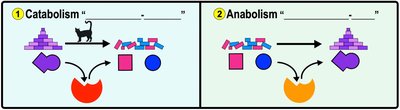
Metabolic pathways can be classified as either catabolic or anabolic:
Catabolic Pathways (Catabolism): Break down large molecules into smaller ones, releasing energy. Example: Digestion of carbohydrates into glucose.
Anabolic Pathways (Anabolism): Build larger molecules from smaller ones, consuming energy. Example: Synthesis of proteins from amino acids.
ATP: The Energy Currency of the Cell
Structure and Function of ATP
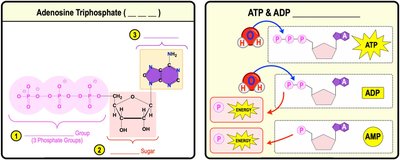
Adenosine Triphosphate (ATP) is the primary energy carrier in cells. It consists of three main components:
A chain of three phosphate groups
A ribose sugar
An adenine nitrogenous base
ATP stores energy in the high-energy bonds between its phosphate groups. Hydrolysis of ATP (removal of a phosphate group) releases energy, forming ADP (adenosine diphosphate) or AMP (adenosine monophosphate).
ATP Cycle and Energy Coupling
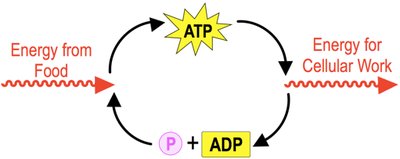
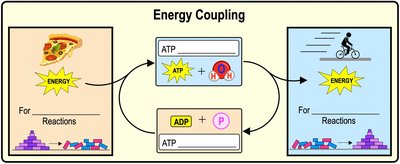
Cells use ATP to couple exergonic (energy-releasing) and endergonic (energy-consuming) reactions. The energy from food is used to regenerate ATP from ADP and inorganic phosphate (Pi), and ATP hydrolysis provides energy for cellular work.
Energy Coupling: The process by which the energy released from ATP hydrolysis drives endergonic reactions.
Phosphorylation
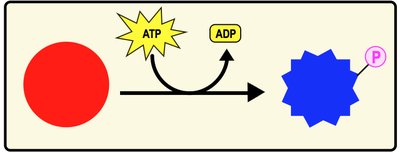
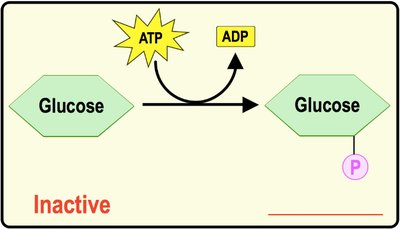
Phosphorylation is the transfer of a phosphate group from ATP to another molecule, often activating the target molecule or altering its function.
Can activate a target molecule to react.
Can change the shape or function of a protein.
Redox Reactions in Metabolism
Oxidation-Reduction (Redox) Reactions
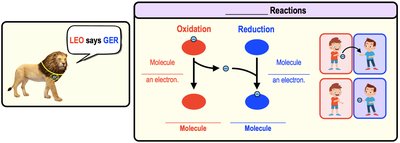
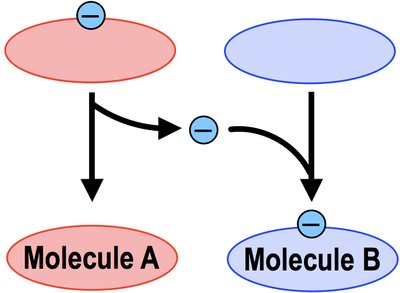
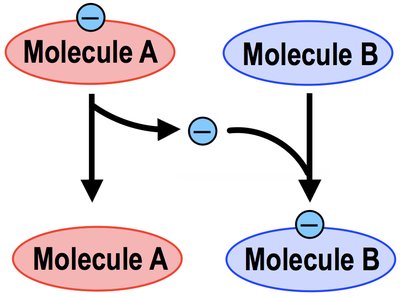
Redox reactions involve the transfer of electrons between molecules. Oxidation is the loss of electrons, while reduction is the gain of electrons. These reactions always occur together.
Mnemonic: LEO the Lion says GER (Lose Electrons = Oxidation, Gain Electrons = Reduction).
Electron Carriers: NADH and FADH2
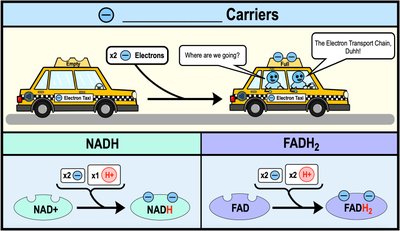
Electron carriers such as NADH and FADH2 play a crucial role in cellular respiration by transporting electrons to the electron transport chain (ETC). Their oxidized forms are NAD+ and FAD, respectively.
NADH and FADH2 act as 'electron taxis,' shuttling electrons to the ETC.
During cellular respiration, these carriers are reduced (gain electrons) and later oxidized (lose electrons) in the ETC.
Aerobic Cellular Respiration
Overview and Chemical Equation
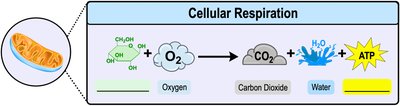
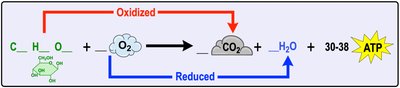
Aerobic cellular respiration is the process by which cells break down glucose in the presence of oxygen to produce ATP, water, and carbon dioxide. This is a redox reaction where glucose is oxidized and oxygen is reduced.
Overall equation:
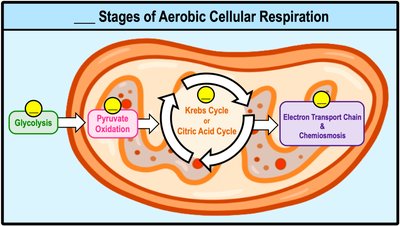
Stages of Aerobic Cellular Respiration
The process occurs in four main stages:
Glycolysis
Pyruvate Oxidation
Krebs Cycle (Citric Acid Cycle)
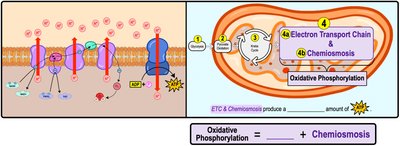
Electron Transport Chain & Chemiosmosis
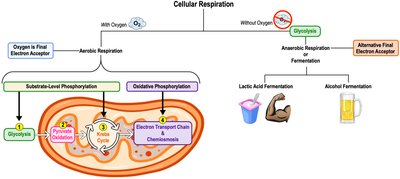
Pathways in the Presence and Absence of Oxygen
Cellular respiration can proceed via aerobic or anaerobic pathways depending on oxygen availability. Oxygen serves as the final electron acceptor in aerobic respiration, while alternative acceptors or fermentation pathways are used in its absence.
Types of Phosphorylation
Substrate-Level Phosphorylation
ATP is synthesized directly by transferring a phosphate group from a substrate to ADP. This occurs during glycolysis and the Krebs cycle, producing a small amount of ATP.
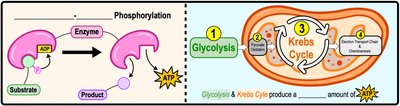
Oxidative Phosphorylation
ATP is synthesized using energy derived from redox reactions in the electron transport chain, which creates a proton gradient used by ATP synthase. This process produces the majority of ATP during cellular respiration.
Glycolysis
Overview and Phases
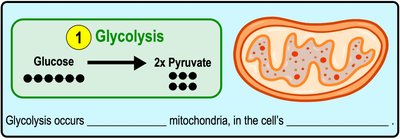
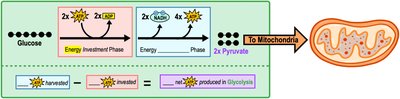
Glycolysis is the first step of cellular respiration, breaking down one glucose molecule into two pyruvate molecules. It occurs in the cytoplasm and does not require oxygen.
Energy Investment Phase: Consumes 2 ATP to activate glucose.
Energy Harvest Phase: Produces 4 ATP and 2 NADH, resulting in a net gain of 2 ATP and 2 NADH per glucose.
Pyruvate Oxidation
Conversion to Acetyl-CoA
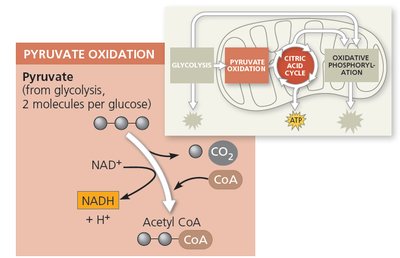
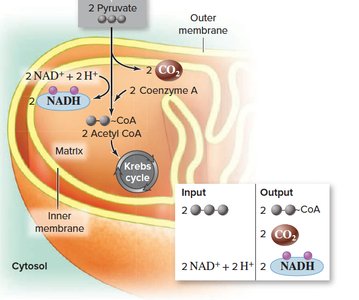
Each pyruvate from glycolysis is transported into the mitochondrial matrix and converted into acetyl-CoA, producing NADH and releasing CO2.
Occurs in the mitochondrial matrix.
For each glucose: 2 pyruvate → 2 acetyl-CoA, 2 NADH, 2 CO2
Krebs Cycle (Citric Acid Cycle)
Stages and Products
The Krebs cycle completes the oxidation of acetyl-CoA, generating ATP, NADH, FADH2, and CO2. It occurs in the mitochondrial matrix and consists of three main phases:
Acetyl-CoA Entry: Acetyl-CoA combines with oxaloacetate to form citrate.
Citrate Oxidation: Citrate is rearranged and oxidized, producing ATP, NADH, and CO2.
Oxaloacetate Regeneration: Oxaloacetate is regenerated, producing NADH and FADH2.
Each glucose molecule results in two turns of the cycle.
Electron Transport Chain (ETC) and Chemiosmosis
Electron Transport Chain
The ETC is a series of protein complexes in the inner mitochondrial membrane that transfer electrons from NADH and FADH2 to oxygen, the final electron acceptor. This process pumps protons (H+) into the intermembrane space, creating a proton gradient.
Chemiosmosis and ATP Synthase
The proton gradient generated by the ETC drives protons back into the mitochondrial matrix through ATP synthase, synthesizing ATP from ADP and Pi. This process is called chemiosmosis and is the main source of ATP in aerobic respiration.
Fermentation and Anaerobic Respiration
Fermentation
In the absence of oxygen, cells can regenerate NAD+ through fermentation, allowing glycolysis to continue. Two main types are:
Lactic Acid Fermentation: Pyruvate is reduced to lactic acid, regenerating NAD+. Occurs in muscle cells and some bacteria.
Alcohol Fermentation: Pyruvate is reduced to ethanol and CO2, regenerating NAD+. Occurs in yeast and some plants.
Anaerobic Respiration
Some organisms use alternative final electron acceptors (e.g., nitrate, sulfate, CO2) in the ETC, producing more ATP than fermentation but less than aerobic respiration.
Gluconeogenesis
Overview
Gluconeogenesis is the synthesis of glucose from non-carbohydrate precursors such as lactate, glycerol, and certain amino acids. It shares many enzymes with glycolysis but uses unique enzymes for irreversible steps.
Occurs mainly in the liver.
Helps maintain blood glucose levels during fasting.
Fatty Acid and Amino Acid Oxidation
Fatty Acid Oxidation (β-Oxidation)
Fatty acids are broken down in the mitochondrial matrix by β-oxidation, producing acetyl-CoA, NADH, and FADH2. Acetyl-CoA enters the Krebs cycle for further energy extraction.
Amino Acid Oxidation and the Urea Cycle
Amino acids are deaminated, and their carbon skeletons enter the Krebs cycle. The amino groups are converted to urea in the liver for excretion.
Essential vs. Nonessential Amino Acids
Essential amino acids cannot be synthesized by the body and must be obtained from the diet. Nonessential amino acids can be synthesized by the body.
