 뒤로
Metabolism: Catabolism, Anabolism, and Metabolic States
스터디 가이드 - 스마트 노트
 자료에 맞춘 맞춤형 노트, 핵심 정의, 예시, 맥락을 확장해 제공합니다.
Chapter 23: Metabolism
Nutrient Catabolism
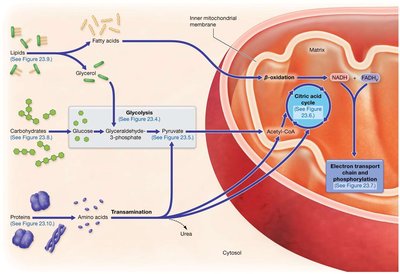
Catabolism is the process by which complex molecules are broken down into simpler ones, releasing energy that can be used by the body. This process is essential for extracting energy from nutrients such as carbohydrates, lipids, and proteins.
Definition: Catabolism refers to the breakdown of molecules to release energy.
Key Pathways: Glycolysis, β-oxidation, and the citric acid cycle are central catabolic pathways.
Example: Glucose is catabolized via glycolysis to produce ATP.
Nutrient Anabolism
Anabolism is the process by which the body synthesizes complex molecules from simpler ones, requiring energy input. This is crucial for growth, repair, and storage of nutrients.
Definition: Anabolism refers to the synthesis of complex molecules from simpler precursors.
Key Pathways: Protein synthesis, glycogenesis, and lipogenesis are major anabolic processes.
Example: Amino acids are assembled into proteins during anabolism.
Metabolic States and Regulation of Feeding
Absorptive State
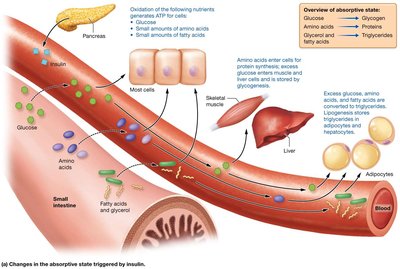
The absorptive state occurs immediately after eating, when nutrients are absorbed from the digestive tract into the bloodstream. Insulin is the primary hormone regulating this state, promoting storage and synthesis of nutrients.
Processes: Oxidation of nutrients for energy, synthesis of proteins, glycogenesis (formation of glycogen), and lipogenesis (formation of fat).
Hormone: Insulin stimulates uptake and storage of glucose, amino acids, and fatty acids.
Overview: Glucose, amino acids, and fatty acids are stored as glycogen, proteins, and triglycerides, respectively.
Example: Excess glucose is converted to glycogen in the liver and muscle.
Postabsorptive State
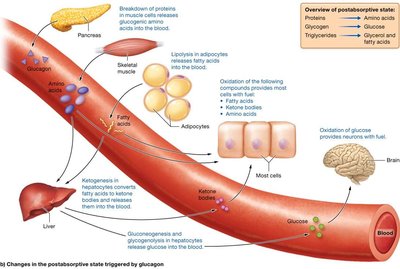
The postabsorptive state begins about four hours after eating, when the body shifts from storing to mobilizing nutrients. Glucagon is the main hormone, promoting catabolic processes to maintain blood glucose levels.
Processes: Protein breakdown, lipolysis (fat breakdown), ketogenesis (formation of ketone bodies), gluconeogenesis (creation of glucose from non-carbohydrate sources), glycogenolysis (breakdown of glycogen), and oxidation of fatty acids.
Hormone: Glucagon stimulates release of glucose and fatty acids into the blood.
Glucose Sparing: The body prioritizes glucose for neural tissue, using fatty acids and ketone bodies for other tissues.
Example: During fasting, the liver produces glucose and ketone bodies to fuel the brain.
Regulation of Feeding
Feeding behavior is regulated by the hypothalamus, which contains centers for hunger and satiety. Hormones and neural signals modulate these centers to maintain energy balance.
Satiety Center: Located in the hypothalamus, signals fullness and inhibits eating.
Hunger Center: Also in the hypothalamus, stimulates appetite.
Long-term Regulation: Hormones such as leptin (from adipose tissue) and ghrelin (from the stomach) influence hunger and satiety.
Short-term Regulation: Signals from stomach stretching, feeding, insulin, and GLP-1 (glucagon-like peptide-1) affect meal initiation and termination.
Summary Table: Metabolic States
State | Main Hormone | Key Processes | Primary Fuel |
|---|---|---|---|
Absorptive | Insulin | Glycogenesis, Lipogenesis, Protein Synthesis | Glucose |
Postabsorptive | Glucagon | Glycogenolysis, Lipolysis, Ketogenesis, Gluconeogenesis | Fatty acids, Ketone bodies |
Key Equations
Glycolysis:
Gluconeogenesis:
β-oxidation:
Additional info: Academic context was added to clarify the processes and regulatory mechanisms, and to provide definitions and examples for key terms.
