 뒤로
Metabolism, Nutrition, and Energetics: Study Notes for Anatomy & Physiology
스터디 가이드 - 스마트 노트
 자료에 맞춘 맞춤형 노트, 핵심 정의, 예시, 맥락을 확장해 제공합니다.
Metabolism, Nutrition & Energetics
Cellular Metabolism Overview
Cellular metabolism encompasses all chemical reactions that occur within cells to maintain life. It is divided into two main processes: catabolism (breaking down molecules to release energy) and anabolism (building up molecules using energy). The nutrient pool refers to the collection of organic molecules available for metabolic processes.
Catabolism: Breakdown of complex molecules into simpler ones, releasing energy.
Anabolism: Synthesis of complex molecules from simpler ones, requiring energy.
Nutrient Pool: Includes amino acids, lipids, and simple sugars used for metabolic reactions.
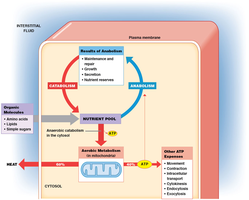
Results of Anabolism: Maintenance and repair, growth, secretion, and nutrient reserves.
Results of Catabolism: Provides energy for cellular activities and heat production.
Role of Nutrient Pool in Metabolism
The nutrient pool supplies substrates for both catabolic and anabolic reactions. It is essential for maintaining cellular functions and energy balance.
Organic molecules from the nutrient pool are used for energy production and biosynthesis.
Balance between catabolism and anabolism is crucial for homeostasis.
Glucose Catabolism: Glycolysis
Glycolysis is the first step in glucose catabolism, occurring in the cytosol. It breaks down one glucose molecule (6 carbons) into two pyruvate molecules (3 carbons each), producing a net gain of 2 ATP.
Glucose (6C) → 2 Pyruvate (3C) + 2 ATP
Provides quick energy without oxygen (anaerobic).
Citric Acid Cycle (Krebs Cycle, TCA Cycle)
The citric acid cycle occurs in the mitochondria and is a key step in aerobic metabolism. Pyruvate is converted to acetate, which binds to CoA to form acetyl-CoA. This enters the cycle, where hydrogen ions are removed and transferred to the electron transport chain.
CO2 is removed from pyruvate.
Acetyl-CoA enters the cycle.
Hydrogen ions are transferred to the electron transport chain.
Electron Transport Chain (ETC)
The ETC uses oxidative phosphorylation to produce ATP. Electrons are transferred through cytochromes, and oxygen acts as the final electron acceptor.
Oxidation: Loss or transfer of electrons.
Phosphorylation: Addition of high-energy phosphate groups.
Cytochromes: Protein-pigment molecules that facilitate electron transfer.
Energy Summary
The total energy produced from one molecule of glucose is summarized as follows:
Glycolysis: Net 2 ATP
TCA & ETC: Net 28-30 ATP
Total: Net 30-32 ATP per glucose molecule
Glucose Metabolism: Importance and Pathways
Glucose is a primary energy source for most cells. It can be stored as glycogen or used directly for ATP production.
Glycogenesis: Formation of glycogen from glucose.
Gluconeogenesis: Formation of glucose from non-carbohydrate sources.
Glycolysis: Breakdown of glucose for energy.
Glycogenolysis: Breakdown of glycogen to release glucose.
Digestion and Absorption of Nutrients
Carbohydrate Digestion
Carbohydrate digestion begins in the mouth with salivary amylase, pauses in the stomach, and resumes in the duodenum with pancreatic enzymes.
Enzymes in the jejunum (maltase, sucrase, lactase) break down disaccharides.
Monosaccharides are absorbed into capillaries and transported to the liver via the hepatic portal vein.
Lipid Digestion and Absorption
Lipid digestion starts in the mouth and is completed in the duodenum with the help of bile and pancreatic lipase. Bile causes emulsification, forming micelles.
Triglycerides are coated with proteins to form chylomicrons.
Chylomicrons travel in lymphatic vessels for processing.
Lipoproteins & Lipid Transport
HDL: Returns cholesterol to the liver.
LDL: Delivers cholesterol to peripheral tissues.
Protein Digestion and Absorption
Protein digestion begins in the stomach, where acid denatures proteins and pepsin breaks peptide bonds. It finishes in the duodenum with CCK and pancreatic enzymes.
Dipeptidases in intestinal epithelia break short peptides into amino acids.
Amino acids are absorbed and transported to the liver via the hepatic portal vein.
Amino Acid Synthesis and Catabolism
Amino acids can be synthesized or broken down for energy or biosynthesis. Catabolism of amino acids releases energy and produces waste products like urea.
Absorptive and Post-Absorptive States
Absorptive State
The absorptive state occurs during the four hours following a meal, when nutrients are absorbed and used for energy or storage. Insulin is the primary hormone, and growth hormone (GH), androgens, and estrogens stimulate protein synthesis.
Post-Absorptive State
During the post-absorptive state, nutrient absorption ceases, and the body relies on internal energy reserves. Glucocorticoids, glucagon, and epinephrine stimulate mobilization of lipid and protein reserves and glycogenolysis.
Vitamins & Minerals
Vitamins are classified as fat-soluble (A, D, E, K) or water-soluble (B, C). Imbalances can lead to hypervitaminosis or hypovitaminosis. A balanced diet is essential to prevent malnutrition.
Calorie Values and Protein Types
Carbohydrate: 4.18 Cal/g
Protein: 4.32 Cal/g
Lipid: 9.46 Cal/g
Complete Proteins: Contain all essential amino acids.
Incomplete Proteins: Lack one or more essential amino acids.
Nutritional Disorders
Anorexia nervosa: Severe restriction of food intake.
Bulimia: Binge eating followed by purging.
Obesity: Excessive body fat accumulation.
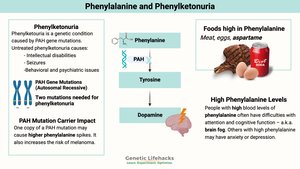
Phenylketonuria (PKU): Genetic disorder affecting phenylalanine metabolism.
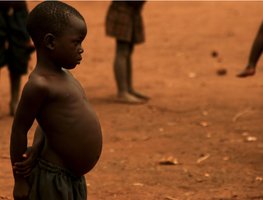
Kwashiorkor: Severe protein deficiency causing edema and swollen belly.
Ketoacidosis: Dangerous buildup of ketones in the blood.
Gout: Painful arthritis caused by uric acid crystal deposition.
Kwashiorkor
Kwashiorkor is a severe form of malnutrition caused by a critical lack of dietary protein, often seen in young children after weaning. It is characterized by edema and a swollen belly.
Common in children under age 4.
Develops after transition from breast milk to low-protein diet.
Gout
Gout is a painful form of inflammatory arthritis caused by excess uric acid in the blood, leading to crystal deposition in joints. It often affects the big toe and is triggered by diets high in purines.
Sudden, severe pain and swelling.
Diet high in red meat, organ meats, seafood, and alcohol increases risk.
Ketoacidosis
Ketoacidosis is a life-threatening condition caused by excessive ketone production, making the blood acidic. It is most common in Type 1 diabetes but can occur in Type 2 diabetes under extreme stress.
Cells cannot access glucose and burn fat for energy.
Results in dangerous acid buildup in the blood.
Hormonal Regulation of Appetite
Appetite is regulated by hormones and neural signals that stimulate either the satiety or feeding centers in the brain.
Satiety center: Stimulated by leptin, elevated blood glucose, CCK, and stretch receptors.
Feeding center: Stimulated by neuropeptide Y and ghrelin.
Energetics and Thermoregulation
Body temperature is regulated through mechanisms such as radiation, evaporation, convection, and conduction.
High body temperature: Activates heat loss center, behavioral changes, vasodilation, sweat production, and respiratory heat loss.
Low body temperature: Stimulates heat gain center, non-shivering and shivering thermogenesis, and conserves heat by counter-current exchange.
