 뒤로
Nutrition, Metabolism, and Energy Balance: Study Notes for Anatomy & Physiology
스터디 가이드 - 스마트 노트
 자료에 맞춘 맞춤형 노트, 핵심 정의, 예시, 맥락을 확장해 제공합니다.
Nutrition, Metabolism, and Energy Balance
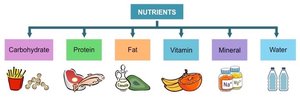
Overview of Nutrients
Nutrients are substances in food that provide energy, support growth, and maintain the body's functions. They are essential for cellular processes, tissue repair, and overall health. Nutrients are classified into macronutrients and micronutrients, each serving distinct roles in the body.
Macronutrients: Include carbohydrates, lipids (fats), and proteins. These are required in large amounts and provide energy and structural components.
Micronutrients: Include vitamins and minerals, needed in smaller quantities for regulatory and structural functions.
Water: Essential for life, involved in nearly all bodily processes.
ATP-ADP Cycle and Energy Utilization
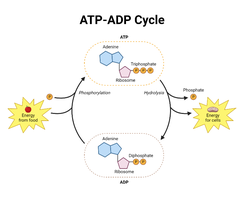
The ATP-ADP cycle is central to cellular energy metabolism. ATP (adenosine triphosphate) is the primary energy carrier in cells, and its hydrolysis releases energy for cellular activities. Energy from nutrients is used to regenerate ATP from ADP (adenosine diphosphate).
ATP Formation: Energy from food is used to add a phosphate group to ADP, forming ATP.
ATP Hydrolysis: ATP is broken down to ADP and a phosphate, releasing energy for cellular work.
Importance: This cycle is fundamental for muscle contraction, nerve transmission, and biosynthesis.
Macronutrients: Sources and Roles
Carbohydrates
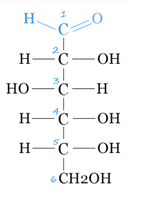
Carbohydrates are the body's preferred energy source, especially for the brain and red blood cells. They are found in a variety of foods and are metabolized to glucose, which is used to generate ATP.
Dietary Sources: Grains, fruits, vegetables, and dairy products.
Uses:
Glucose: The main fuel for most cells; neurons and RBCs rely exclusively on glucose.
Excess Glucose: Stored as glycogen in liver and muscles or converted to triglycerides.
Fructose and Galactose: Converted to glucose in the liver.
Lipids
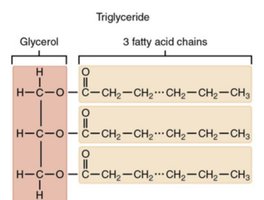
Lipids are a diverse group of compounds including fats, oils, and cholesterol. They serve as a major energy reserve, structural components of cell membranes, and precursors for hormones.
Dietary Sources: Animal fats, vegetable oils, dairy products, nuts.
Uses:
Adipose Tissue: Provides protection, insulation, and energy storage.
Phospholipids: Essential for cell membranes and myelin sheaths.
Cholesterol: Stabilizes membranes, precursor for bile salts and steroid hormones.
Fuel Source: Used by hepatocytes and skeletal muscle.
Vitamin Absorption: Necessary for absorption of fat-soluble vitamins (A, D, E, K).
Proteins
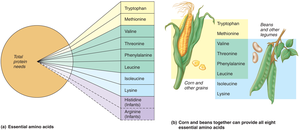
Proteins are vital for growth, repair, and maintenance of tissues. They are composed of amino acids, some of which are essential and must be obtained from the diet.
Dietary Sources: Meat, dairy, eggs, legumes, grains.
Uses:
Structural: Build and repair tissues, form enzymes and hormones.
Functional: Enzymes, antibodies, transport proteins.
Energy: Used for energy when carbohydrate and fat intake is insufficient.
Micronutrients: Vitamins and Minerals
Vitamins
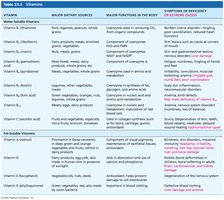
Vitamins are organic compounds required in small amounts for various metabolic processes. They often function as coenzymes and are crucial for normal growth and health.
Sources: Most vitamins must be ingested, though some are synthesized in the body (e.g., vitamin D in skin, B and K by intestinal bacteria).
Functions:
Coenzymes: Assist enzymes in catalyzing metabolic reactions.
Antioxidants: Vitamins C, E, and A neutralize free radicals generated during metabolism.
Variety: No single food group contains all vitamins; a balanced diet is necessary.
Minerals
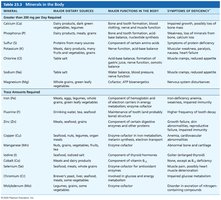
Minerals are inorganic elements essential for structural and functional roles in the body. They are required for bone formation, nerve function, muscle contraction, and fluid balance.
Sources: Dairy, meats, vegetables, grains, and water.
Functions:
Structural: Calcium and phosphorus for bones and teeth.
Regulatory: Sodium, potassium, and chloride for fluid and electrolyte balance.
Enzymatic: Many minerals act as cofactors for enzymes.
Summary Table: Macronutrients
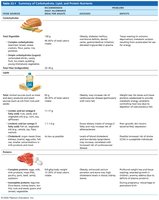
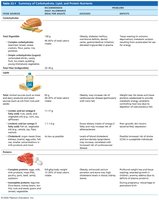
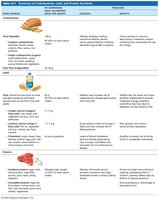
The following table summarizes the major dietary sources, functions, and deficiency symptoms of carbohydrates, lipids, and proteins.
Macronutrient | Major Dietary Sources | Major Functions | Symptoms of Deficiency/Excess |
|---|---|---|---|
Carbohydrates | Breads, cereals, fruits, vegetables, milk | Energy source, spare protein, prevent ketosis | Deficiency: Fatigue, ketosis; Excess: Obesity, dental caries |
Lipids | Animal fats, vegetable oils, dairy | Energy storage, insulation, cell membranes, hormone precursor | Deficiency: Weight loss, poor vitamin absorption; Excess: Obesity, cardiovascular disease |
Proteins | Meat, dairy, eggs, legumes | Tissue growth and repair, enzymes, hormones | Deficiency: Poor growth, muscle loss; Excess: Kidney strain |
Summary Table: Vitamins
This table summarizes the major dietary sources, functions, and deficiency symptoms of key vitamins.
Summary Table: Minerals
This table summarizes the major dietary sources, functions, and deficiency symptoms of key minerals.
Key Equations
ATP Hydrolysis
The hydrolysis of ATP releases energy for cellular processes:
Glucose Metabolism
Cellular respiration of glucose produces ATP:
Conclusion
Understanding the sources, roles, and metabolism of nutrients is fundamental to Anatomy & Physiology. Proper nutrition supports cellular function, tissue health, and overall physiological balance.
