 뒤로
Respiration and Artificial Ventilation: Anatomy & Physiology Study Guide
스터디 가이드 - 스마트 노트
 자료에 맞춘 맞춤형 노트, 핵심 정의, 예시, 맥락을 확장해 제공합니다.
Respiratory System: Anatomy & Physiology
Mechanics of Breathing
The process of breathing involves the movement of air into and out of the lungs, enabling gas exchange essential for cellular function.
Inhalation: An active process where chest muscles expand and the diaphragm contracts, increasing chest volume and creating negative pressure that draws air into the lungs.
Exhalation: A passive process where chest muscles and diaphragm relax, decreasing chest volume and creating positive pressure that pushes air out.
Tidal Volume: The amount of air moved in one breath.
Minute Volume: The total amount of air moved into and out of the lungs per minute.
Alveolar Ventilation: The portion of air that actually reaches the alveoli for gas exchange, affected by breathing rate and tidal volume.
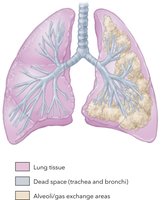
Dead space refers to areas of the airway outside the alveoli where no gas exchange occurs.
Structure of the Respiratory System
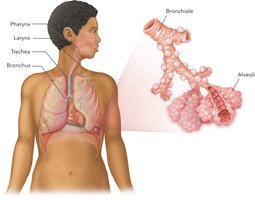
The respiratory system consists of several anatomical structures that facilitate the movement and exchange of gases.
Pharynx: Located behind the mouth, serves as a passageway for air.
Larynx: The voice box, connects the pharynx to the trachea.
Trachea: The windpipe, conducts air to the bronchi.
Bronchi: Branches from the trachea into each lung.
Bronchioles: Smaller branches leading to alveoli.
Alveoli: Tiny air sacs where gas exchange occurs.
Physiology of Respiration
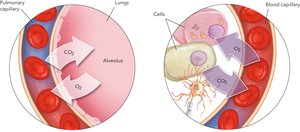
Respiration involves the exchange of oxygen and carbon dioxide between the lungs, blood, and body cells.
Pulmonary Respiration: Diffusion of oxygen and carbon dioxide between alveoli and circulating blood.
Cellular Respiration: Diffusion of oxygen and carbon dioxide between cells and circulating blood.
Diffusion: Movement of gases from areas of high concentration to low concentration.
Cardiopulmonary System: The combined function of the respiratory and circulatory systems, also referred to as ventilation-perfusion matching.
Equation for Diffusion:
Pathophysiology of the Cardiopulmonary System
Mechanical Failures
Mechanical failures can limit the ability of the chest to create pressure changes necessary for ventilation.
Stab wounds allow air into the chest cavity, preventing negative pressure.
Loss of nervous control impairs respiratory muscle function.
Painful chest wall injuries restrict movement.
Airway problems such as bronchoconstriction limit airflow.
Gas Exchange and Circulation Issues
Problems with gas exchange or circulation can impair oxygen delivery and carbon dioxide removal.
Low oxygen levels in ambient air reduce inhaled oxygen.
Alveolar dysfunction limits gas exchange.
Blood loss or insufficient hemoglobin reduces oxygen transport.
Respiration: Adequate vs. Inadequate Breathing
Identifying Adequate and Inadequate Breathing
Assessment of breathing is critical for determining the need for intervention.
Hypoxia: Low oxygen levels in tissues.
Hypercapnia: High carbon dioxide levels.
Compensatory mechanisms include increased respiratory and heart rates, and vasoconstriction.
Respiratory Distress: Compensation is effective; normal mental status and skin color.
Respiratory Failure: Compensation fails; metabolic needs are unmet, leading to respiratory arrest.
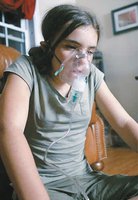
Assessment of Breathing
Signs of adequate breathing include equal chest expansion, normal breath sounds, typical skin coloration, and normal rate, rhythm, and depth.
Signs of inadequate breathing: altered mental status, absent or uneven chest movement, slow pulse (children), abdominal-only breathing, diminished breath sounds, abnormal noises (wheezing, stridor, gurgling), cyanosis, prolonged inspirations/expirations, inability to speak, retractions, nasal flaring (children), low oxygen saturation (<95%), and distress body position.
Interventions for Respiratory Conditions
Appropriate interventions depend on the severity of respiratory compromise.
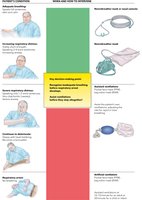
Key decision point: Recognize inadequate breathing before respiratory arrest develops. Assist ventilations before they stop altogether!
Assessing Breathing with Technology
Pulse Oximetry and Capnography
Technological tools aid in assessing respiratory function.
Pulse Oximetry: Measures hemoglobin saturation by oxygen.
Capnography: Measures carbon dioxide in exhaled air.
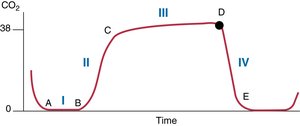
Limitations include inaccurate readings in certain populations and inability to measure all airway segments.
Positive Pressure Ventilation
Artificial Ventilation
Artificial ventilation uses positive pressure to force air or oxygen into the lungs, opposite to the body's normal negative pressure mechanism.
Used for patients with inadequate or absent breathing.
Side effects: decreased cardiac output and blood pressure, gastric distention, and risk of hyperventilation.
Techniques of Artificial Ventilation
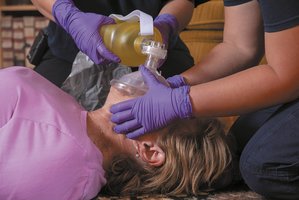
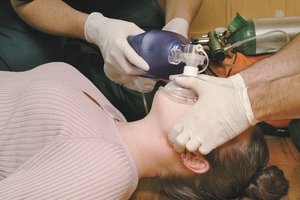
Three common methods: mouth-to-mask, two-rescuer bag-valve mask (BVM), and one-rescuer BVM.
Ensure chest rise and fall with each ventilation.
Use barrier devices for infection control.
Adjust technique for rapid or slow breathing.
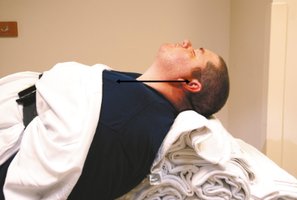
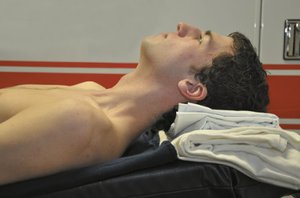
Proper airway positioning is essential (head-elevated, sniffing position).




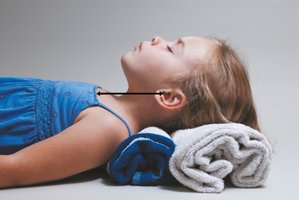
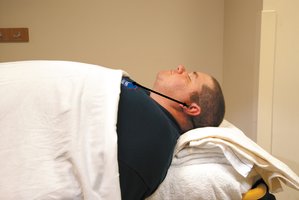
Bag-Valve Mask (BVM) Ventilation
BVMs are used for nonbreathing or respiratory failure patients and come in various sizes.
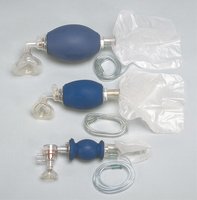
PEEP valve prevents alveolar collapse.
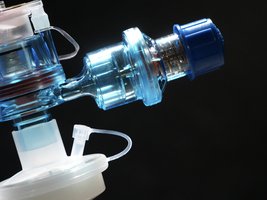
Automatic Transport Ventilator (ATV)
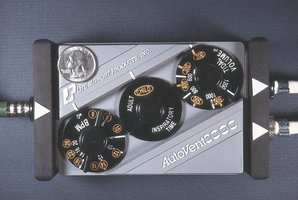
ATVs provide positive pressure ventilation with adjustable rate and volume, useful for prolonged ventilation.
Oxygen Therapy
Oxygen Therapy Equipment
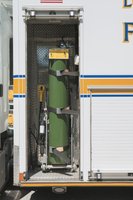
Oxygen delivery systems must be safe, portable, and reliable. Cylinders are filled with pressurized oxygen and come in various sizes.
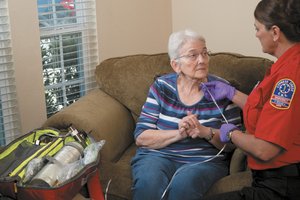
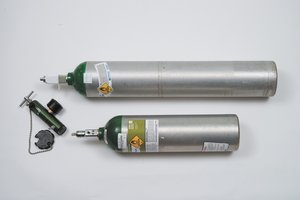
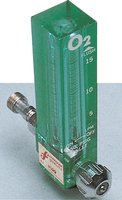
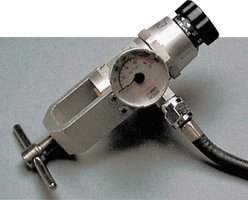
Pressure regulators and flowmeters control oxygen delivery.
Humidifiers can moisten dry oxygen but are rarely used in EMS due to infection risk.
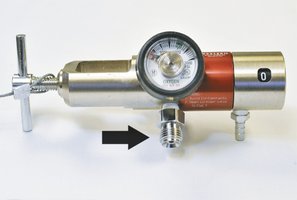
Hazards of Oxygen Therapy
Oxygen can pose nonmedical and medical hazards if not handled properly.
Nonmedical: Fire risk, explosive reactions with oil, equipment mishandling.
Medical: Hyperoxia, oxygen toxicity, respiratory depression in COPD, reperfusion injury.
Administering Oxygen
Oxygen can be delivered using various devices, including nonrebreather masks, nasal cannulas, partial rebreather masks, Venturi masks, and tracheostomy masks.
Nonrebreather mask: Delivers high concentrations (80–90%) at 15 L/min.
Nasal cannula: Delivers low concentrations (24–44%) at 4–6 L/min.
Partial rebreather mask: Delivers 40–60% at 9–10 L/min.
Venturi mask: Delivers specific concentrations, useful for COPD patients.
Tracheostomy mask: Used for patients with stoma or tracheostomy tube.
Special Considerations
Facial Injuries and Obstructions
Facial injuries may require frequent suctioning and airway adjuncts. Solid obstructions require abdominal or chest thrusts or finger sweeps.
Dental Appliances
Dentures should be left in place unless they endanger the airway.
Infants and Children
Children have unique anatomical and physiological considerations, such as larger tongues, softer tracheas, and higher oxygen burn rates. Management requires proper mask sizing and careful ventilation to avoid gastric distention.
Assisting with Advanced Airway Devices
Intubation and Ventilation
EMTs may assist with intubation by providing oxygen, positioning the patient, and monitoring tube placement. Proper stabilization and monitoring are essential during trauma intubation.
Chapter Review
Respiratory failure results from inadequate breathing and requires artificial ventilation. Oxygen therapy is indicated for patients with inadequate breathing, cyanosis, chest pain, severe injuries, or altered mental status. Proper assessment, intervention, and safety measures are critical in respiratory emergencies.
