 뒤로
Study Guide: Male Reproductive System and Spermatogenesis
스터디 가이드 - 스마트 노트
 자료에 맞춘 맞춤형 노트, 핵심 정의, 예시, 맥락을 확장해 제공합니다.
Essentials of Sexual Reproduction
Genetic Contribution and Gametes
Sexual reproduction involves the fusion of gametes from two parents, resulting in offspring with unique genetic combinations. This is why we don't look identical to either parent. Gametes are produced in specialized organs called gonads, which also secrete hormones essential for reproductive function.
Gametes: Egg (female) and sperm (male) carry DNA from each parent.
Gonads: Primary sex organs: ovaries in females, testes in males. Gametes are made in the gonads.
Also produce hormones with widespread effects in the body.
Secondary sex organs: Structures required for the transport and support of gametes. These are structures like the penis.
Zygote: The fertilized cell formed by the union of egg and sperm.
Male Reproductive System
Overview and Function
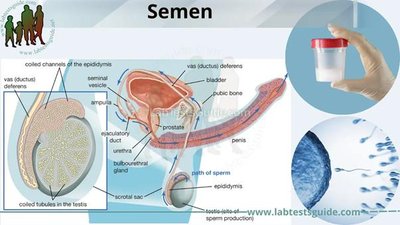
The male reproductive system is specialized for the production and delivery of sperm. It begins at the testes and ends at the penis, encompassing several accessory glands and ducts.
Primary function: Sperm production and delivery.
Pathway: Testes → Epididymis → Vas deferens → Ejaculatory duct → Urethra → Penis.
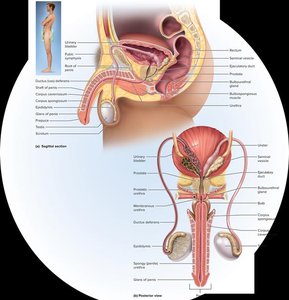
Testes (Initial Production)
The testes are the primary male gonads responsible for producing sperm and sex hormones, mainly testosterone.
Seminiferous tubules: Site of sperm production. This where the immature sperm are produced.
Semi = sperm
Interstitial (Leydig's) cells: Located between tubules, secrete testosterone.
Interstitial = testosterone
Sustentacular (nurse) cells: Support developing sperm, provide nutrients, remove waste, and secrete inhibin.
Nurse = nourish the sperm
Inhibin: regulates the rate of sperm production
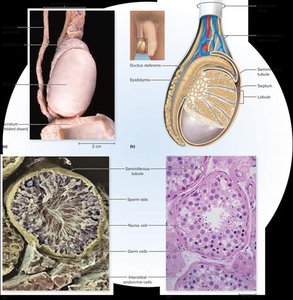
Epididymis (Maturation and Storage)
The epididymis is a coiled tube where sperm mature and are stored.
Sperm maturation: Takes about 20 days as sperm travel through the epididymis.
Storage: Mature sperm are stored until ejaculation.
Vas deferens: Continuation of the epididymis, important for sperm transport during ejaculation.
Contains thick, smooth muscle
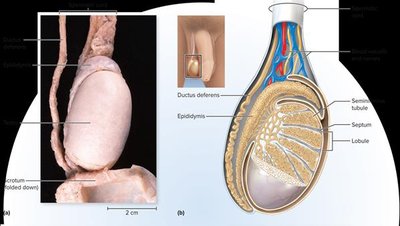
Scrotum (Temperature Regulation)
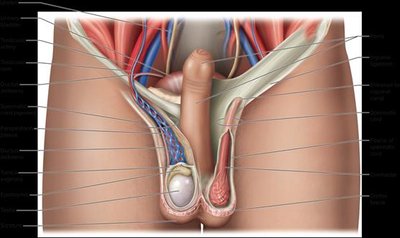
The scrotum is a pouch of skin and muscle that houses the testes and epididymis, regulating their temperature for optimal sperm production.
Temperature regulation: Sperm production requires a temperature about 2°C lower than the pelvic cavity.
When it's cold outside, the spermatic cord and dartos fascia within the scrotum naturally contracts.
Cremaster muscle and dartos fascia: Contract or relax to move the testes closer or further from the body, adjusting temperature.
Seminal Vesicles (Produce Secretion for Semen)
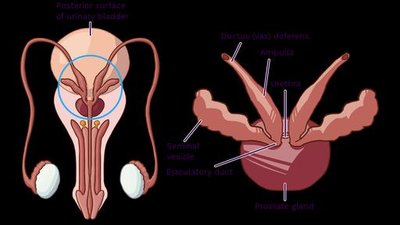
Seminal vesicles are paired glands that contribute a significant portion of the seminal fluid.
Secretion: Forms about 60% of semen volume.
Function: Provides nutrients and enhances sperm motility.
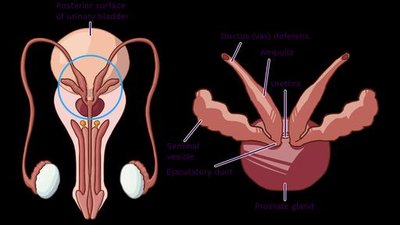
Prostate
The prostate gland surrounds the urethra and contributes to seminal fluid. If the prostate is enlarged, the urethra is cut off and urination may be difficult.
Secretion: Constitutes about 30% of semen.
Contains: Calcium, ions, and serine protease enzyme.
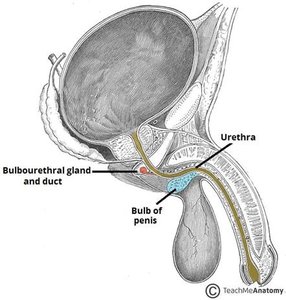
Bulbourethral Glands
These glands secrete a clear, slippery fluid during sexual arousal.
Function: Lubricates the urethra and neutralizes acidity from residual urine in the urethra to protect the sperm.
The vagina is also acidic, so this protection is essential
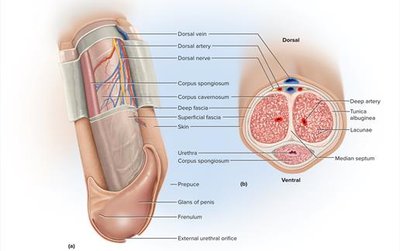
Penis
The penis is the organ responsible for depositing semen in the vagina.
Structure: Contains three erectile tissues: corpus spongiosum and two corpus cavernosum.
The are all separated by a median septum and covered in a tight fibrous tunic.
Prepuce: Highly sensitive area with tactile corpuscles.
Puberty and Adolescence
Hormonal Regulation
Puberty marks the activation of the reproductive system, driven by hormonal changes.
Reproductive systems remain dormant until onset of puberty.
Adolescence: period from the onset of gonadotropin secretion to when they reach full height. Puberty is the first few years of adolescence.
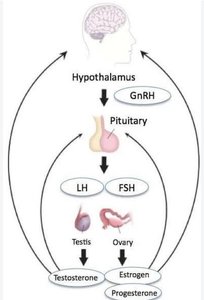
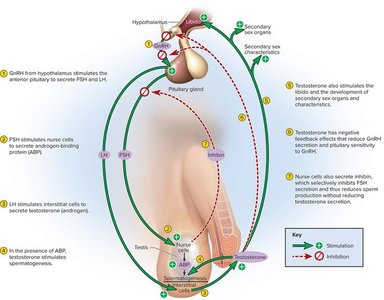
GnRH: Stimulates tghe pituitary gland to secrete two gonadotropin hormones.
FSH and LH: Follicle-stimulating hormone and luteinizing hormone regulate spermatogenesis and testosterone production.
FSH: FSH makes seminiferous tubules more sensitive to testosterone. Without FSH tubules do not respond to testosterone
FSH = F*** that hurts!
LH: stimulates interstitial cells to secrete testosterone.
LH = Lets go!
Effects of Testosterone
Physiological and Developmental Effects
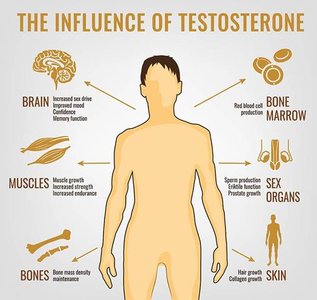
Testosterone is the primary male sex hormone, influencing various aspects of male physiology and development.
Growth: Sex organs, muscle mass, height, larynx, metabolic rate.
Secondary sex characteristics: Pubic, axillary, and facial hair; apocrine sweat glands.
Libido: Development of sex drive.
Spermatogenesis
Process and Stages
Spermatogenesis is the process by which sperm are produced in the seminiferous tubules of the testes.
Spermatogonia: Stem cells that divide by mitosis; one remains a stem cell, the other becomes a primary spermatocyte. This is initiated at puberty and happen by the minute (4 million/day).
Mitosis: form one parent cell to two identical daughter cells. One daughter cells remains a stem cell and the other migrates towards the center and differentiates into a primary spermatocyte.
Primary spermatocyte: Undergoes meiosis I to become genetically unique to the other cells (2 total). Opposite of meiosis.
Secondary spermatocyte: Undergoes meiosis II, producing two spermatids for 4 total genetically unique cells. Each spermatid will eventually become a single sperm.
Spermatids: Mature into sperm through spermiogenesis.
Spermiogenesis: Spermatid sprout flagellum and shed excess cytoplasm. When formed, move down the seminiferous tubule to
the epididymis.
Sperm Structure
Mature sperm are specialized for fertilization, with distinct regions for function.
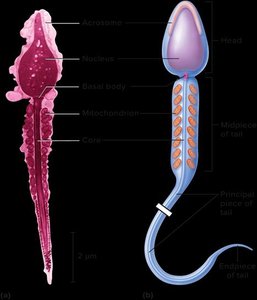
Head: Contains genetic material and acrosome. Cargo.
Midpiece: Packed with mitochondria for energy. Motor.
Tail: Propels the sperm forward. Propeller.
Semen
Composition and Function
Semen is the fluid expelled during ejaculation, containing sperm and secretions from accessory glands. Contains LOW levels of sperm.
Composition: 10% sperm, 30% prostatic fluid, 60% seminal vesicle fluid.
Typical volume: 2–5 mL per ejaculation.
Sperm count: 50–120 million sperm/mL; counts below 25 million may indicate infertility.
Regulation of Spermatogenesis
Hormonal Control
Spermatogenesis is tightly regulated by hormones, particularly inhibin and testosterone.
Inhibin: Produced by nurse cells, inhibits FSH to regulate sperm production.
FSH is responsible for stimulating sperm production. When FSH is inhibited, the response to testosterone is reduced.
Testosterone: Maintains spermatogenesis and secondary sex characteristics.
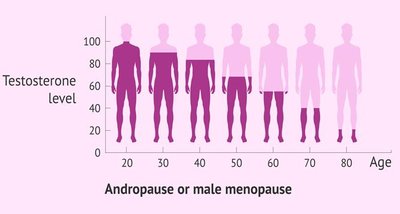
Andropause
Age-Related Changes
Andropause refers to the gradual decline in testosterone levels with age, affecting reproductive function.
Testosterone peak: Around age 20.
Increase in FSH and LH: After age 50, leading to symptoms of andropause. There are typically no symptoms or major effects, sperm production persists.
Sperm production: Usually continues throughout life.
Anabolic Steroids
Medical and Non-Medical Use
Anabolic steroids are synthetic forms of testosterone used medically and often abused for performance enhancement.
Medical use: Induce puberty, treat certain diseases.
Abuse: Associated with short-term and long-term health risks.
Short-term effects: Acne, mood swings, decreased sperm count, impotence.
Long-term effects: Testicular shrinkage, breast tissue growth, fertility issues, stroke, heart problems.
Summary Table: Male Reproductive System Structures and Functions
Structure | Function |
|---|---|
Testes | Sperm and testosterone production |
Epididymis | Sperm maturation and storage |
Scrotum | Temperature regulation for sperm production |
Seminal vesicles | Produce seminal fluid (nutrients, motility) |
Prostate | Produce prostatic fluid (enzymes, ions) |
Bulbourethral glands | Lubrication and neutralization of urethra |
Penis | Deposits semen in vagina |
Key Equations
Meiosis in Spermatogenesis
Chromosome reduction: (diploid to haploid)
Number of sperm per primary spermatocyte:
Additional info:
Hormonal feedback loops are essential for regulating male reproductive function.
Accessory glands contribute to the viability and motility of sperm.
