 뒤로
The Endocrine System: Structure, Function, and Hormonal Regulation
스터디 가이드 - 스마트 노트
 자료에 맞춘 맞춤형 노트, 핵심 정의, 예시, 맥락을 확장해 제공합니다.
The Endocrine System
Internal Communication: Nervous vs. Endocrine Systems
The body relies on both the nervous and endocrine systems for internal communication and coordination. These systems differ in their signaling mechanisms and timing:
Nervous System: Uses electrical and chemical signals (action potentials and neurotransmitters); communicates rapidly with short-lived effects.
Endocrine System: Uses chemical messengers (hormones); communicates gradually with longer-lasting effects.
Cell Signaling: Overview
Cell-to-cell communication is essential for physiological regulation. The four major methods are:
Gap Junctions: Physically join cells, allowing direct passage of molecules.
Neurotransmitters: Released by neurons, bind to receptors on adjacent cells.
Paracrines: Secreted by cells, diffuse to nearby cells within the same tissue.
Hormones: Chemical messengers transported by the bloodstream to distant tissues or organs.
Endocrine System: Overview
The endocrine system consists of glands, tissues, and cells that secrete hormones. Hormones are classified into three main categories:
Monoamines: Derived from amino acids; water-soluble; bind to plasma membrane receptors.
Peptide Hormones: Chains of amino acids; water-soluble; bind to plasma membrane receptors.
Steroids: Derived from cholesterol; fat-soluble; enter cells to bind intracellular receptors.
Hormonal Interactions
Hormones can interact in several ways:
Synergistic Effects: Two or more hormones act together for a greater effect (e.g., FSH & testosterone stimulate sperm production).
Permissive Effects: One hormone enhances the response to another (e.g., progesterone requires estrogen-induced receptors).
Antagonistic Effects: One hormone opposes another (e.g., insulin & glucagon regulate blood sugar).
Glands: Structure and Function
Definition and Types
A gland is a cell or organ that secretes substances for use elsewhere or for elimination as waste. Secretion is a useful product (e.g., enzyme, hormone), while excretion is a waste product (e.g., urine).
Exocrine Glands
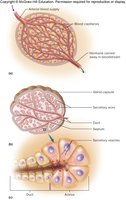
Exocrine glands release products through ducts onto body surfaces or into organ cavities. Examples include sweat, mammary, tear, salivary glands, liver, and pancreas.
Endocrine Glands
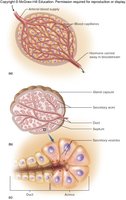
Endocrine glands lack ducts and secrete hormones directly into the bloodstream. Examples include the pituitary, thyroid, adrenal glands, and pancreas.
Mixed Function Glands
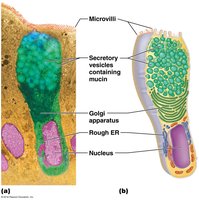
Some organs have both endocrine and exocrine functions. Glands can range from single cells to complex organs.
Hormonal Release and Regulation
Mechanism of Hormonal Release
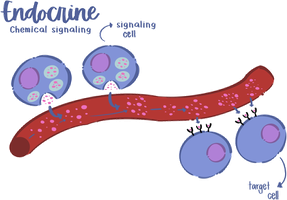
Hormones are released when the endocrine system receives a signal. The signaling cell releases the hormone, which binds to specific receptors on the target cell.
Trigger Mechanisms
Three main mechanisms trigger hormone release:
Humoral Stimuli: Changes in blood levels of substances (e.g., high glucose triggers insulin).
Neural Stimuli: Direct stimulation by nerve fibers (e.g., sympathetic nerves trigger adrenal medulla).
Hormonal Stimuli: Hormones from one gland stimulate another (e.g., pituitary hormones trigger thyroid hormone release).
Major Endocrine Glands and Their Hormones
Components of the Endocrine System
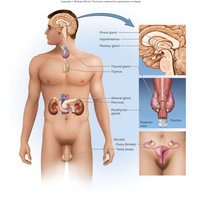
The main players include the pineal gland, hypothalamus, pituitary gland, thyroid gland, parathyroid gland, thymus, adrenal glands, pancreas, and gonads.
Pineal Gland
The pineal gland is a small structure hanging from the roof of the third ventricle in the brain. It secretes melatonin, which regulates sleep cycles.
Hypothalamus
The hypothalamus is a key regulator of the endocrine system, often acting through the pituitary gland.
Pituitary Gland
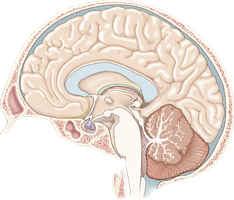
The pituitary gland (hypophysis) is a two-lobed structure considered the 'master gland.' It is divided into anterior and posterior lobes, each secreting distinct hormones.
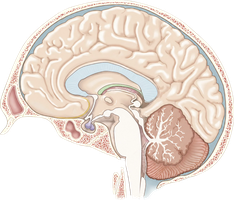
Anterior Pituitary (Adenohypophysis)
Growth Hormone (GH): Stimulates growth of skeletal muscle and bones, cell division, and fat metabolism.
Prolactin (PRL): Stimulates and maintains milk production in mammary glands.
Thyroid Stimulating Hormone (TSH): Stimulates thyroid hormone release, regulating metabolism.
Adrenocorticotropic Hormone (ACTH): Regulates adrenal gland stress hormone release.
Follicle Stimulating Hormone (FSH): Stimulates follicle development in ovaries and sperm production in testes.
Luteinizing Hormone (LH): Triggers ovulation and stimulates testosterone production.
Posterior Pituitary (Neurohypophysis)
Antidiuretic Hormone (ADH): Increases water retention in kidneys, decreases urine volume, increases blood volume and pressure.
Oxytocin (OT): Released via positive feedback; stimulates uterine contractions, milk flow, and mother-baby bonding.
Thyroid Gland
Located just below the 'Adam's apple,' the thyroid gland produces:
Thyroid Hormone (T3 & T4): Regulates metabolic rate and ATP production; requires iodine.
Calcitonin: Decreases blood calcium by stimulating osteoblasts and inhibiting osteoclasts; more important in children.
Parathyroid Glands
Four pea-sized glands on the posterior thyroid. They produce parathyroid hormone (PTH) which increases blood calcium by stimulating osteoclasts and synthesis of calcitriol.
Thymus
The thymus is a bilobed gland posterior to the sternum, involved in endocrine, lymphatic, and immune systems. It releases thymopoietin, thymosin, and thymulin to regulate T-cell maturation.
Adrenal Glands
Adrenal glands sit atop the kidneys and consist of two parts:
Adrenal Cortex: Produces corticosteroids:
Mineralocorticoids (e.g., aldosterone): Regulate electrolyte balance.
Glucocorticoids (e.g., cortisol): Regulate glucose metabolism; released in response to ACTH and stress.
Androgens: Trigger secondary sex characteristics and stimulate libido.
Adrenal Medulla: Secretes catecholamines (epinephrine, norepinephrine) in response to sympathetic stimulation for short-term stress.
Pancreas
The pancreas is a spongy gland posterior to the stomach, containing islets that regulate blood glucose:
Insulin: Released from beta cells; decreases blood glucose by stimulating uptake and storage.
Glucagon: Released from alpha cells; increases blood glucose by stimulating glycogen breakdown.
Gonads
The gonads (testes and ovaries) produce gametes and sex hormones:
Testes: Produce androgens (testosterone) for male characteristics, sex drive, and sperm production.
Ovaries: Produce estradiol (estrogen) and progesterone for female characteristics, menstrual cycle, pregnancy, and lactation.
Summary Table: Hormones and Their Functions
Gland | Hormone | Main Function |
|---|---|---|
Pituitary (Anterior) | GH, PRL, TSH, ACTH, FSH, LH | Growth, milk production, metabolism, stress, reproduction |
Pituitary (Posterior) | ADH, OT | Water retention, uterine contraction, milk flow |
Thyroid | T3/T4, Calcitonin | Metabolism, calcium homeostasis |
Parathyroid | PTH | Increase blood calcium |
Adrenal Cortex | Aldosterone, Cortisol, Androgens | Electrolytes, glucose, sex characteristics |
Adrenal Medulla | Epinephrine, Norepinephrine | Short-term stress response |
Pancreas | Insulin, Glucagon | Blood glucose regulation |
Gonads | Testosterone, Estrogen, Progesterone | Sex characteristics, reproduction |
Key Equations
Hormone concentration in blood can be described by:
Calcium homeostasis (simplified):
Conclusion
The endocrine system is a complex network of glands and hormones that regulate numerous physiological processes, including growth, metabolism, stress response, and reproduction. Understanding the structure and function of each gland and hormone is essential for mastering anatomy and physiology.
