 뒤로
The Endocrine System: Structure, Function, and Hormonal Regulation
스터디 가이드 - 스마트 노트
 자료에 맞춘 맞춤형 노트, 핵심 정의, 예시, 맥락을 확장해 제공합니다.
The Endocrine System
Overview of the Endocrine System
The endocrine system is a network of glands and cells that secrete hormones to regulate various physiological processes throughout the body. It works closely with the nervous system to coordinate and integrate the activity of most body cells, but it uses chemical messengers (hormones) rather than electrical impulses. Endocrinology is the study of hormones and endocrine organs.
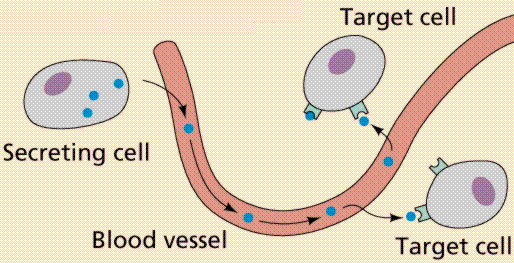
Hormones: Chemical messengers secreted into the blood, affecting only target cells with specific receptors.
Endocrine responses are generally slower but longer-lasting than nervous system responses.
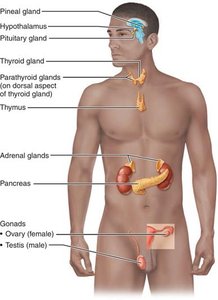
Major endocrine glands include the pituitary, thyroid, adrenal glands, and gonads, but hormone-secreting cells are also found in organs like the heart, liver, and adipose tissue.
Comparison: Endocrine System vs. Nervous System
Both the endocrine and nervous systems are essential for internal communication and homeostasis, but they differ in their signaling mechanisms, speed, and duration of response.
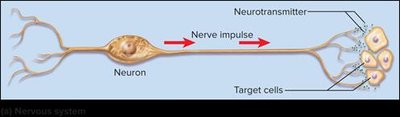
Nervous system: Uses electrical and chemical signals (neurotransmitters), responds rapidly, and targets specific organs.
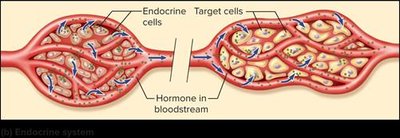
Endocrine system: Uses only chemical signals (hormones), responds more slowly, and signals are distributed throughout the bloodstream to reach distant targets.
Some cells, called neuroendocrine cells, function in both systems.
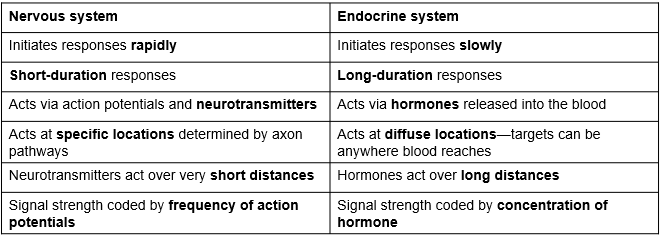
Nervous system | Endocrine system |
|---|---|
Initiates responses rapidly | Initiates responses slowly |
Short-duration responses | Long-duration responses |
Acts via action potentials and neurotransmitters | Acts via hormones released into the blood |
Acts at specific locations determined by axon pathways | Acts at diffuse locations—targets can be anywhere blood reaches |
Neurotransmitters act over very short distances | Hormones act over long distances |
Signal strength coded by frequency of action potentials | Signal strength coded by concentration of hormone |
Hormones and Endocrine Glands
Hormone Secretion and Target Cells
Hormones are secreted by specialized endocrine glands or cells and travel through the bloodstream to reach target cells. Only cells with the appropriate receptors can respond to a specific hormone.
Major glands: pituitary, thyroid, adrenal, gonads (ovaries/testes), pancreas, pineal, parathyroid, thymus.
Other hormone-secreting cells: adipocytes, osteoblasts, heart, liver, brain.
Target cells: Cells with specific receptors for a hormone.
Hormone Classes and Structures
Classification of Hormones
Hormones are classified based on their chemical structure, which determines their solubility, transport, and mechanism of action.
Amino acid–based hormones: Includes amino acid derivatives, peptides, and proteins. Most are water-soluble (except thyroxine) and cannot cross the plasma membrane.
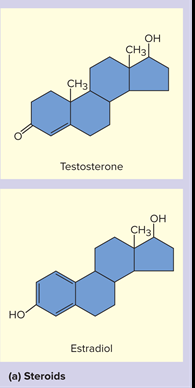
Steroid hormones: Synthesized from cholesterol, lipid-soluble, and can cross the plasma membrane. Includes gonadal and adrenocortical hormones.
Hormone Structure Details
Steroids: Lipids with four organic rings and varied side groups. Example: testosterone, estradiol.
Monoamines: Small molecules derived from amino acids (e.g., thyroxine from tyrosine).
Peptide hormones: Chains of amino acids (3–200+). Example: oxytocin (9 aa), insulin (51 aa, considered a protein).
Hormone Receptors and Effects
Hormone-Receptor Interactions
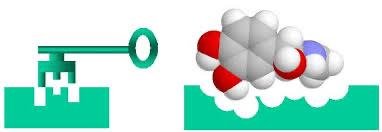
Hormones exert their effects by binding to specific receptors on or in target cells. The presence of the correct receptor determines whether a cell will respond to a hormone.
Monoamines and peptide hormones: Bind to receptors on the plasma membrane (hydrophilic, cannot cross membrane).
Steroid hormones: Diffuse through the plasma membrane and bind to intracellular receptors (hydrophobic).
Second Messenger Systems (Monoamines and Peptides)
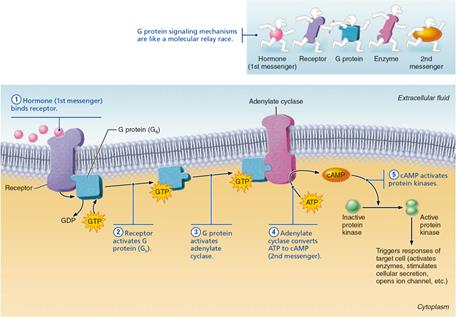
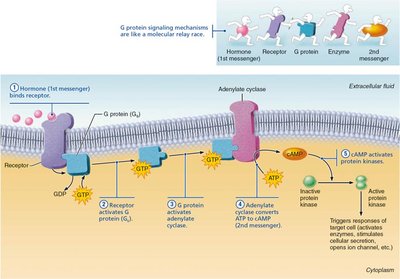
Monoamines and peptide hormones act as first messengers. Their binding to membrane receptors activates intracellular second messengers, such as cyclic adenosine monophosphate (cAMP), which mediate the cellular response.
cAMP can activate or deactivate enzymes, leading to various metabolic effects.
Second messenger systems amplify the signal and allow for regulation at multiple steps.
Steroid Hormone Mechanism
Steroid hormones, being lipid-soluble, diffuse through the plasma membrane and bind to intracellular receptors, often in the nucleus. The hormone-receptor complex then binds to DNA, altering gene expression and leading to the production of specific proteins.
Direct gene activation is a hallmark of steroid hormone action.
Results in changes in protein synthesis and long-term cellular effects.
Hormone Interactions
Types of Hormone Interactions
Multiple hormones often circulate simultaneously and can interact at target cells in three main ways:
Permissive: One hormone enhances the target organ's response to another hormone (e.g., estrogen primes the uterus for progesterone).
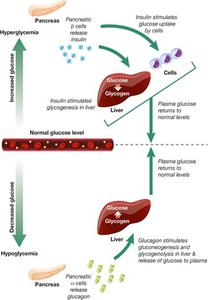
Antagonistic: One hormone opposes the action of another (e.g., insulin vs. glucagon in blood glucose regulation).
Synergistic: Two hormones work together to produce a stronger response (e.g., testosterone and FSH in sperm production).
Hormonal Control and Homeostasis
Negative Feedback Regulation
Hormones play a crucial role in maintaining homeostasis, often through negative feedback loops. When a variable deviates from its set point, endocrine glands adjust hormone secretion to restore balance. Once the desired effect is achieved, hormone levels decrease through degradation and excretion.
Example: Blood glucose regulation by insulin and glucagon.
Hormones are typically degraded chemically and excreted in bile or urine after their action is complete.
