 뒤로
E3: The Endocrine System Pt. 1 (SS 4)
스터디 가이드 - 스마트 노트
 자료에 맞춘 맞춤형 노트, 핵심 정의, 예시, 맥락을 확장해 제공합니다.
The Endocrine System
Overview and Functions
The endocrine system is a major regulatory system of the body, working alongside the nervous system to coordinate and integrate the activity of most body cells. It uses hormones—chemical messengers—to influence metabolic activities and maintain homeostasis. Endocrine responses are typically slower but longer lasting than nervous system responses.
Endocrinology: The study of hormones and endocrine organs.
Hormones: Chemical messengers secreted by endocrine glands or tissues into the blood, affecting only target cells with specific receptors.
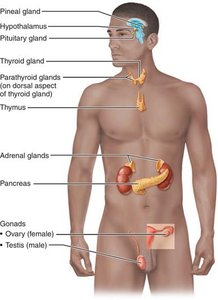
Comparison: Endocrine System vs. Nervous System
Both systems are essential for internal communication, but they differ in their signaling mechanisms and effects.
Nervous system: Uses electrical and chemical signals, responds quickly, and targets specific organs.
Endocrine system: Uses only chemical signals (hormones), responds slowly, and signals are distributed throughout the body via the bloodstream.
Some cells, called neuroendocrine cells, function in both systems.
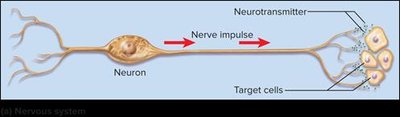
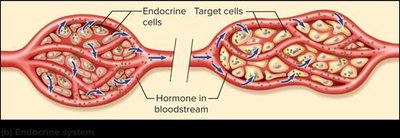
Nervous system | Endocrine system |
|---|---|
Initiates responses rapidly | Initiates responses slowly |
Short-duration responses | Long-duration responses |
Acts via action potentials and neurotransmitters | Acts via hormones released into the blood |
Acts at specific locations determined by axon pathways | Acts at diffuse locations—targets can be anywhere blood reaches |
Neurotransmitters act over very short distances | Hormones act over long distances |
Signal strength coded by frequency of action potentials | Signal strength coded by concentration of hormone |
Hormones and Endocrine Glands
The endocrine system is composed of glands and cells that secrete hormones. Major glands include the pituitary, thyroid, adrenal glands, and gonads. Hormones can also be secreted by cells in organs not typically considered endocrine organs, such as adipocytes, osteoblasts, the brain, heart, and liver. 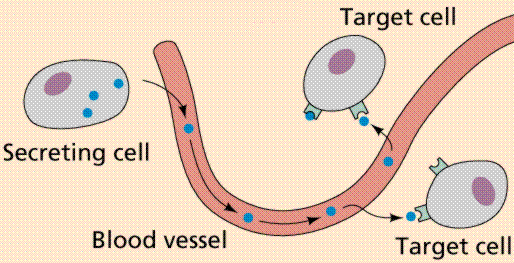
Hormone Classes and Structures
Classification of Hormones
Hormones are classified into two main types based on their chemical structure and solubility:
Amino acid–based hormones: Includes amino acid derivatives, peptides, and proteins. Most are water-soluble (except thyroxine) and cannot cross the plasma membrane.
Steroid hormones: Synthesized from cholesterol, lipid-soluble, and can cross the plasma membrane. Includes gonadal and adrenocortical hormones.
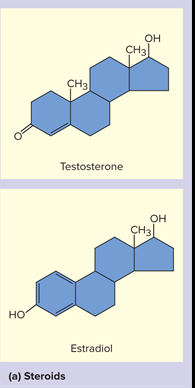
Hormone Structure Details
Steroids: Lipids synthesized from cholesterol, all share four organic rings with varied side groups.
Monoamines: Small molecules synthesized from amino acids (tyrosine and tryptophan). Example: thyroxine.
Peptide hormones: Chains of amino acids (3 to 200 aa). If >50 aa, considered a protein. Example: oxytocin (9 aa), insulin (51 aa).
Hormone Receptors and Effects
Mechanism of Hormone Action
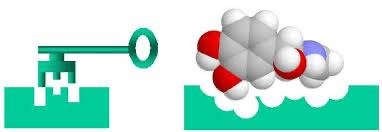
Hormones stimulate physiological changes in target cells. A cell can only respond if it has the correct receptor for the hormone.
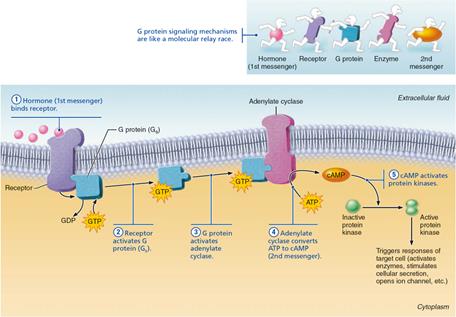
Monoamines and peptide hormones: Hydrophilic, cannot pass the plasma membrane. Their receptors are integral proteins embedded in the plasma membrane. They act as a first messenger, activating second messengers inside the cell.
Steroid hormones: Hydrophobic, can diffuse across the plasma membrane. Most enter the nucleus and bind to receptors associated with DNA, leading to changes in gene regulation and specific protein production.
Second Messenger Systems
cAMP (cyclic adenosine monophosphate): A notable second messenger activated by monoamines and peptide hormones. cAMP can activate or deactivate enzymes, causing various metabolic effects in the cell.
Steroid Hormone Mechanism
Steroid hormones diffuse through the plasma membrane, bind to intracellular receptors, and influence gene expression by binding to DNA. This process results in the synthesis of new proteins. 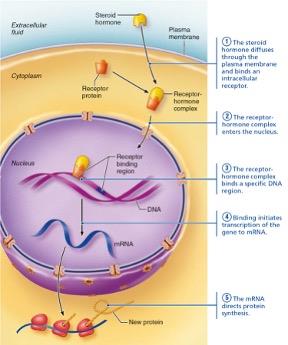
Hormone Interactions
Types of Hormone Interactions
Multiple hormones are often present in circulation, and their effects on target cells can interact in three main ways:
Permissive: One hormone enhances the target organ's response to another hormone that will be secreted later. Example: Estrogen primes the uterus to respond to progesterone.
Antagonistic: One hormone opposes the action of another.
Synergistic: Two hormones work together to produce a stronger response. Example: Testosterone and follicle-stimulating hormone together stimulate sperm production.
Hormonal Control and Homeostasis
Negative Feedback Regulation
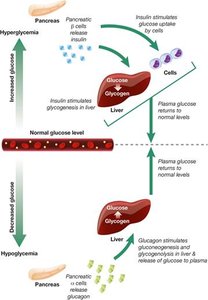
Hormones contribute to homeostasis through negative feedback loops.
The body senses a change in a controlled variable.
An endocrine gland responds by altering the rate of hormone secretion.
Target cells respond to restore homeostasis.
Once hormones have served their purpose, they are chemically degraded and excreted in bile or urine.
Summary Table: Hormone Classes
Class | Structure | Solubility | Examples |
|---|---|---|---|
Amino acid–based | Amino acid derivatives, peptides, proteins | Water-soluble (except thyroxine) | Insulin, oxytocin, thyroxine |
Steroids | Cholesterol-derived, four organic rings | Lipid-soluble | Testosterone, estradiol, cortisol |
Monoamines | Small molecules from tyrosine/tryptophan | Varies | Thyroxine, epinephrine |
Key Terms
Endocrine gland: Organ that secretes hormones directly into the bloodstream.
Hormone: Chemical messenger affecting target cells with specific receptors.
Target cell: Cell with receptors for a specific hormone.
Second messenger: Intracellular molecule activated by hormone-receptor binding (e.g., cAMP).
Negative feedback: Regulatory mechanism to maintain homeostasis.
