 뒤로
The Muscular System: Structure, Function, and Classification
스터디 가이드 - 스마트 노트
 자료에 맞춘 맞춤형 노트, 핵심 정의, 예시, 맥락을 확장해 제공합니다.
The Muscular System
Introduction to the Muscular System
The muscular system consists exclusively of skeletal muscles, which are responsible for voluntary movements and play a crucial role in locomotion, posture, and overall body function. The organization of muscle fibers and their arrangement into fascicles significantly affects the power, range, and speed of movement.
Fascicle Arrangement in Skeletal Muscles
Types of Fascicle Arrangements
Skeletal muscle fibers are grouped into bundles called fascicles. The pattern of fascicle arrangement determines the muscle's functional properties and classification. The main types are:
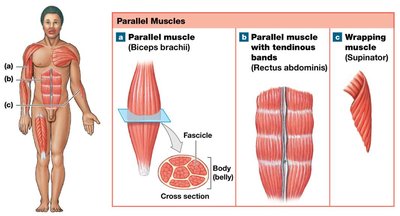
Parallel muscles: Fascicles run parallel to the long axis of the muscle. These muscles can be flat or spindle-shaped and are capable of significant shortening. Examples include rectus abdominis and biceps brachii.
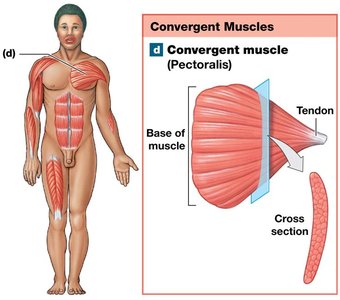
Convergent muscles: Fascicles spread over a broad area and converge on a single attachment point, such as a tendon or aponeurosis. This allows the muscle to pull in different directions. Example: pectoralis major.
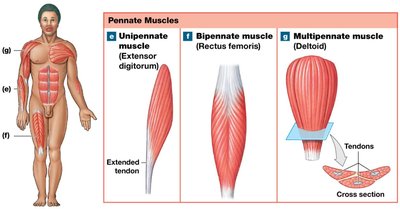
Pennate muscles: Fascicles are arranged at an angle to the tendon, increasing tension but reducing movement range. Types include unipennate (e.g., extensor digitorum), bipennate (e.g., rectus femoris), and multipennate (e.g., deltoid).
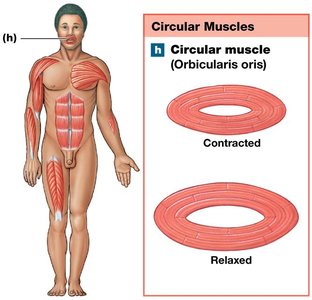
Circular muscles (sphincters): Fascicles are concentrically arranged around an opening, acting as valves in body tracts. Example: orbicularis oris of the mouth.
Levers in the Muscular System
Lever Mechanics and Muscle Efficiency
Most skeletal muscles attach to bones, forming lever systems that affect force, speed, and range of movement. A lever is a rigid structure that moves around a fixed point called the fulcrum (F). Muscles provide an applied force (AF) to overcome a load (L). Bones act as levers, joints as fulcrums, and muscles as sources of applied force.
Equation for lever mechanics:
Understanding lever classes helps explain how muscles maximize efficiency in movement.
Origins, Insertions, and Muscle Actions
Definitions and Functional Relationships
Muscles attach to bones at two main points:
Origin: The fixed (less movable) point of attachment, usually proximal.
Insertion: The more movable point of attachment, usually distal.
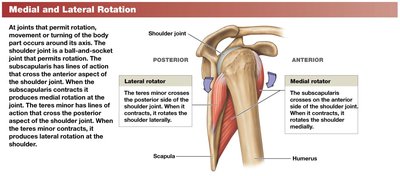
The action of a muscle is the specific movement produced by its contraction, described in terms of the effect on the bone or joint (e.g., flexion of the forearm or flexion at the elbow).
Muscle Interactions
Muscles work in groups to maximize efficiency. The four functional types are:
Agonist (prime mover): Main muscle responsible for a movement.
Antagonist: Opposes the movement of the agonist.
Synergist: Assists the agonist.
Fixator: Stabilizes the origin of the agonist by preventing movement at another joint.
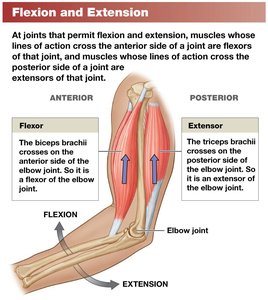
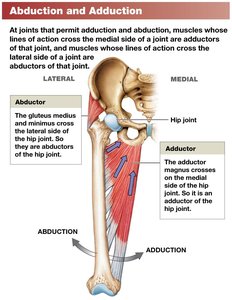
Agonists and antagonists work in pairs; when one contracts, the other stretches or undergoes eccentric contraction. Examples include flexors-extensors and abductors-adductors.
Naming Skeletal Muscles
Descriptive Information in Muscle Names
Muscle names often provide clues about their location, appearance, or function. The main categories include:
Region of the body: Examples: temporalis (temple), brachial (arm), femoris (thigh).
Position, direction, or fascicle arrangement: Examples: externus (superficial), internus (deep), transversus (across), oblique (slanting), rectus (straight).
Structural characteristics: Origin and insertion (e.g., sternocleidomastoid), number of tendons (e.g., biceps, triceps), shape (e.g., deltoid, rhomboid), size (e.g., maximus, minimus).
General actions: Examples: abductor (moves away), adductor (moves toward), flexor (bends), extensor (straightens), pronator (turns prone), supinator (turns supine).
Summary Table: Muscle Naming Conventions
Category | Example Terms | Description |
|---|---|---|
Region | Abdominal, Brachial, Femoris | Indicates location in the body |
Position/Direction | Externus, Internus, Transversus, Oblique, Rectus | Indicates depth, orientation, or arrangement |
Structural Characteristics | Biceps, Triceps, Deltoid, Rhomboid, Maximus, Minimus | Indicates number of tendons, shape, or size |
Action | Abductor, Adductor, Flexor, Extensor, Pronator, Supinator | Indicates the movement produced |
Functional Relationship with Other Body Systems
Muscular System and Exercise
The muscular system interacts with other body systems, such as the skeletal, nervous, and cardiovascular systems, to produce movement and maintain homeostasis. Exercise induces various responses in these systems, including increased muscle strength, improved cardiovascular function, and enhanced neural coordination.
Conclusion
Understanding the structure, classification, and function of skeletal muscles is essential for comprehending human movement and the role of the muscular system in health and disease. The arrangement of fascicles, lever mechanics, muscle interactions, and naming conventions provide a foundation for further study in anatomy and physiology.
