Ch. 19 The Cardiovascular System: Blood Vessels
Marieb - Human Anatomy & Physiology 11th Edition
Marieb, Hoehn11th EditionHuman Anatomy & PhysiologyISBN: 9780136874034당신이 사용하는 게 아니라요?교과서 변경
19장, 문제 9

Blood flow in the capillaries is steady despite the rhythmic pumping of the heart because of the:
a. Elasticity of the large arteries
b. Small diameter of capillaries
c. Thin walls of the veins
d. Venous valves

검증된 단계별 안내
1
Understand the physiological context: The heart pumps blood in a rhythmic, pulsatile manner, but blood flow in capillaries is steady and continuous rather than pulsatile.
Recall the role of large arteries: Large arteries, such as the aorta, have elastic walls that stretch when the heart pumps blood and then recoil to maintain pressure and smooth out the flow between heartbeats.
Analyze the options: Consider how each option might contribute to steady blood flow. The small diameter of capillaries affects resistance but not the smoothing of flow; thin walls of veins relate to permeability, not flow steadiness; venous valves prevent backflow but do not smooth arterial pulsations.
Identify the correct mechanism: The elasticity of large arteries acts as a pressure reservoir, absorbing the pulsatile output of the heart and releasing it steadily, which results in continuous capillary blood flow.
Summarize the concept: The Windkessel effect, due to the elastic recoil of large arteries, is responsible for converting the intermittent pumping of the heart into a steady flow in the capillaries.

비슷한 문제에 대한 검증된 영상 답변:

이 영상 해법은 위 문제에 도움이 된다고 튜터들이 추천한 것입니다.
영상 길이:
1m

주요 개념

질문에 올바르게 답하기 위해 반드시 이해해야 하는 핵심 개념들은 다음과 같습니다.

Elasticity of Large Arteries

Large arteries, such as the aorta, have elastic walls that stretch during the heart's pumping phase and recoil during relaxation. This elasticity smooths out the pulsatile blood flow from the heart, converting it into a more steady flow in smaller vessels like capillaries.
추천 영상:
가이드 코스
1:42
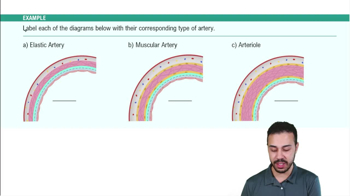
Arteries Example 1

Capillary Structure and Function

Capillaries are tiny blood vessels with thin walls that facilitate exchange of gases and nutrients. Their small diameter slows blood flow, but the steadiness of flow is mainly influenced by upstream factors rather than their size alone.
추천 영상:
가이드 코스
5:59
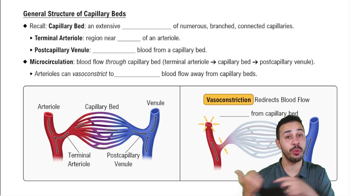
General Structure of Capillary Beds

Role of Venous Valves

Venous valves prevent backflow of blood in veins, ensuring unidirectional flow toward the heart. While important for venous return, they do not directly affect the steadiness of blood flow in capillaries.
추천 영상:
7:13
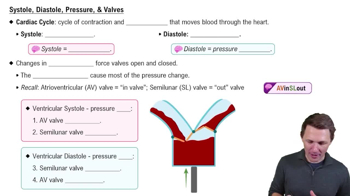
Systole, Diastole, Pressure, & Valves
관련 실천
교과서 질문

The myocardium receives its blood supply directly from the:

a. Aorta

b. Coronary arteries

c. Coronary sinus

d. Pulmonary arteries

1463
views
교과서 질문

Tracing the blood from the heart to the right hand, we find that blood leaves the heart and passes through the aorta, the right subclavian artery, the axillary and brachial arteries, and through either the radial or ulnar artery to arrive at the hand. Which artery is missing from this sequence?

a. Coronary

b. Brachiocephalic

c. Cephalic

d. Right common carotid

1420
views
교과서 질문

How is the anatomy of capillaries and capillary beds well suited to their function?

907
views
1
rank
교과서 질문

Using the letters from column B, match the artery descriptions in column A. (Note that some require more than a single choice.)

Column A 

____  (1) unpaired branch of abdominal aorta 

____  (2) second branch of aortic arch 

____ 3) branch of internal carotid 

____ (4) branch of external carotid 

____  (5) origin of femoral arteries

Column B

a. right common carotid

b. superior mesenteric

c. left common carotid

d. external iliac

e. inferior mesenteric

f. superficial temporal

g. celiac trunk

h. facial

i. ophthalmic

j. internal iliac

1387
views
교과서 질문

The structure of a capillary wall differs from that of a vein or an artery because

a. it has two tunics instead of three

b. there is less smooth muscle

c. it has a single tunic—only the tunica intima

d. none of these

1433
views
교과서 질문

The baroreceptors in the carotid sinus and aortic arch are sensitive to

a. a decrease in CO₂

b. changes in arterial pressure

c. a decrease in O₂

d. all of these

1757
views
1
rank