 뒤로
뒤로Biochemistry Study Notes: Carbohydrates – Structure, Classification, and Functions
스터디 가이드 - 스마트 노트
 자료에 맞춘 맞춤형 노트, 핵심 정의, 예시, 맥락을 확장해 제공합니다.
Biomolecules: The Chemistry of Life
Overview of Biomolecules
Biomolecules are fundamental to life, serving as the architects, engines, and messengers within cells. They include carbohydrates, lipids, proteins, and nucleic acids, each with distinct roles in biological systems.
Carbohydrates: Main energy source and structural component.
Lipids: Long-term energy storage, membrane structure, and signaling.
Proteins: Catalysts (enzymes), structural elements, and functional molecules.
Nucleic Acids: Genetic information storage and transmission.

Carbohydrates
Introduction to Carbohydrates
Carbohydrates are organic compounds composed of carbon, hydrogen, and oxygen, typically in a 1:2:1 ratio. They are the primary energy source for most organisms and play structural roles in plants and animals.
General formula:
Empirical formula:
Types: Sugars (simple carbohydrates) and starches (complex carbohydrates)

Chemical Nature of Carbohydrates
Chemically, carbohydrates are polyhydroxy aldehydes or ketones, or substances that yield these compounds upon hydrolysis. The functional group determines whether a carbohydrate is an aldose (aldehyde group) or a ketose (ketone group).
Aldose: Contains an aldehyde group (R-CHO)
Ketose: Contains a ketone group (RC(=O)R')
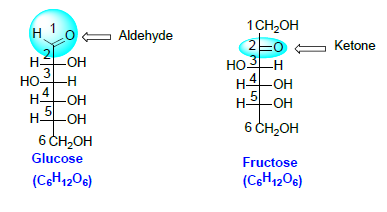 c
c
Classification of Carbohydrates
Types of Carbohydrates
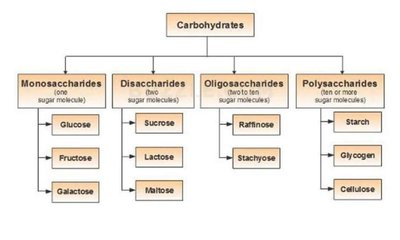
Carbohydrates are classified based on their complexity and the number of sugar units:
Monosaccharides: Single sugar units (e.g., glucose, fructose, galactose)
Disaccharides: Two sugar units (e.g., sucrose, lactose, maltose)
Oligosaccharides: 2–10 sugar units (e.g., raffinose, stachyose)
Polysaccharides: More than ten sugar units (e.g., starch, glycogen, cellulose)
Monosaccharides
Monosaccharides are the simplest carbohydrates and cannot be hydrolyzed into smaller units. They are colorless, crystalline solids, soluble in water, and serve as building blocks for more complex carbohydrates.
General formula:
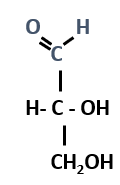
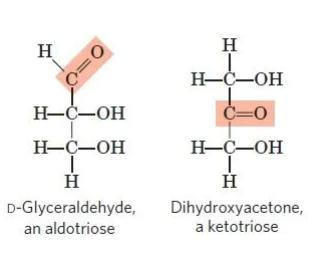
Smallest monosaccharides: Dihydroxyacetone and D-/L-glyceraldehyde (n=3)
Functional groups: Aldoses (aldehyde group), Ketoses (ketone group)
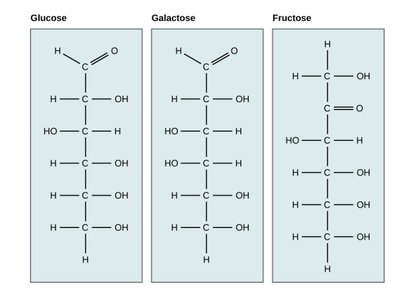
Examples: Glucose, fructose, ribose, galactose
Structure of Monosaccharides
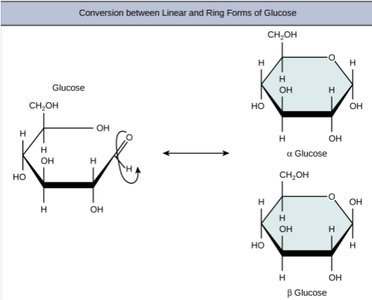
Monosaccharides exist as linear chains or ring-shaped molecules. In ring forms, the hydroxyl group on the anomeric carbon (carbon-1) can be in the alpha (α) or beta (β) position.
Alpha (α): OH group below the plane
Beta (β): OH group above the plane
Functions of Monosaccharides
Glucose: Main energy source in humans and plants
Galactose: Component of lactose in milk
Fructose: Found in fruits and honey
Ribose: Structural element of nucleic acids
Mannose: Component of glycoproteins
Classification Based on Carbon Number and Functional Group
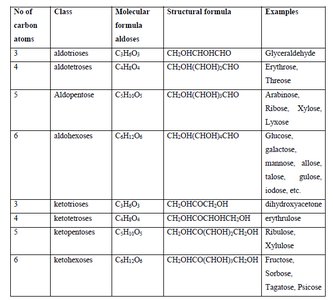
Monosaccharides are further classified by the number of carbon atoms and the presence of aldehyde or ketone groups. The following table summarizes this classification:
No of carbon atoms | Class | Molecular formula | Structural formula | Examples |
|---|---|---|---|---|
3 | aldotriose | C3H6O3 | CH2OHCHOHCHO | Glyceraldehyde |
3 | ketotriose | C3H6O3 | CH2OHCOCH2OH | Dihydroxyacetone |
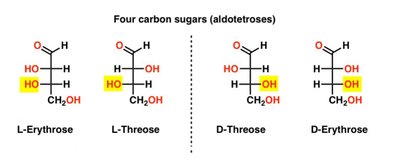
4 | aldotetrose | C4H8O4 | CH2OHCHOHCHOHCHO | Erythrose, Threose |
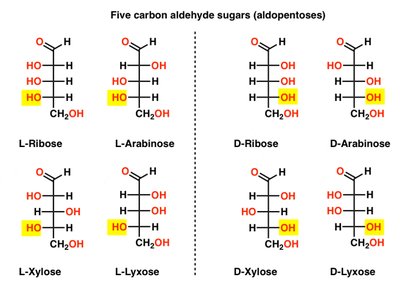
5 | aldopentose | C5H10O5 | CH2OHCHOHCHOHCHOHCHO | Ribose, Arabinose, Xylose, Lyxose |
5 | ketopentose | C5H10O5 | CH2OHCOCH2OHCHOHCHO | Ribulose, Xylulose |
6 | aldohexose | C6H12O6 | CH2OHCHOHCHOHCHOHCHOHCHO | Glucose, galactose, mannose |
6 | ketohexose | C6H12O6 | CH2OHCOCH2OHCHOHCHOHCHO | Fructose, Sorbose, Tagatose, Psicose |
Disaccharides
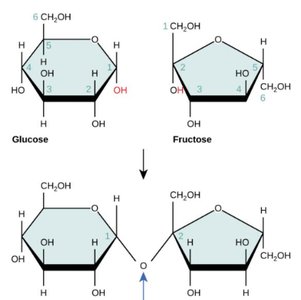
Disaccharides are composed of two monosaccharide units joined by a glycosidic bond, formed through a dehydration reaction. Their general formula is .
Examples: Sucrose, lactose, maltose, trehalose, cellobiose, gentiobiose
Glycosidic bond: Covalent bond formed between two sugar molecules
Classification of Disaccharides
Disaccharides are classified as reducing or non-reducing sugars based on their ability to undergo oxidation-reduction reactions.
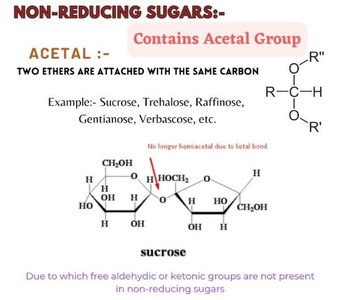
Reducing sugars: Have a free hemiacetal unit (e.g., maltose, cellobiose)
Non-reducing sugars: Bonded through an acetal linkage (e.g., sucrose, trehalose)
Functions of Disaccharides
Sucrose: Major source of carbon and energy in plants
Lactose: Major energy source in animals
Maltose: Intermediate in starch and glycogen digestion
Trehalose: Essential energy source for insects
Cellobiose: Important in carbohydrate metabolism
Gentiobiose: Constituent of plant glycosides
Disaccharide | Monomer Units |
|---|---|
Sucrose | Glucose and Fructose |
Lactose | Galactose and Glucose |
Maltose | Glucose and Glucose (alpha-1,4 linkage) |
Trehalose | Glucose and Glucose (alpha-1,1, alpha-1 linkage) |
Cellobiose | Glucose and Glucose (beta-1,4 linkage) |
Gentiobiose | Glucose and Glucose (beta-1,6 linkage) |
Polysaccharides
Polysaccharides are complex carbohydrates composed of many monosaccharide units. Their general formula is , where n is a large number.
Examples: Starch, glycogen, cellulose, pectin
Functions: Energy storage (starch, glycogen), structural support (cellulose), gelling agent (pectin)

Nomenclature of Carbohydrates
Systematic Naming
Carbohydrates are named based on chain length and functional group, with the suffix "-ose". Prefixes such as "tri-", "penta-", or "hexa-" indicate the number of carbon atoms. Stereochemistry is denoted by D or L, depending on the orientation of the hydroxyl group on the highest-numbered chiral center.
Aldoses: Contain an aldehyde group
Ketoses: Contain a keto group
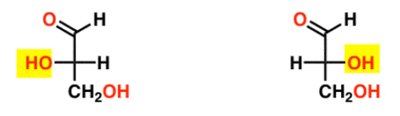
D and L designations: D-sugars have the –OH on the right, L-sugars on the left in Fischer projection
Cyclic Structures and Anomers
Monosaccharides often form ring structures. Furanose refers to a 5-membered ring, and pyranose to a 6-membered ring. The orientation of the OH group at the anomeric carbon gives rise to α-anomer (OH down) and β-anomer (OH up).
Disaccharides and Polysaccharides: Named according to the monosaccharide units and type of glycosidic linkage (e.g., maltose: α-1,4 linkage; lactose: β-1,4 linkage; sucrose: α-1,2 linkage)
Summary Table: Carbohydrate Classification
Type | Examples | Key Features |
|---|---|---|
Monosaccharides | Glucose, Fructose, Galactose | Single sugar unit, soluble, crystalline |
Disaccharides | Sucrose, Lactose, Maltose | Two sugar units, glycosidic bond |
Oligosaccharides | Raffinose, Stachyose | 2–10 sugar units |
Polysaccharides | Starch, Glycogen, Cellulose | Many sugar units, structural/energy storage |
Additional info:
Carbohydrates are essential for energy metabolism, cellular structure, and signaling.
Understanding carbohydrate structure and function is foundational for biochemistry, molecular biology, and physiology.
