 뒤로
뒤로Carbohydrates and Lipids: Structure, Classification, and Biological Roles
스터디 가이드 - 스마트 노트
 자료에 맞춘 맞춤형 노트, 핵심 정의, 예시, 맥락을 확장해 제공합니다.
Carbohydrates
Classification of Carbohydrates
Carbohydrates are essential biomolecules that serve as energy sources and structural components in living organisms. They are classified based on the number of monosaccharide units they contain:
Monosaccharides: Simple sugars and the basic monomeric units of carbohydrates (e.g., glucose).
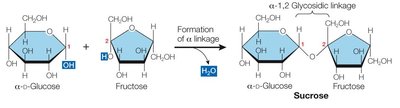
Disaccharides: Composed of two monosaccharides linked by covalent bonds (e.g., sucrose).
Oligosaccharides: Consist of 3–20 monosaccharide units.
Polysaccharides: Large polymers made up of hundreds or thousands of monosaccharides (e.g., starch, glycogen, cellulose).
Monosaccharide Structure and Isomerism
Monosaccharides contain carbon (C), hydrogen (H), and oxygen (O), typically in the ratio (CH2O)n. They differ in the length of their carbon skeletons and can be classified by the number of carbons:
Trioses: 3 carbons (e.g., glyceraldehyde)
Pentoses: 5 carbons (e.g., ribose)
Hexoses: 6 carbons (e.g., glucose, fructose)
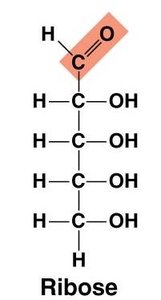
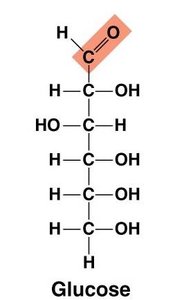
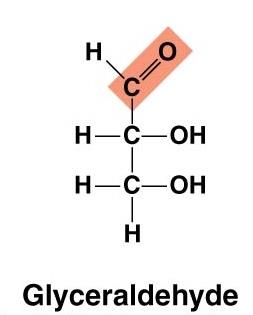
Monosaccharides can exist as structural isomers, meaning they have the same molecular formula but different arrangements of atoms. For example, glucose and fructose are both hexoses but differ in the position of their carbonyl group.

Ring Formation and Isomerism in Monosaccharides
In aqueous solutions, monosaccharides such as glucose predominantly exist in a ring form, which is more stable than the straight-chain form. The ring structure forms when the carbonyl group reacts with a hydroxyl group within the same molecule.

Depending on the orientation of the ring closure, α (alpha) and β (beta) anomers are formed.
Biological Roles of Monosaccharides
Monosaccharides have distinct structures and biological roles, serving as energy sources, building blocks for nucleic acids, and precursors for other biomolecules.
Disaccharides: Structure and Linkages
Disaccharides are formed by joining two monosaccharide units via a glycosidic bond, which can be in the α or β configuration. Common examples include sucrose (glucose + fructose) and maltose (glucose + glucose).
Polysaccharides: Structure and Function
Polysaccharides are polymers of glucose that differ in their branching and packing:
Starch: Energy storage in plants; moderately branched.
Glycogen: Energy storage in animals; highly branched.
Cellulose: Structural component in plant cell walls; unbranched and forms fibrils.
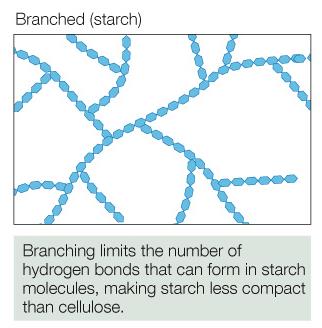
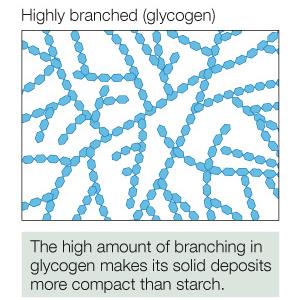
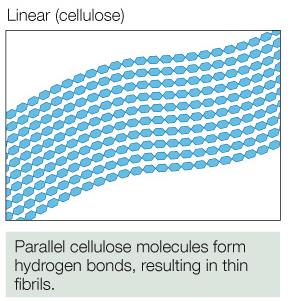
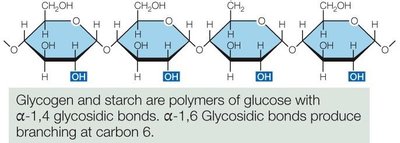
Starch and glycogen are linked by α-glycosidic bonds, while cellulose is linked by β-glycosidic bonds, making it chemically stable and suitable for structural roles.

Comparison of Major Glucose Polymers
Polymer | Branching | Bond Type | Function |
|---|---|---|---|
Starch | Branched | α-1,4 and α-1,6 | Energy storage (plants) |
Glycogen | Highly branched | α-1,4 and α-1,6 | Energy storage (animals) |
Cellulose | Unbranched | β-1,4 | Structural (plants) |
Chemical Modification of Carbohydrates
Carbohydrates can be chemically modified by the addition of functional groups, resulting in derivatives such as sugar phosphates, amino sugars, and chitin. These modifications expand the functional diversity of carbohydrates in biological systems.
Lipids
Classification and Functions of Lipids
Lipids are a diverse group of hydrophobic molecules with various biological functions:
Triglycerides: Fats and oils used for energy storage.
Steroids: Hormones and vitamins with a characteristic four-ring structure.
Phospholipids: Major components of cell membranes.
Carotenoids and Chlorophylls: Involved in light energy capture in plants.
Waxes: Prevent water loss by slowing evaporation.
Unlike other biomolecules, lipids are not polymers and do not share a common structure.
Fatty Acids: Structure and Types
Fatty acids are long hydrocarbon chains with a terminal carboxyl group. They are major components of triglycerides and phospholipids.
Saturated fatty acids: Only single bonds between carbons; straight chains; higher melting points.
Unsaturated fatty acids: One or more double bonds; kinks in the chain; lower melting points and increased fluidity.
Trans double bonds keep the hydrocarbon chain straight, so trans fatty acids behave like saturated fats.
Triglycerides and Phospholipids
Triglycerides are formed when glycerol bonds to three fatty acids via ester linkages. Phospholipids are amphipathic, containing both hydrophilic (polar) heads and hydrophobic (nonpolar) tails. In aqueous solutions, phospholipids spontaneously form bilayers due to the hydrophobic effect, which is fundamental to biological membrane structure.
Waxes and Steroids
Waxes are formed when a long-chain fatty acid bonds to a long-chain alcohol via an ester linkage. Steroids are a family of lipids characterized by a bulky, four fused ring structure, with cholesterol being a key example.
Summary Table: Lipid Types and Functions
Lipid Type | Structure | Main Function |
|---|---|---|
Triglyceride | Glycerol + 3 fatty acids | Energy storage |
Phospholipid | Glycerol + 2 fatty acids + phosphate group | Membrane structure |
Steroid | Four fused rings | Hormones, membrane fluidity |
Wax | Fatty acid + alcohol | Waterproofing |
Additional info: The melting point and fluidity of lipids are influenced by chain length and degree of saturation. As chain length increases, fluidity decreases and melting point increases. Unsaturated fatty acids (with cis double bonds) increase membrane fluidity and lower melting points, which is crucial for cell membrane dynamics.
