 뒤로
뒤로Carbohydrates: Structure, Classification, and Biological Importance
스터디 가이드 - 스마트 노트
 자료에 맞춘 맞춤형 노트, 핵심 정의, 예시, 맥락을 확장해 제공합니다.
Carbohydrates
Introduction to Carbohydrates
Carbohydrates are one of the four major classes of biomolecules essential for life. They serve as the primary source of energy, structural components, and participate in cellular recognition and signaling processes.
Definition: Organic compounds composed of carbon, hydrogen, and oxygen, typically with the empirical formula Cn(H2O)n.
Main Functions: Energy storage (e.g., glucose, starch), structural support (e.g., cellulose), and cell signaling (e.g., glycoproteins).
General Formula: Many simple carbohydrates follow the formula (CH2O)n, but not all compounds with this formula are carbohydrates.

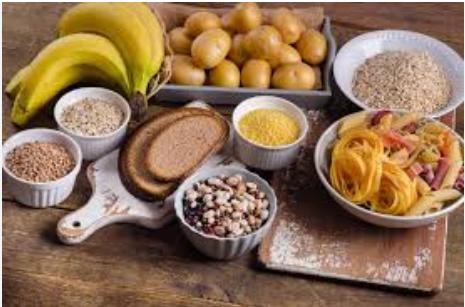
Classification of Carbohydrates
Carbohydrates are classified based on the number of sugar units and the type of functional group present.
Monosaccharides: Single sugar units (e.g., glucose, fructose, galactose).
Disaccharides: Two monosaccharide units joined by a glycosidic bond (e.g., sucrose, lactose, maltose).
Oligosaccharides: 3–10 monosaccharide units (e.g., raffinose, stachyose).
Polysaccharides: More than 10 monosaccharide units (e.g., starch, glycogen, cellulose).
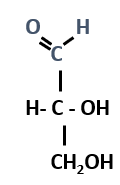
Monosaccharides
Structure and Properties
Monosaccharides are the simplest carbohydrates and serve as the building blocks for more complex carbohydrates.
General Formula: CnH2nOn
Functional Groups: Aldehyde (aldose) or ketone (ketose)
Physical Properties: Colorless, crystalline solids, soluble in water, insoluble in nonpolar solvents.
Examples: Glucose (aldohexose), fructose (ketohexose), ribose (aldopentose).
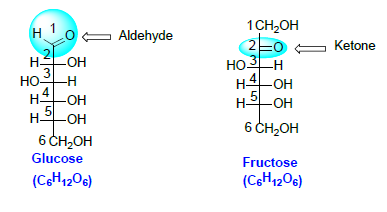
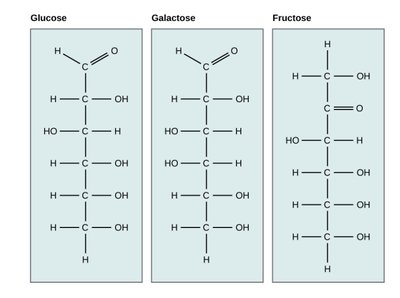
Chemical Structure and Isomerism
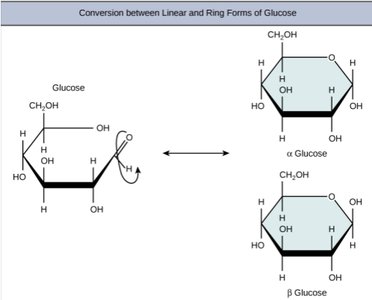
Monosaccharides can exist in linear or cyclic forms. The cyclic forms are more common in biological systems.
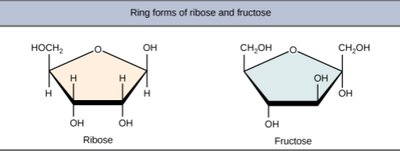
Ring Formation: Monosaccharides with five or more carbons form ring structures (furanose: 5-membered, pyranose: 6-membered).
Anomers: The orientation of the hydroxyl group at the anomeric carbon creates α- and β-anomers.
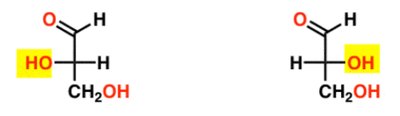
Stereoisomerism: D- and L- forms are based on the configuration of the chiral carbon farthest from the carbonyl group.
Classification by Carbon Number and Functional Group
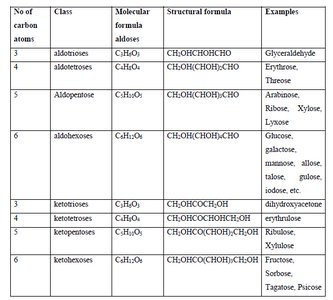
Monosaccharides are further classified by the number of carbon atoms and the type of carbonyl group present.
No of carbon atoms | Class | Molecular formula | Structural formula | Examples |
|---|---|---|---|---|
3 | aldotrioses | C3H6O3 | CH2OH(CHOH)CHO | Glyceraldehyde |
3 | ketotrioses | C3H6O3 | CH2OHCOCH2OH | Dihydroxyacetone |
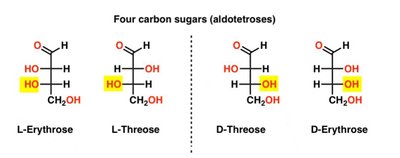
4 | aldotetroses | C4H8O4 | CH2OH(CHOH)2CHO | Erythrose, Threose |
5 | aldopentoses | C5H10O5 | CH2OH(CHOH)3CHO | Ribose, Arabinose |
6 | aldohexoses | C6H12O6 | CH2OH(CHOH)4CHO | Glucose, Galactose |
6 | ketohexoses | C6H12O6 | CH2OHCO(CHOH)3CH2OH | Fructose |
Functions of Monosaccharides
Glucose: Primary energy source for cells.
Galactose: Component of lactose in milk.
Fructose: Found in fruits and honey, contributes to sweetness.
Ribose: Structural component of RNA and some coenzymes.
Mannose: Important in glycoprotein structure and function.
Disaccharides
Structure and Formation
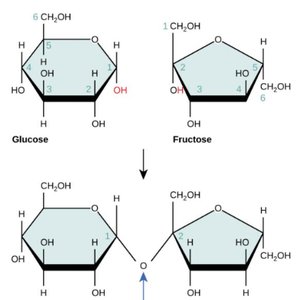
Disaccharides are composed of two monosaccharide units joined by a glycosidic bond, formed via a dehydration (condensation) reaction.
General Formula: C12H22O11
Glycosidic Bond: Covalent bond formed between the anomeric carbon of one sugar and a hydroxyl group of another.
Examples: Sucrose (glucose + fructose), lactose (galactose + glucose), maltose (glucose + glucose).
Reducing and Non-Reducing Sugars
Disaccharides are classified based on their ability to act as reducing agents.
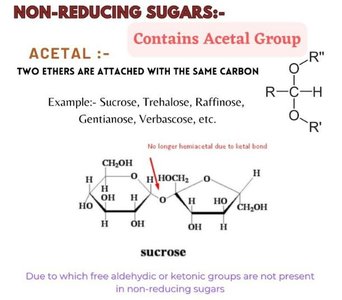
Reducing Sugars: Contain a free hemiacetal group (e.g., maltose, lactose).
Non-Reducing Sugars: Both anomeric carbons are involved in the glycosidic bond, so no free hemiacetal (e.g., sucrose, trehalose).
Functions of Disaccharides
Sucrose: Main transport sugar in plants, product of photosynthesis.
Lactose: Major sugar in milk, energy source for mammals.
Maltose: Intermediate in starch and glycogen digestion.
Trehalose: Energy source for insects.
Cellobiose: Intermediate in cellulose metabolism.
Disaccharide | Monomer Units |
|---|---|
Sucrose | Glucose and Fructose |
Lactose | Galactose and Glucose |
Maltose | Glucose and Glucose (alpha-1,4 linkage) |
Trehalose | Glucose and Glucose (alpha-1,1, alpha-1 linkage) |
Cellobiose | Glucose and Glucose (beta-1,4 linkage) |
Gentiobiose | Glucose and Glucose (beta-1,6 linkage) |
Polysaccharides
Structure and Types
Polysaccharides are large, complex carbohydrates composed of many monosaccharide units linked by glycosidic bonds. They serve as energy storage or structural components.
General Formula: (C6H10O5)n, where n is a large number.
Examples: Starch (plants), glycogen (animals), cellulose (plants), pectin (plants).
Functions: Energy storage (starch, glycogen), structural support (cellulose), gelling agent (pectin).

Nomenclature and Stereochemistry
Naming Conventions
Carbohydrates are named based on the number of carbon atoms and the type of functional group present. The suffix "-ose" is common to most sugars.
Prefixes: tri- (3C), tetra- (4C), penta- (5C), hexa- (6C), etc.
Aldoses: Contain an aldehyde group.
Ketoses: Contain a ketone group.
Stereochemistry: D- and L- forms are determined by the orientation of the hydroxyl group on the highest-numbered chiral center in the Fischer projection.
Cyclic Structures and Anomers
Monosaccharides with five or more carbons often form cyclic structures in solution. The orientation of the hydroxyl group at the anomeric carbon creates α- and β-anomers.
Furanose: 5-membered ring structure.
Pyranose: 6-membered ring structure.
Anomers: α-anomer (OH down), β-anomer (OH up) in Haworth projection.
Summary Table: Carbohydrate Types and Examples
Type | Examples |
|---|---|
Monosaccharides | Glucose, Fructose, Galactose |
Disaccharides | Sucrose, Lactose, Maltose |
Oligosaccharides | Raffinose, Stachyose |
Polysaccharides | Starch, Glycogen, Cellulose |
Additional info: The notes above are expanded with academic context to ensure completeness and clarity for biochemistry students. All images included are directly relevant to the explanation of the adjacent paragraph and reinforce the educational content.
