 뒤로
뒤로Cell Signaling and Biosignaling Pathways in Biochemistry
스터디 가이드 - 스마트 노트
 자료에 맞춘 맞춤형 노트, 핵심 정의, 예시, 맥락을 확장해 제공합니다.
Cell Signaling: General Principles
Overview of Cell Signaling
Cell signaling is a fundamental process by which cells communicate with each other to coordinate various physiological responses. The signaling cell releases a signaling molecule that binds to a receptor on the target cell, initiating a cascade of intracellular events. - Signaling molecule: A chemical messenger (e.g., hormone, neurotransmitter) released by a cell. - Receptor: A protein on the target cell that specifically binds the signaling molecule. - Target cell: The cell that responds to the signaling molecule.
Types of Signaling Based on Distance
There are four main types of cell signaling, classified by the distance over which the signal acts:
Endocrine: Signaling molecules (hormones) travel through the bloodstream to distant target cells.
Paracrine: Local mediators act on nearby cells.
Neuronal: Neurotransmitters are released at synapses to target cells.
Contact-Dependent: Membrane-bound signals require direct cell-to-cell contact.
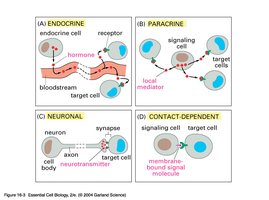
Determinants of Target Cell Response
The response of a target cell depends on:
The signals present in the extracellular environment
The receptors synthesized by the cell
The intracellular relay systems (signaling cascades)
The intracellular targets (proteins) available
Additional info: Not all cells express all possible receptors or relay systems; specificity is determined by cell type and developmental stage.
Signal Transduction Mechanisms
General Signal Transduction Pathway
Signal transduction involves the conversion of an extracellular signal into a functional response inside the cell. The pathway typically includes:
Receptor activation
Intracellular relay systems (proteins)
Second messengers
Amplification steps
Modulation and cross-talk with other networks
Multiple targets and effects
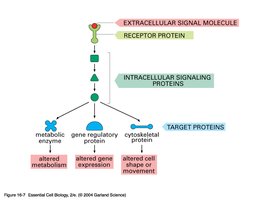
Types of Receptors
Cells utilize various receptor types to detect and respond to signals:
Ion channel-linked receptors
G protein-coupled receptors (GPCRs)
Enzyme-linked receptors (e.g., tyrosine kinases)
Cell adhesion molecules
Nuclear receptors
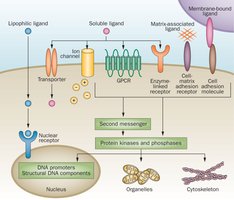
Enzyme-Linked Receptors: Tyrosine Kinases
Mechanism of Tyrosine Kinase Receptor Activation
Enzyme-linked receptors, such as tyrosine kinases, are activated by ligand binding, which triggers autophosphorylation of tyrosine residues. This creates docking sites for downstream signaling proteins. - Ligand binding: Activates the receptor's kinase domain. - Autophosphorylation: Addition of phosphate groups to tyrosine residues. - Adapter proteins: Bridge the receptor to downstream effectors like Ras. - Ras activation: Initiates a kinase cascade (Raf → MEK → ERK). 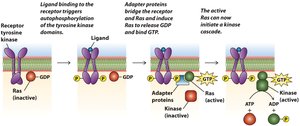
Growth Factor/Insulin Signaling Pathway
PI3K/Akt Pathway
Growth factors and insulin activate the PI3K/Akt pathway, which regulates cell survival, metabolism, and growth. - Insulin receptor: Phosphorylated at tyrosine residues upon ligand binding. - PI3K: Converts PIP2 to PIP3. - PIP3: Activates Akt kinases. - PTEN: Lipid phosphatase that converts PIP3 back to PIP2, inhibiting the pathway. 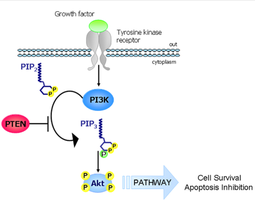 Example: Dysregulation of the PI3K/Akt pathway is implicated in cancer.
Lipid-Derived Signal Molecules: Eicosanoids
Arachidonate and Eicosanoid Synthesis
Eicosanoids are signaling molecules derived from membrane phospholipids or dietary sources. - Arachidonate: Precursor for prostaglandins and thromboxanes. - COX (cyclooxygenase): Enzyme catalyzing the first step in eicosanoid synthesis. - Thromboxanes: Synthesized in platelets; promote vasoconstriction and aggregation. - NSAIDs (e.g., aspirin): Inhibit COX enzymes, reducing inflammation. 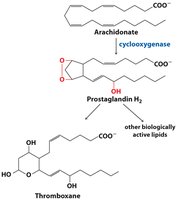
G Protein-Coupled Receptors (GPCRs)
GPCR Structure and Function
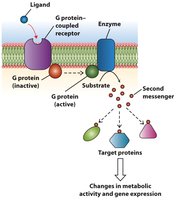
GPCRs are a large family of membrane receptors that mediate responses to hormones, neurotransmitters, and other signals. - Ligand binding: Induces conformational change in the receptor. - G protein activation: GDP is exchanged for GTP on the α subunit. - Effector regulation: G protein regulates enzymes or ion channels. 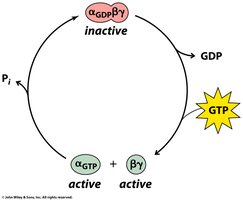
Second Messengers
Inositol Triphosphate (IP3) and Diacylglycerol (DAG)
Second messengers amplify and propagate signals within the cell. - Phospholipase C: Cleaves PIP2 to generate IP3 and DAG. - IP3: Mobilizes Ca2+ from intracellular stores. - DAG: Activates protein kinase C. 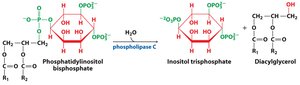
Cyclic AMP (cAMP)
cAMP is a second messenger produced from ATP by adenylate cyclase. - cAMP: Activates protein kinase A (PKA), regulating metabolism and gene expression. 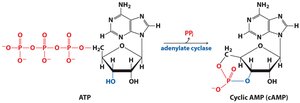
Ras and MAPK Signaling Branch
Ras–MAPK Cascade
The Ras–MAPK pathway is a key signaling branch downstream of many receptors. - Ras: GTPase acting as a molecular switch. - Raf, MEK, ERK: Protein kinases in the cascade. - Function: Regulates cell proliferation, differentiation, and survival. 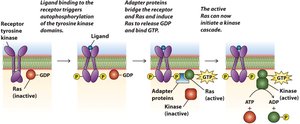
Signal Amplification and Termination
Amplification in Enzyme Cascades
Enzyme cascades amplify signals through repeated catalytic steps. - Example: 10 relay enzymes × 10 kinases each × 10 targets each = 1,000 modified targets. Additional info: Amplification ensures a small signal can produce a large cellular response.
Signal Termination and Desensitization
Cells terminate signals by:
Reducing receptor activity
Degrading relay proteins or messengers
Dephosphorylating target proteins
Calcium Signaling and NFAT Activation
NFAT Activation in T Cells
In T cells, NFAT is activated by increased cytosolic Ca2+ and calcineurin-mediated dephosphorylation. - Ca2+–calmodulin: Activates calcineurin. - Calcineurin: Removes phosphate from NFAT, exposing nuclear localization signal. - NFAT: Enters nucleus and promotes gene expression. Additional info: Chemical modification alters protein interactions and localization, changing cellular function.
Summary Table: Types of Cell Signaling
Type | Signal Molecule | Distance | Example |
|---|---|---|---|
Endocrine | Hormone | Distant (via bloodstream) | Insulin |
Paracrine | Local mediator | Nearby cells | Histamine |
Neuronal | Neurotransmitter | Synaptic | Acetylcholine |
Contact-Dependent | Membrane-bound | Direct contact | Delta-Notch |
Key Concepts and Applications
Cell signaling is essential for regulating metabolism, gene expression, and cell behavior.
Receptor diversity allows cells to respond specifically to different signals.
Second messengers amplify and diversify cellular responses.
Signal termination is crucial for preventing overstimulation and maintaining homeostasis.
