 뒤로
뒤로Chemical Bonds and Interactions in Biochemistry
스터디 가이드 - 스마트 노트
 자료에 맞춘 맞춤형 노트, 핵심 정의, 예시, 맥락을 확장해 제공합니다.
Chemical Bonds and Interactions
Introduction
Chemical bonds and interactions are fundamental to the structure and function of biological molecules. Understanding these forces is essential for studying biochemistry, as they determine the properties and behaviors of molecules in living systems.
Covalent Bonds
Definition and Properties
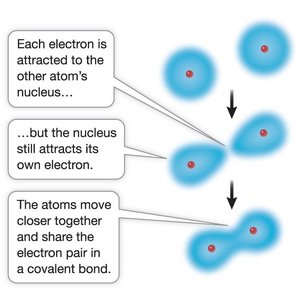
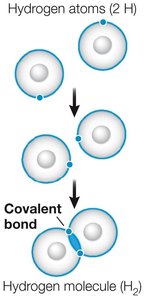
Covalent bonds are formed when two atoms share one or more pairs of valence electrons, resulting in a stable molecule.
These bonds are strong and stable, requiring a significant amount of energy to break.
The octet rule states that atoms tend to form stable molecules by filling their outermost electron shells.
Electronegativity and Bond Polarity
Electronegativity is a measure of how strongly an atom attracts shared electrons in a chemical bond.
It depends on the number of protons in the nucleus and the distance between the nucleus and valence electrons.
The difference in electronegativity between two atoms determines the bond type:
Bond Type | Electronegativity Difference (χ1 - χ2) | Electron Distribution |
|---|---|---|
Nonpolar covalent | χ1 - χ2 ≤ 0.4 | Electrons shared equally |
Polar covalent | 0.4 < χ1 - χ2 ≤ 1.8 | Electrons shared unequally |
Ionic | χ1 - χ2 > 1.8 | Electrons transferred |

Carbon: The Versatile Element
Carbon is exceptionally versatile because each atom can form four covalent bonds due to its four unpaired valence electrons.
This allows carbon to form molecules of varying size, shape, and composition, including chains, branches, and rings.

Ionic Bonds
Definition and Properties
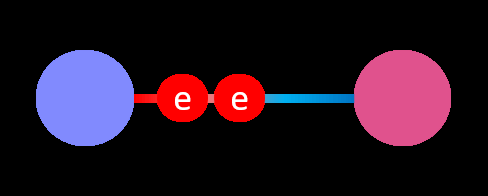
Ionic bonds form through the electrostatic attraction between positively and negatively charged ions.
These bonds are strong in solid crystals (such as salts) but weaken when the ions dissociate in water.

Ionic Compounds in Water
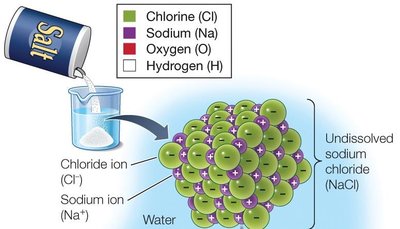
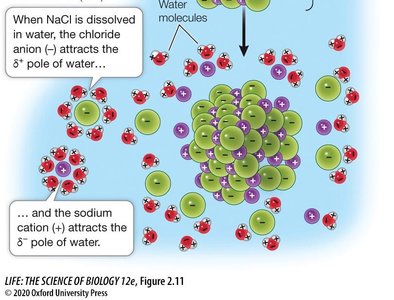
When ionic compounds like NaCl dissolve in water, the ions dissociate and interact with the polar water molecules.
The chloride ion (Cl-) attracts the δ+ pole of water, while the sodium ion (Na+) attracts the δ- pole.

Hydrogen Bonds and Water
Hydrogen Bonds
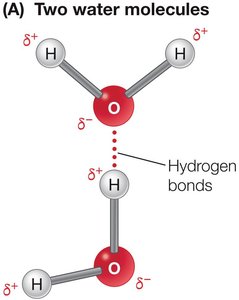
A hydrogen bond is a weak attraction between a partially positive hydrogen atom and a partially negative oxygen or nitrogen atom.
Hydrogen bonds are crucial for the structure of water, proteins, and nucleic acids.

Properties of Water
Water is a polar molecule due to its small size, bent shape, and polar covalent bonds.
Each water molecule can form up to four hydrogen bonds, giving water unique properties essential for life:
Excellent solvent for polar compounds
High surface tension (cohesion)
High heat capacity
High heat of vaporization
Liquid water is denser than ice, so ice floats

Hydrophobic Effect
Definition and Biological Importance
Hydrophilic molecules (polar or charged) interact well with water, while hydrophobic molecules (nonpolar) avoid water.
The hydrophobic effect drives nonpolar molecules to cluster together in water, minimizing their contact with water and stabilizing biological structures such as membranes and protein cores.
van der Waals Forces
Definition and Role
van der Waals interactions arise from temporary dipoles between nearby, electrically neutral molecules.
While individually weak and transient, their cumulative effect across large nonpolar molecules can create significant attractive forces, contributing to molecular stability.
Summary Table: Types of Chemical Bonds and Interactions
Type | Strength | Key Features | Biological Importance |
|---|---|---|---|
Covalent | Strong | Electron sharing | Backbone of biomolecules |
Ionic | Strong (in crystal), weak (in water) | Electron transfer, ion attraction | Salt bridges, signaling |
Hydrogen bond | Weak (individually) | H atom between O/N atoms | Protein/nucleic acid structure |
van der Waals | Very weak (individually) | Temporary dipoles | Stabilizes macromolecules |
Hydrophobic effect | Not a bond, but a force | Exclusion of nonpolar molecules from water | Membrane/protein folding |
