 뒤로
Chemical Logic of Metabolism: Mechanisms, Regulation, and Bioenergetics
스터디 가이드 - 스마트 노트
 자료에 맞춘 맞춤형 노트, 핵심 정의, 예시, 맥락을 확장해 제공합니다.
Chemical Logic of Metabolism
Overview of Metabolism
Metabolism encompasses the synthesis and degradation of small molecules within cells, facilitating energy generation and storage. It is divided into anabolic (building up) and catabolic (breaking down) reactions. Central metabolic pathways, such as glycolysis, the citric acid cycle, and oxidative phosphorylation, are highly conserved and account for the majority of mass and energy transfer in cells. Organisms are classified as autotrophs (capable of synthesizing all organic metabolites from CO2 and inorganic molecules) or heterotrophs (requiring reduced carbon compounds).
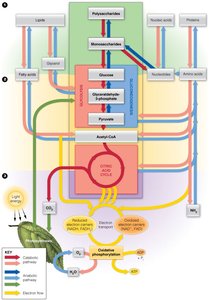
Central Pathways of Energy Metabolism
Central pathways include glycolysis, citric acid cycle, electron transport/oxidative phosphorylation, fatty acid oxidation, gluconeogenesis, fatty acid synthesis, and photosynthesis. In aerobic organisms, all pathways funnel into the citric acid cycle, which is the hub for energy production and biosynthetic precursors.
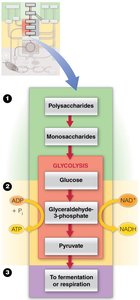
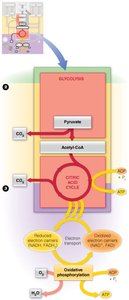
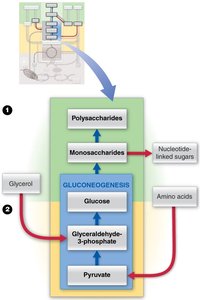
Separate Pathways for Biosynthesis and Degradation
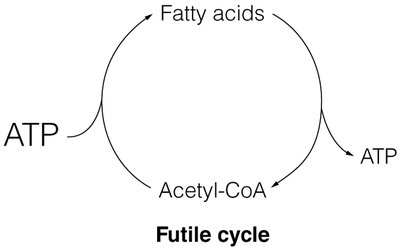
Metabolic pathways for biosynthesis and degradation are distinct and regulated to ensure directionality and prevent futile cycles. Reciprocal regulation, also known as substrate cycling, ensures that opposing pathways (e.g., glycolysis and gluconeogenesis) do not operate simultaneously within the same compartment.
Chemical Mechanisms in Metabolism
Electrophiles and Nucleophiles
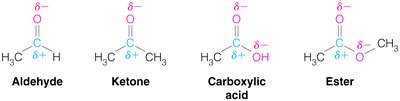
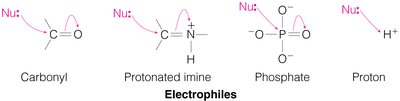
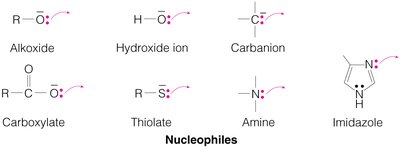
Metabolic reactions often involve electrophiles (electron-poor, positively polarized atoms) and nucleophiles (electron-rich, negatively polarized atoms). Carbonyl carbons are common electrophiles, while nucleophiles include alkoxides, hydroxide ions, carbanions, carboxylates, thiolates, amines, and imidazole.
Nucleophilic Substitution Reactions
Nucleophilic substitution reactions are classified as SN1 (unimolecular, involving a carbocation intermediate) or SN2 (bimolecular, involving a pentavalent transition state). Both require a stable leaving group. These mechanisms are fundamental to many biological transformations.
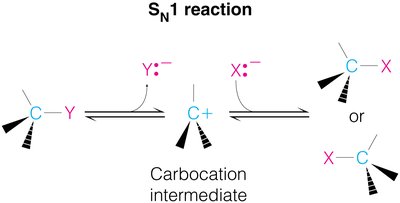
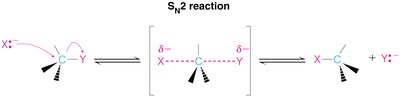
Example: R-Br + OH- → R-OH + Br- (OH- is the nucleophile, Br- is the leaving group)
Acyl Substitution
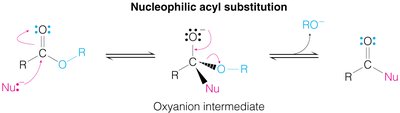
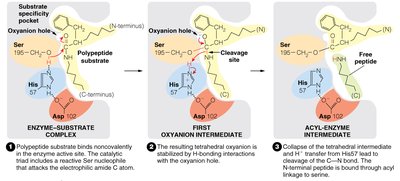
Acyl substitution involves a tetrahedral intermediate and is central to many enzymatic reactions, such as chymotrypsin catalysis. The red parts in the diagram represent acyl groups, and R is an alkyl group.
Carbonyl Condensation Reactions
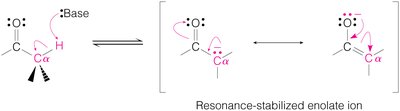
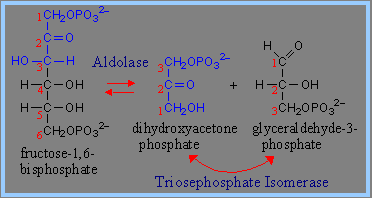
Carbonyl condensation reactions form C–C bonds and are classified as aldol condensation (if the carbonyl is an aldehyde or ketone) or Claisen condensation (if it is an ester). Formation of the enolate ion enables nucleophilic attack on a carbonyl carbon, involving both nucleophilic addition and alpha-substitution.
Elimination Reactions
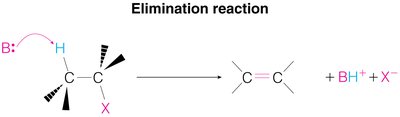
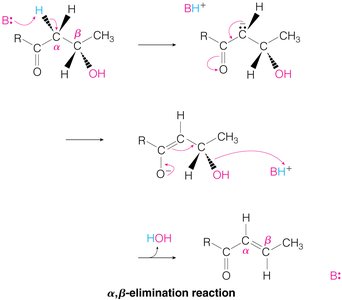
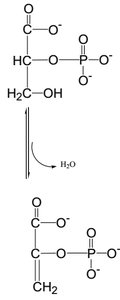
Elimination reactions, such as dehydration of β-hydroxycarbonyls, result in the removal of a slightly acidic hydrogen due to its proximity to a carbonyl oxygen. These reactions are important in metabolic pathways for generating double bonds.
Oxidation-Reduction Reactions
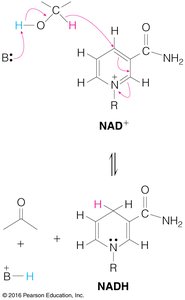
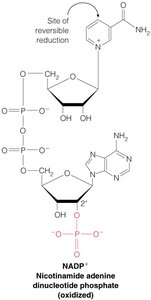
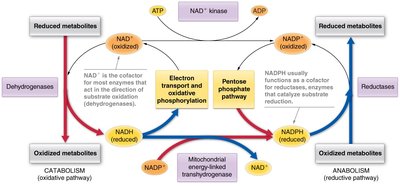
Oxidation-reduction reactions are central to energy metabolism. NAD+ is a widely used redox cofactor, acting via reversible hydride ion transfer. Enzymes involved include dehydrogenases, oxidases, and reductases, depending on the direction and electron acceptor.
Bioenergetics and Energy Coupling
Oxidation as a Biological Energy Source
Oxidation of glucose is broken into small increments in biological systems. Aerobic organisms utilize glycolysis, pyruvate conversion, citric acid cycle, and oxidative phosphorylation to convert glucose to CO2. Fat oxidation yields more energy due to greater production of reducing equivalents.
NAD+/NADH and NADP+/NADPH
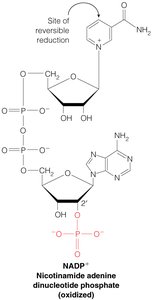
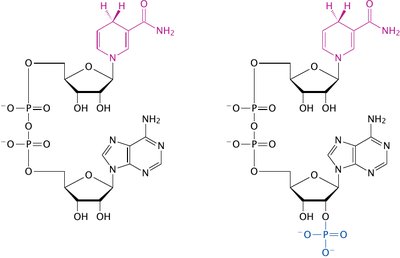
NAD+ is a major oxidant, while NADPH is a major reductant. Cells maintain high [NAD+]/[NADH] and [NADPH]/[NADP+] ratios to support their roles as electron acceptor and donor, respectively.
ATP as Free Energy Currency
ATP is the primary energy currency in cells, with a standard free energy of hydrolysis of –32.2 kJ/mol. It is used to drive endergonic processes, such as movement, active transport, and biosynthesis. ATP predominates due to its abundance and is most often used as a phosphate donor.

Coupling Stoichiometry and ATP-Coupling
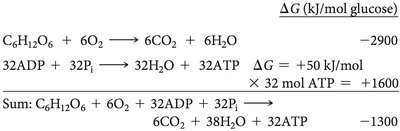
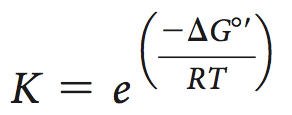
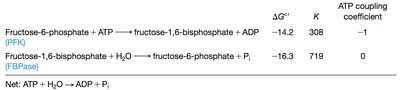
ATP is continuously formed and consumed, with coupling reactions converting thermodynamically unfavorable processes to favorable ones. The net ΔG for the production of 32 ATP from glucose is –1300 kJ/mol, ensuring respiration is favorable under physiological conditions.





ATP-Coupling Avoids High Metabolite Concentrations
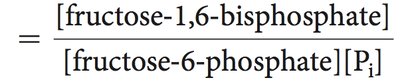
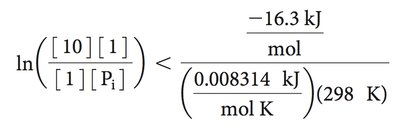
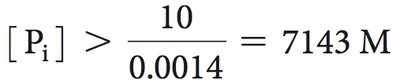
Coupling reactions to ATP hydrolysis allows cells to maintain low metabolite concentrations, avoiding the impossibly high concentrations of Pi that would otherwise be required to drive reactions forward. This is crucial for maintaining the solvent capacity of the cell.

Regulation of Metabolic Pathways
Regulation (kinetic control) is imposed only on reactions displaced far from equilibrium. Each opposing pathway is favorable, waiting for a signal (such as an allosteric effector) to open. Allosteric effectors are different for each pathway, preventing simultaneous operation.
Major Sources of Energy for ATP Synthesis
Substrate-level phosphorylation: Energy from breakdown of a higher-energy substrate (e.g., phosphoenolpyruvate, creatine phosphate).
Oxidative phosphorylation: Energy from exergonic redox reactions in mitochondria.
Photophosphorylation: Energy from light.
Regulation of Pathways in Energy Metabolism
Enzymes catalyzing rate-limiting steps in energy generation are inhibited by ATP and activated by ADP or AMP, while biosynthetic enzymes are activated by ATP and inhibited by ADP or AMP. The adenylate energy charge is a key regulatory parameter:
Major Metabolic Control Mechanisms
Control of enzyme levels: Genetic regulation.
Control of enzyme activity: Substrate-level, allosteric, covalent modification.
Compartmentation: Physical (membranes) and functional (juxtaposition of sequential enzymes).
Signal transduction: Intercellular control via hormones and second messengers.
Cellular Locations of Major Metabolic Pathways
Metabolic pathways are compartmentalized within cells, with specific locations for glycolysis, citric acid cycle, fatty acid oxidation, and biosynthetic pathways.
Experimental Analysis of Metabolism
Metabolism is studied at various levels: whole organism, isolated organ, whole cell, organelles, purified components, and metabolomics. Techniques include mutant analysis, tissue culture, differential centrifugation, and nuclear magnetic resonance.
Table: Comparison of Metabolic Control Mechanisms
Control Mechanism | Description | Example |
|---|---|---|
Genetic Regulation | Control of enzyme levels | Induction/repression of metabolic enzymes |
Allosteric Regulation | Control of enzyme activity by effectors | ATP inhibition of phosphofructokinase |
Covalent Modification | Enzyme activity altered by phosphorylation | Glycogen phosphorylase activation |
Compartmentation | Physical separation of pathways | Fatty acid oxidation in mitochondria |
Signal Transduction | Intercellular communication | Insulin signaling for glucose uptake |
Additional info: The notes expand on brief points by providing definitions, examples, and academic context for each mechanism and regulatory principle. All equations are provided in LaTeX format as required.
