 뒤로
뒤로Essentials of Biochemistry: Introduction and Foundations
스터디 가이드 - 스마트 노트
 자료에 맞춘 맞춤형 노트, 핵심 정의, 예시, 맥락을 확장해 제공합니다.
Chapter 1: Biochemical Similarities Demonstrate the Unity of Life
Unity of Biochemistry
Biochemistry seeks to understand life at the molecular level, revealing that all organisms share remarkable molecular uniformity. This unity is evident in the chemical composition and fundamental processes of living systems.
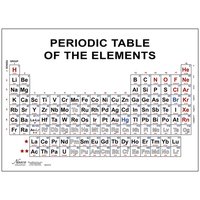
Key Point 1: Living organisms are composed of a limited subset of elements, primarily oxygen, hydrogen, and carbon, which together make up 98% of the atoms in organisms.
Key Point 2: Biochemical research demonstrates that molecular manipulations can profoundly affect the life of an organism.
1.1 Living Systems Require a Limited Subset of Available Atoms and Molecules
Organisms selectively utilize certain elements, resulting in chemical compositions distinct from their environment. The predominance of carbon, hydrogen, and oxygen is central to the structure and function of biomolecules.
Key Point 1: Carbon is favored over silicon for building large molecules due to the strength and stability of carbon–carbon bonds.
Key Point 2: Biological fuels, composed of carbon, hydrogen, and oxygen, undergo combustion to provide energy for cellular processes.
Key Point 3: Trace elements such as nitrogen, phosphorus, and sulfur are essential for various life processes.
Features of Living Organisms
Living organisms are characterized by several defining features that distinguish them from non-living matter.
High degree of chemical complexity and microscopic organization
Energy extraction and transformation systems
Defined functions and regulated interactions among components
Mechanisms for sensing and responding to environmental changes
Capacity for precise self-replication and self-assembly
Ability to evolve over time
1.2 The Four Major Classes of Biomolecules
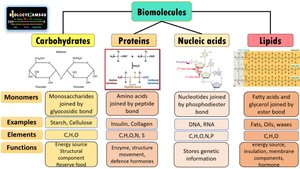
All living organisms are built from four major classes of biomolecules: proteins, nucleic acids, lipids, and carbohydrates. Each class has unique structures, functions, and monomeric units.
Proteins: Polymers of 20 amino acids linked by peptide bonds; serve as catalysts, structural components, signal molecules, receptors, and more.
Nucleic Acids: Polymers of nucleotides; store and transfer genetic information (DNA and RNA).
Lipids: Diverse, hydrophobic molecules; function in energy storage, membrane structure, and signaling.
Carbohydrates: Polymers of monosaccharides; serve as fuel, structural components, and mediators of cell recognition.
Proteins
Definition: Linear polymers of amino acids folded into specific three-dimensional structures.
Functions: Enzymatic catalysis, signaling, structural support, movement, and defense.
Nucleic Acids
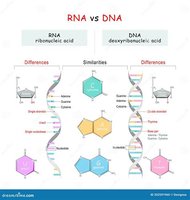
DNA: Double-stranded helix storing genetic information; composed of four deoxyribonucleotides (A, T, G, C) linked by phosphodiester bonds.
RNA: Single- or double-stranded; contains ribonucleotides (A, U, G, C); involved in information transfer and regulation.
Lipids
Structure: Amphipathic molecules with hydrophilic heads and hydrophobic tails.
Functions: Energy storage, membrane formation, and signaling.
Carbohydrates
Definition: Sugars and their polymers; primary energy source for most organisms.
Examples: Glucose (simple sugar), glycogen (animal storage), starch (plant storage).
Monomers of Biomacromolecules
Proteins: Amino acids
Nucleic acids: Nucleotides
Polysaccharides: Monosaccharides
Lipids: Fatty acids (not always true polymers)
1.3 The Central Dogma of Molecular Biology
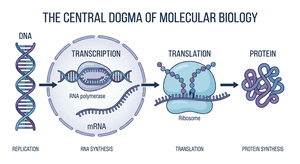
The central dogma describes the flow of genetic information within a biological system: DNA is replicated, transcribed into RNA, and translated into protein. This process underlies gene expression and inheritance.
Replication: DNA is copied to produce identical genomes for daughter cells.
Transcription: DNA is transcribed into RNA (mRNA, functional RNAs).
Translation: mRNA is decoded by ribosomes to synthesize proteins.
1.4 Membranes Delineate the Cell and Carry Out Cellular Functions
Cells are the basic units of life, separated from their environment by lipid bilayer membranes. Membranes maintain distinct internal environments and regulate the movement of substances.
Lipid Bilayer: Composed of two layers of lipids with hydrophobic tails inward and hydrophilic heads outward.
Selective Permeability: Membrane proteins control the passage of specific molecules.
Types of Cells
Eukaryotic Cells: Contain membrane-bound organelles; found in plants, animals, fungi, and protists.
Prokaryotic Cells: Lack membrane-bound organelles; include bacteria and archaea.
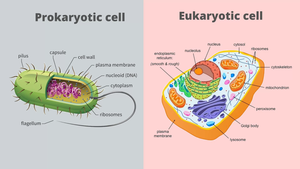
Cytoplasm and Cytoskeleton
Cytoplasm: Site of many metabolic processes; contains the cytoskeleton.
Cytoskeleton: Network of actin filaments, intermediate filaments, and microtubules that provide structure and facilitate intracellular transport.
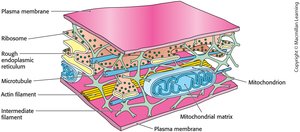
Organelles of Eukaryotic Cells
Nucleus: Contains genetic material; site of transcription.
Mitochondria: Site of cellular respiration and energy (ATP) production.
Chloroplasts: Site of photosynthesis in plants.
Endoplasmic Reticulum (ER): Rough ER synthesizes proteins; smooth ER synthesizes lipids and detoxifies chemicals.
Golgi Complex: Modifies, sorts, and packages proteins and lipids.
Secretory Granules: Store and release cellular products via exocytosis.
Endosomes: Involved in endocytosis and intracellular transport.
Lysosomes: Contain digestive enzymes for breakdown of macromolecules.
Plant Vacuoles: Store water, ions, and nutrients in plant cells.
1.5 Scientific Research and Diversity in Biochemistry
Scientific research is a collaborative and evolving endeavor, enriched by the inclusion of diverse perspectives. Efforts to diversify the scientific community have led to paradigm-shifting discoveries and expanded opportunities for underrepresented groups.
Marie Maynard Daly: Pioneered programs to support underrepresented students in science and medicine.
Course-Based Undergraduate Research Experiences (CUREs): Engage students in authentic research, fostering inclusion and scientific advancement.
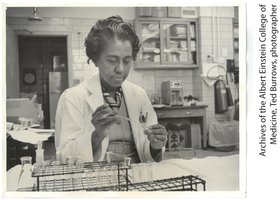


Additional info: This summary covers the foundational concepts of biochemistry, including the chemical basis of life, the major classes of biomolecules, the central dogma, cellular structure, and the importance of diversity in scientific research. The images included directly support the explanations of chemical elements, biomolecules, nucleic acids, the central dogma, cell structure, and scientific diversity initiatives.
