 뒤로
뒤로Glycogen Metabolism and Gluconeogenesis: Structure, Function, and Regulation
스터디 가이드 - 스마트 노트
 자료에 맞춘 맞춤형 노트, 핵심 정의, 예시, 맥락을 확장해 제공합니다.
Introduction to Glycogen Metabolism and Gluconeogenesis
Maintaining a constant supply of glucose is essential for cellular metabolism, especially for tissues such as the brain and red blood cells. Animals utilize two complementary metabolic processes to manage glucose levels: glycogen metabolism (storage and release of glucose) and gluconeogenesis (synthesis of glucose from non-carbohydrate precursors). These pathways are tightly regulated to ensure blood glucose homeostasis and a continuous energy supply.
Glycogenesis: Synthesis of glycogen from glucose for energy storage.
Glycogenolysis: Breakdown of glycogen to release glucose for energy production.
Gluconeogenesis: Synthesis of glucose from non-carbohydrate precursors such as pyruvate and lactate.
These pathways are integrated to prevent wasteful cycling and to adapt to changing nutritional and physiological conditions.
Structure and Function of Glycogen
What is Glycogen?
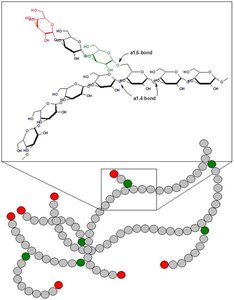
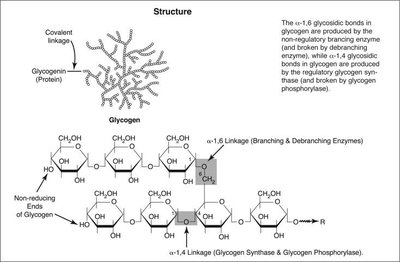
Glycogen is the major storage polysaccharide in animals, composed entirely of α-D-glucose molecules joined by glycosidic bonds. It is highly branched, with α(1→4) linkages forming linear chains and α(1→6) linkages at branch points, occurring every 8–12 residues. This structure allows for rapid synthesis and degradation.
Why Do Cells Store Glucose as Glycogen?
Prevention of Osmotic Stress: Glycogen is osmotically inactive, preventing cell swelling that would occur if glucose were stored freely.
Chemical Reactivity: Glycogen is chemically inert compared to free glucose, reducing the risk of non-enzymatic glycation of proteins.
Compact Storage: Glycogen's branched structure allows dense packing of glucose units.
Rapid Mobilization: Multiple non-reducing ends enable simultaneous enzymatic action for quick glucose release.
Where is Glycogen Stored?
Liver: Maintains blood glucose levels by releasing glucose during fasting.
Skeletal Muscle: Provides glucose for ATP production during muscle contraction; cannot release glucose into the bloodstream due to lack of glucose-6-phosphatase.
Glycogen Breakdown (Glycogenolysis)
Overview of Glycogenolysis
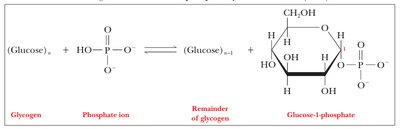
Glycogenolysis is the process by which glycogen is broken down to release glucose, primarily as glucose-1-phosphate. This process occurs via phosphorolysis rather than hydrolysis, conserving energy by bypassing the need for ATP in the initial phosphorylation step of glycolysis.
Phosphorolysis vs. Hydrolysis
Hydrolysis: Glycogen + H2O → Shorter glycogen + Glucose (requires ATP to phosphorylate glucose for glycolysis)
Phosphorolysis: Glycogen + Pi → Shorter glycogen + Glucose-1-phosphate (no ATP required for phosphorylation)
Glycogen Phosphorylase: The Key Enzyme
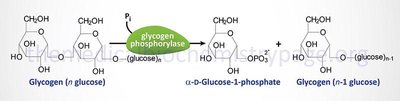
Glycogen phosphorylase catalyzes the phosphorolytic cleavage of α(1→4) glycosidic bonds at the non-reducing ends of glycogen, releasing glucose-1-phosphate. The enzyme acts only at non-reducing ends, allowing rapid mobilization of glucose.
Non-Reducing vs. Reducing Ends
Glycogen has one reducing end (attached to glycogenin) and many non-reducing ends. Glycogen phosphorylase removes glucose residues from non-reducing ends, stopping four residues before a branch point.
Debranching Enzyme
The debranching enzyme has two activities:
Transferase: Moves a block of three glucose residues to a nearby chain.
α(1→6)-Glucosidase: Hydrolyzes the remaining α(1→6) bond, releasing free glucose.
Glycogen Synthesis (Glycogenesis)
Overview of Glycogenesis
Glycogenesis is the process of synthesizing glycogen from glucose, primarily after meals when glucose and ATP are abundant. The pathway uses different enzymes from glycogenolysis to allow independent regulation.
Activation of Glucose: Formation of UDP-Glucose
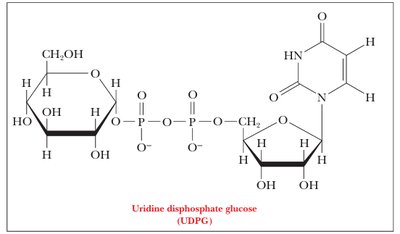
Glucose-6-phosphate is converted to glucose-1-phosphate, which is then activated by reaction with UTP to form UDP-glucose (uridine diphosphate glucose), the immediate donor of glucose for glycogen synthesis.
Glycogen Synthase: The Key Enzyme
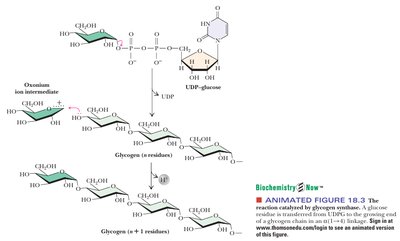
Glycogen synthase catalyzes the transfer of glucose from UDP-glucose to the non-reducing end of a glycogen chain, forming α(1→4) glycosidic bonds. The enzyme cannot initiate a new glycogen molecule; it requires a primer provided by glycogenin.
Branching Enzyme
The branching enzyme (amylo-(1,4→1,6)-transglycosylase) introduces α(1→6) linkages, creating branch points that increase solubility and the rate of both synthesis and degradation.
Regulation of Glycogen Metabolism
Why Regulation is Necessary
Simultaneous activation of glycogenesis and glycogenolysis would result in a futile cycle, wasting energy. Regulation ensures that only one pathway is active at a time, depending on the body's needs.
Mechanisms of Regulation
Covalent Modification: Phosphorylation and dephosphorylation alter enzyme activity.
Allosteric Regulation: Small metabolites bind to enzymes, changing their activity rapidly.
Regulation of Glycogen Phosphorylase
Phosphorylase b: Dephosphorylated, less active form.
Phosphorylase a: Phosphorylated, more active form.
Phosphorylase kinase: Activates phosphorylase by phosphorylation.
Phosphoprotein phosphatase: Deactivates phosphorylase by dephosphorylation.
Allosteric regulation differs by tissue:
Liver: Glucose inhibits glycogen phosphorylase.
Muscle: AMP activates, ATP and glucose-6-phosphate inhibit glycogen phosphorylase.
Regulation of Glycogen Synthase
Phosphorylation: Inactivates glycogen synthase (opposite effect to phosphorylase).
Dephosphorylation: Activates glycogen synthase.
Allosteric Regulation: Glucose-6-phosphate activates, ATP inhibits (mainly relevant for the phosphorylated form).
Hormonal Regulation
Glucagon: Released during low blood glucose; stimulates glycogen breakdown in the liver.
Epinephrine: Released during stress/exercise; stimulates glycogen breakdown in both liver and muscle.
Both hormones activate protein kinase A, which phosphorylates and activates glycogen phosphorylase while inactivating glycogen synthase.
Signal Amplification
Hormonal signals are amplified through cascades of enzyme activation, allowing a small stimulus to produce a large metabolic response. This ensures rapid adaptation to physiological needs.
Summary Table: Regulation of Glycogen Metabolism
Hormonal Signal | Glycogen Phosphorylase | Glycogen Synthase |
|---|---|---|
Phosphorylation | Activated | Inactivated |
Dephosphorylation | Inactivated | Activated |
Key Concepts
Glycogen metabolism is tightly regulated to prevent futile cycling and unnecessary energy expenditure.
Regulation occurs through covalent modification, allosteric effectors, and hormonal signals.
Liver and muscle differ in their regulatory mechanisms due to their distinct physiological roles.
Signal amplification allows small hormonal changes to produce large metabolic responses.
