 뒤로
뒤로Introduction to Biochemistry: Building Blocks of Cells and Atoms
스터디 가이드 - 스마트 노트
 자료에 맞춘 맞춤형 노트, 핵심 정의, 예시, 맥락을 확장해 제공합니다.
Introduction to Biochemistry
Characteristics of Living Organisms
Biochemistry explores the chemical processes within and related to living organisms. All living organisms share several fundamental characteristics that distinguish them from non-living matter:
Common Chemical Composition: Organisms are primarily composed of carbohydrates, fatty acids, nucleic acids, and amino acids.
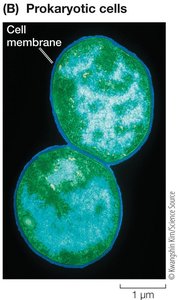
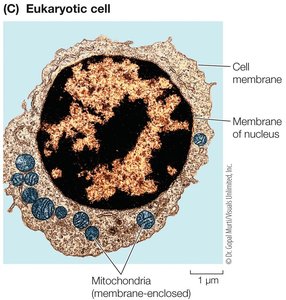
Cellular Organization: All living things are made up of one or more cells.
Homeostasis: The ability to maintain a stable internal environment.
Response to Stimuli: Organisms can respond to internal and external environmental changes.
Energy Utilization: Living things acquire energy from their environment and use it to perform work.
Genetic Information: They contain genetic material that directs development, function, and reproduction.
Protein Synthesis: Use a universal molecular code to synthesize proteins.
Evolution: Populations evolve over time through genetic changes.
Biological Membranes
Biological membranes are essential for compartmentalizing the cell and its internal structures. They are primarily composed of a phospholipid bilayer, which encloses the cell's biological molecules and separates the internal environment from the external surroundings.
Major Biomolecules in Cells
Composition of Living Matter
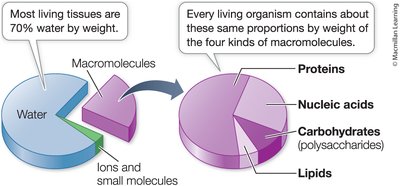
Most living tissues are composed of approximately 70% water by weight. The remaining mass consists of ions, small molecules, and macromolecules. The four major classes of macromolecules found in all living organisms are:
Proteins
Nucleic acids
Carbohydrates (polysaccharides)
Lipids
Classes of Biomolecules and Their Functions
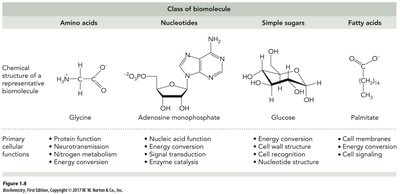
Each class of biomolecule has a unique structure and function in the cell:
Amino acids: Building blocks of proteins, involved in protein function, neurotransmission, nitrogen metabolism, and energy conversion.
Nucleotides: Building blocks of nucleic acids, involved in genetic information storage, energy conversion, signal transduction, and enzyme catalysis.
Simple sugars: Building blocks of carbohydrates, involved in energy conversion, cell wall structure, cell recognition, and nucleotide structure.
Fatty acids: Components of lipids, involved in cell membranes, energy conversion, and cell signaling.
Functional Chemical Groups
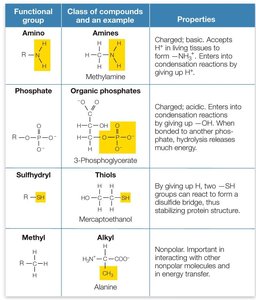
Functional groups are specific groups of atoms within molecules that determine the chemical properties and reactivity of those molecules. Common functional groups in biochemistry include:
Amino group (–NH2): Basic, can accept protons, found in amines and amino acids.
Phosphate group (–PO4): Acidic, involved in energy transfer and condensation reactions.
Sulfhydryl group (–SH): Found in thiols, can form disulfide bridges that stabilize protein structure.
Methyl group (–CH3): Nonpolar, important in molecular interactions and energy transfer.
Atoms: The Building Blocks of Matter
Structure of Atoms
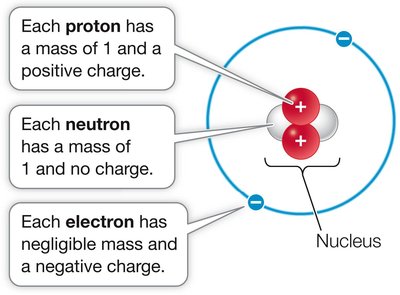
Atoms are the fundamental units of matter, consisting of a central nucleus (containing protons and neutrons) surrounded by electrons in orbitals. The number of protons determines the element, while neutrons contribute to atomic mass. Electrons are negatively charged and occupy regions called orbitals around the nucleus.

Atomic Number, Mass Number, and Isotopes
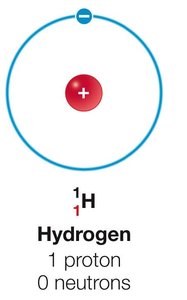
The atomic number is the number of protons in an atom's nucleus and defines the element. The mass number is the sum of protons and neutrons. Isotopes are atoms of the same element with different numbers of neutrons, resulting in different mass numbers but identical chemical properties.
Atomic number (Z):
Mass number (A):

Elements Essential for Life
Six elements make up approximately 98% of all living matter:
Hydrogen (H)
Carbon (C)
Nitrogen (N)
Oxygen (O)
Phosphorus (P)
Sulfur (S)
These elements are the primary constituents of the major biomolecules found in living organisms.
