 뒤로
뒤로Macromolecules and Amino Acids: Structure, Classification, and Protein Organization
스터디 가이드 - 스마트 노트
 자료에 맞춘 맞춤형 노트, 핵심 정의, 예시, 맥락을 확장해 제공합니다.
Macromolecules in Biochemistry
Definition and Types of Macromolecules
Macromolecules are large, complex molecules essential for life, typically formed by the polymerization of smaller subunits called monomers. Their structure and function are determined by the chemical properties of their constituent functional groups.
Proteins: Polymers of amino acids
Nucleic acids: Polymers of nucleotides
Carbohydrates: Polymers of simple sugars (monosaccharides)
Lipids: Not true polymers, but large molecules with diverse structures
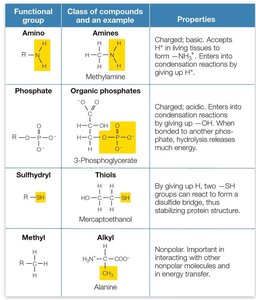
Functional groups such as amino, phosphate, sulfhydryl, and methyl groups determine the chemical reactivity and interactions of macromolecules.
Condensation and Hydrolysis Reactions
Macromolecules are assembled and disassembled by specific chemical reactions:
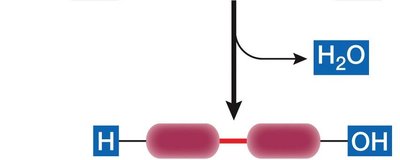
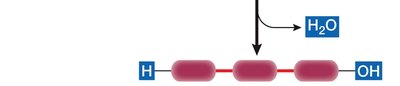
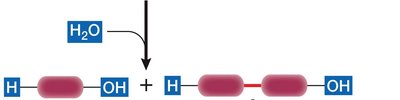
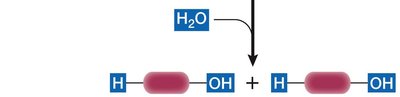
Condensation (Dehydration) Reactions: Join monomers by forming covalent bonds and releasing water.
Hydrolysis Reactions: Break polymers into monomers by adding water to cleave covalent bonds.


Isomers
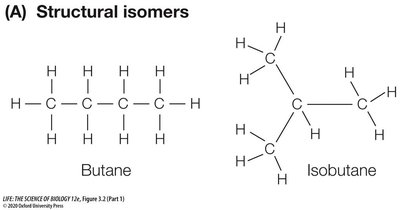
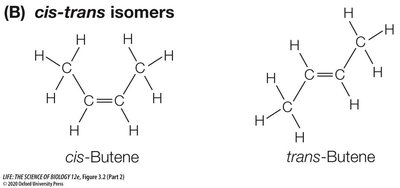
Isomers are molecules with the same chemical formula but different atomic arrangements, resulting in distinct properties. Types include:
Structural isomers: Differ in the covalent arrangement of atoms.
Cis-trans isomers: Differ in spatial arrangement around double bonds.
Optical isomers: Mirror images due to asymmetric carbon atoms (chiral centers).

Amino Acids: Structure and Classification
General Structure of Amino Acids
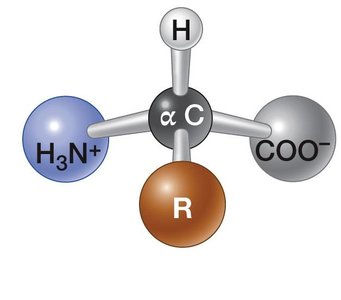
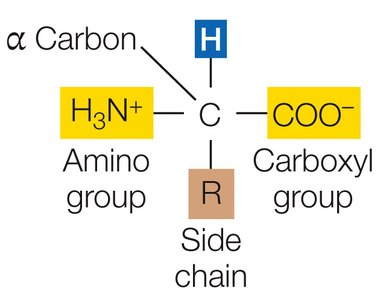
Amino acids are the building blocks of proteins. Each amino acid contains a central alpha carbon (αC) bonded to an amino group, a carboxyl group, a hydrogen atom, and a variable side chain (R group) that determines its unique properties.
At physiological pH (7.0–7.4), amino acids exist as zwitterions, with both the amino group protonated (NH3+) and the carboxyl group deprotonated (COO−).


Classification of Amino Acids
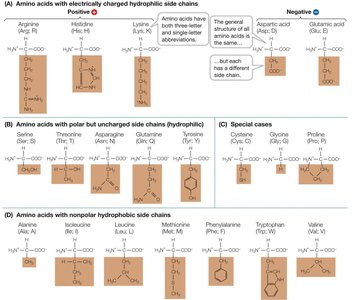
The 20 common amino acids are classified based on the chemical properties of their side chains (R groups):
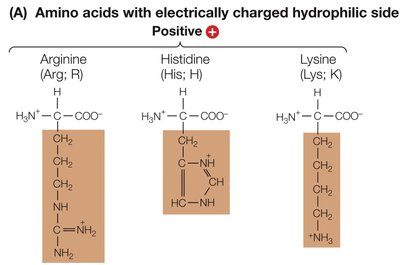
Electrically charged (hydrophilic) side chains: Can be positive (basic) or negative (acidic), form ionic bonds, and interact with water.
Polar but uncharged (hydrophilic) side chains: Form hydrogen bonds with water and other polar molecules.
Nonpolar (hydrophobic) side chains: Tend to cluster in the interior of proteins, away from water.
Special cases: Glycine (side chain is H), Proline (side chain forms a ring), and Cysteine (can form disulfide bonds).


Examples of Amino Acid Structures
Glycine: Smallest amino acid, side chain is a hydrogen atom.
Proline: Side chain forms a ring with the amino group, introducing kinks in polypeptide chains.
Cysteine: Contains a sulfhydryl group, can form disulfide bonds for protein stability.
Proteins: Structure and Function
Peptide Bonds and Protein Synthesis
Proteins are polymers of amino acids linked by peptide bonds, which are formed by condensation reactions between the carboxyl group of one amino acid and the amino group of another. Polypeptide chains are synthesized from the amino (N) terminus to the carboxyl (C) terminus.
Peptide (oligopeptide): Short polymer (<20 amino acids)
Polypeptide: Longer polymer (>20 amino acids)
Protein: One or more polypeptides, usually folded into a functional form
Levels of Protein Structure
Protein structure is organized into four hierarchical levels:
Primary structure: Linear sequence of amino acids in a polypeptide chain, determined by genetic information.
Secondary structure: Localized folding patterns such as α-helices and β-sheets, stabilized by hydrogen bonds between backbone atoms.
Tertiary structure: Overall three-dimensional shape of a single polypeptide, determined by interactions among side chains (hydrogen bonds, hydrophobic interactions, van der Waals forces, ionic bonds, and disulfide bridges).
Quaternary structure: Assembly of multiple polypeptide subunits into a functional protein complex.
Example: Hemoglobin is a protein with quaternary structure, composed of multiple subunits.
Protein Functions
Proteins perform a wide variety of functions in cells, including catalysis, structural support, transport, signaling, and movement.
Category | Function |
|---|---|
Enzymes | Catalyze (speed up) biochemical reactions |
Structural proteins | Provide physical stability and movement |
Defensive proteins | Recognize and respond to nonself substances (e.g., antibodies) |
Signaling proteins | Control physiological processes (e.g., hormones) |
Receptor proteins | Receive and respond to chemical signals |
Membrane transporters | Regulate passage of substances across cellular membranes |
Storage proteins | Store amino acids for later use |
Transport proteins | Bind and carry substances within the organism |
Gene regulatory proteins | Determine the rate of expression of a gene |
Motor proteins | Cause movement of structures in the cell |
Summary Table: Representative Biomolecules and Functions
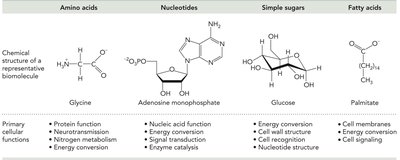
Amino acids | Nucleotides | Simple sugars | Fatty acids | |
|---|---|---|---|---|
Chemical structure example | Glycine | Adenosine monophosphate | Glucose | Palmitate |
Primary cellular functions | Protein function, neurotransmission, nitrogen metabolism, energy conversion | Nucleic acid function, energy conversion, signal transduction, enzyme catalysis | Energy conversion, cell wall structure, cell recognition, nucleotide structure | Cell membranes, energy conversion, cell signaling |

Additional info: This guide covers foundational concepts in biochemistry, including macromolecule structure, amino acid classification, and the hierarchical organization of protein structure, all of which are essential for understanding protein function and the molecular basis of life.
