 뒤로
뒤로Water, Acids, Bases, and Buffer Systems in Biochemistry
스터디 가이드 - 스마트 노트
 자료에 맞춘 맞춤형 노트, 핵심 정의, 예시, 맥락을 확장해 제공합니다.
Water and Basic Chemistry
Structure and Properties of Water
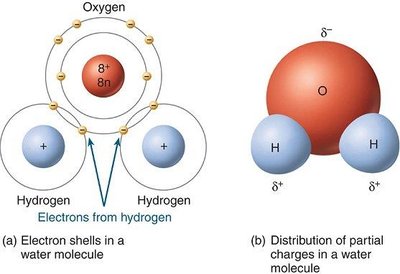
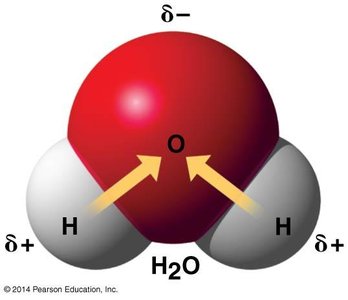
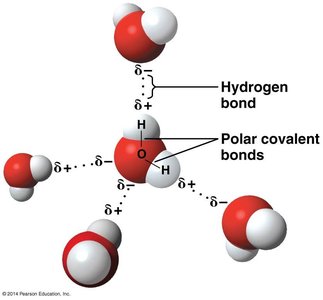
Water is a fundamental molecule in biochemistry, characterized by its polar nature and ability to form hydrogen bonds. The polarity arises from the asymmetric distribution of charges within the molecule, where oxygen is more electronegative than hydrogen, resulting in partial negative and positive charges.
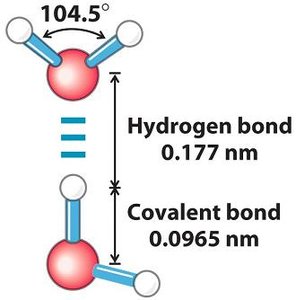
Polarity: Water molecules have a bent shape (104.5° angle) and partial charges (δ- on oxygen, δ+ on hydrogen).
Hydrogen Bonding: Each water molecule can form up to four hydrogen bonds, leading to unique emergent properties such as high cohesion, surface tension, and specific heat.
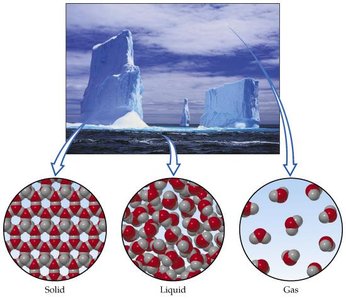
States of Water: Hydrogen bonds are dynamic in liquid water, forming and breaking rapidly, while in ice, they are more stable, creating a lattice structure.
Example: Water's ability to dissolve salts but not oils is due to its polarity and capacity for electrostatic interactions.
Hydrogen Bonds in Biological Systems
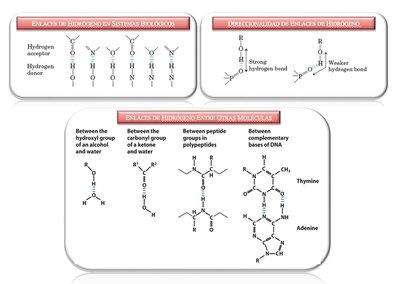
Hydrogen bonds are critical for molecular interactions in biological systems, including protein folding, DNA base pairing, and enzyme activity.
Definition: A hydrogen bond is an interaction between a hydrogen atom covalently bonded to an electronegative atom (like O or N) and another electronegative atom.
Biological Importance: Stabilizes structures such as DNA double helix and protein secondary/tertiary structures.
Example: Hydrogen bonds between complementary bases in DNA (A-T, G-C).
Water as a Solvent
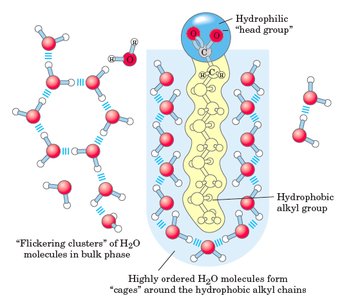
Water's polarity enables it to dissolve a wide range of substances, making it an excellent solvent for biochemical reactions.
Electrostatic Interactions: Water surrounds ions and polar molecules, stabilizing them in solution.
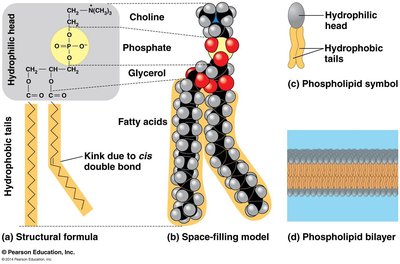
Hydrophobic Effect: Nonpolar molecules (like oils) do not dissolve in water, leading to the formation of micelles and biological membranes.
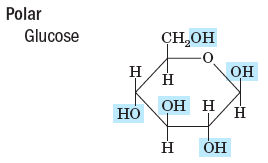
Classification: Molecules can be polar (e.g., glucose), nonpolar (e.g., wax), or amphipathic (e.g., phenylalanine).
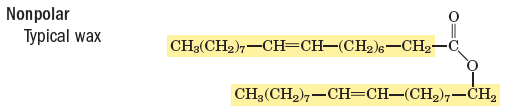
Acids, Bases, and pH
Ionization of Water
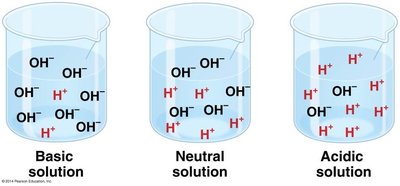
Water can ionize to form hydronium (H3O+) and hydroxide (OH-) ions, a process fundamental to acid-base chemistry in biological systems.
Equation:
Equilibrium Constant: The ion product of water () is .
At 25°C:
pH Scale and Calculations
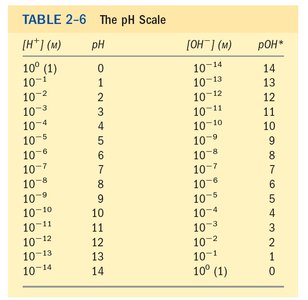
The pH scale is a logarithmic measure of hydrogen ion concentration, used to assess acidity and alkalinity in solutions.
Definition:
Neutral pH: At M, pH = 7.
Diagnostic Use: pH is used in medical diagnostics (e.g., blood and urine analysis).
Acidosis/Alkalosis: Blood pH below 7.4 (acidosis) or above 7.4 (alkalosis) can be life-threatening.

Acids, Bases, and Conjugate Pairs
Acids donate protons (H+), while bases accept protons. Each acid has a conjugate base, and vice versa.
Ka: The acid dissociation constant () quantifies the strength of an acid.
pKa: ; lower pKa means stronger acid.
Conjugate Pair: Acetic acid (CH3COOH) and acetate (CH3COO-) form a conjugate acid-base pair.

Buffer Systems in Biological Context
Buffering and pH Regulation
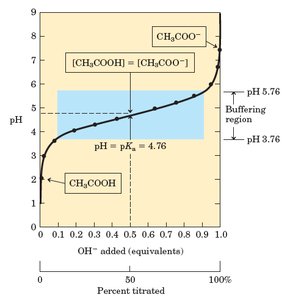
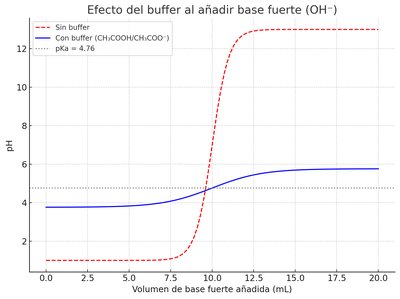
Buffers are aqueous systems that resist changes in pH when small amounts of acid or base are added. They are essential for maintaining physiological pH in organisms.
Definition: A buffer consists of a weak acid and its conjugate base.
Biological Importance: Buffers stabilize pH in blood, cellular fluids, and other biological systems.
Example: Acetic acid/acetate and bicarbonate buffer systems.
Henderson-Hasselbalch Equation
The Henderson-Hasselbalch equation relates pH, pKa, and the ratio of conjugate base to acid concentrations in a buffer system.
Equation:
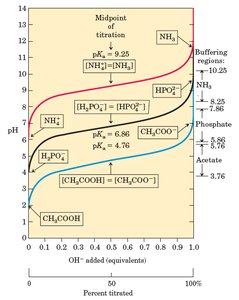
Application: Used to calculate pH of buffer solutions and to analyze titration curves.
Example Calculation: For a buffer with 0.1 M acetic acid and 0.6 M acetate, .
Biological Buffer Systems
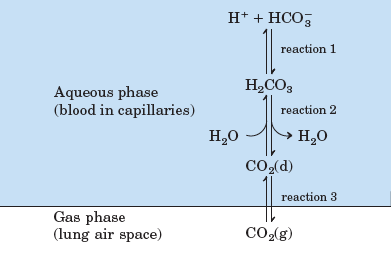
Several buffer systems operate in living organisms, including the bicarbonate buffer in blood and protein-based buffers.
Bicarbonate Buffer: Maintains blood pH via equilibrium between CO2, H2CO3, and HCO3-.
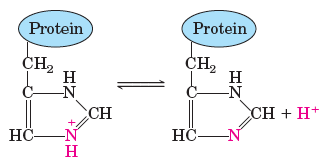
Protein Buffers: Amino acids like histidine act as buffers near physiological pH.
Example: Histidine's pKa (6.0) allows it to donate/accept protons in enzymatic reactions.
Summary Table: pH, pKa, and Buffer Systems
Concept | Definition | Example |
|---|---|---|
pH | Logarithmic measure of [H+] | Blood pH = 7.4 |
pKa | Logarithmic measure of acid strength | Acetic acid pKa = 4.76 |
Buffer | Resists pH changes | Acetate/acetic acid, bicarbonate |
Additional info: The notes expand on the original slides by providing full academic context, definitions, and examples for each concept, ensuring completeness and clarity for exam preparation.
