 뒤로
Biochemistry and Macromolecules: The Chemistry of Life
스터디 가이드 - 스마트 노트
 자료에 맞춘 맞춤형 노트, 핵심 정의, 예시, 맥락을 확장해 제공합니다.
Molecules of Cells: Biochemistry and Cycles
Chemistry of Life
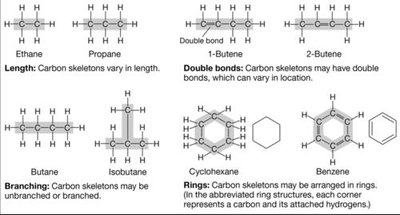
All living organisms are composed of molecules built primarily from carbon. The study of these molecules falls under organic chemistry, which focuses on carbon and its bonding properties. Organic compounds are defined by the presence of carbon covalently bonded to other atoms.
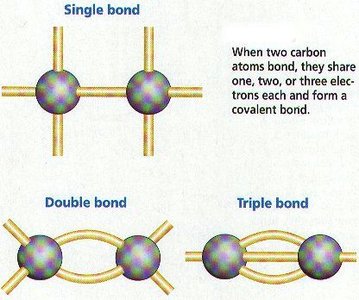
Carbon's Unique Properties: Carbon has four valence electrons, allowing it to form four covalent bonds with other atoms, including itself. This enables carbon to create single, double, or triple bonds and a variety of molecular shapes.
Organic Compounds: These compounds contain carbon atoms bonded to other elements, forming the backbone of biological molecules.
Carbon Macromolecules
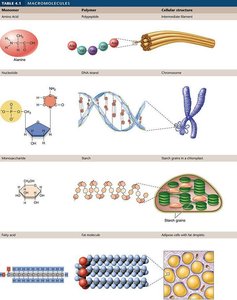
Macromolecules are large, complex molecules essential for life. They are built from smaller units called monomers, which link together to form polymers. Functional groups attached to these molecules give them specific chemical properties.
Monomer: The basic building block; a single molecule that can bond to others.
Polymer: A chain of monomers linked together.
Macromolecule: A giant molecule composed of many polymers.
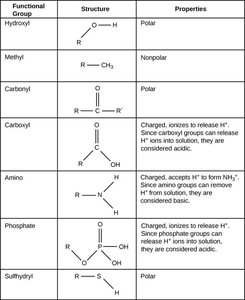
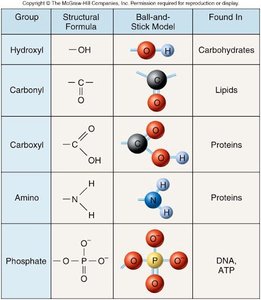
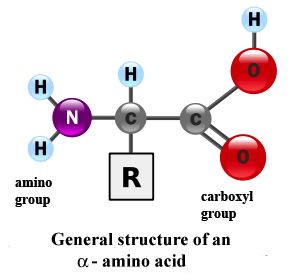
Functional Groups: Specific groups of atoms that confer distinct properties to molecules (e.g., hydroxyl, methyl, carboxyl, amino, phosphate).
Formation and Breakdown of Macromolecules
Macromolecules are formed and broken down through specific chemical reactions:
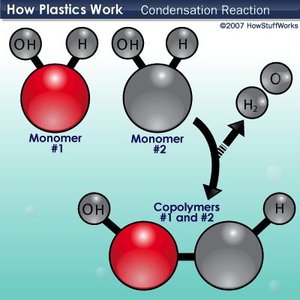
Condensation (Dehydration Synthesis): Monomers are joined together, releasing a water molecule.
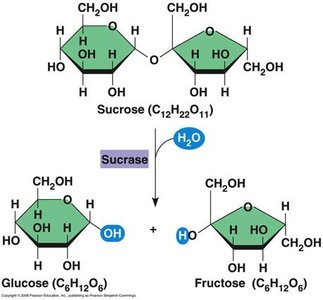
Hydrolysis: Polymers are broken down into monomers by the addition of water.
Macromolecules of Life
Carbohydrates
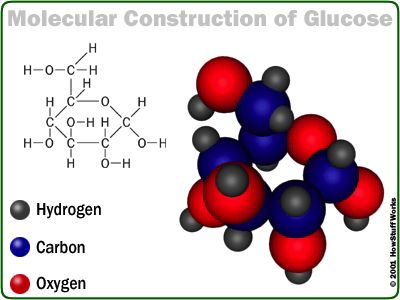
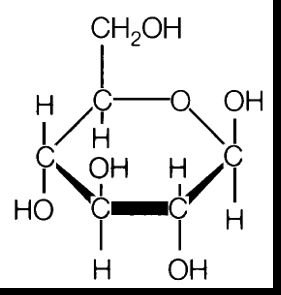
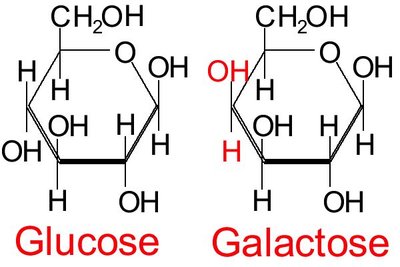
Carbohydrates are the main energy source for cells. They are composed of carbon, hydrogen, and oxygen, typically in a 1:2:1 ratio (e.g., C6H12O6).
Monosaccharides: Simple sugars; monomers of carbohydrates (e.g., glucose, fructose, galactose).
Isomers: Molecules with the same formula but different structures.
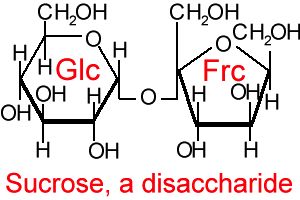
Disaccharides: Two monosaccharides linked together (e.g., sucrose, lactose, maltose).
Polysaccharides: Long chains of monosaccharides (e.g., starch, cellulose, glycogen).
Carbohydrate Metabolism and Nutrition
Carbohydrates are broken down to release energy, measured in calories. The type and amount of sugar consumed can impact health.
Calorie: The energy required to raise the temperature of 1g of water by 1°C.

Lipids
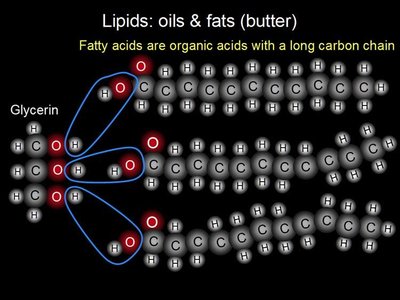
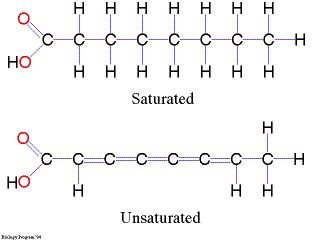
Lipids are large, nonpolar molecules used for energy storage and structural functions. They are composed of carbon, hydrogen, and oxygen, and do not dissolve in water.
Fatty Acids: Unbranched carbon chains with a hydrophilic (water-loving) end and a hydrophobic (water-fearing) end.
Types of Lipids:
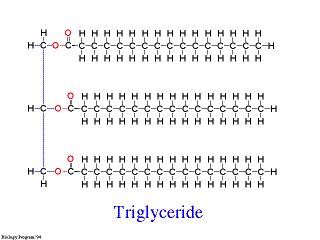
Triglycerides: Three fatty acids and one glycerol; main form of stored energy.
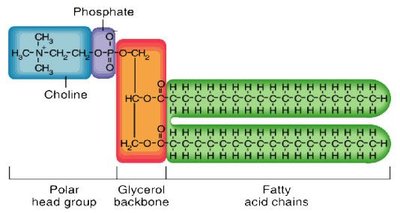
Phospholipids: Two fatty acids, a phosphate group, and a glycerol; key component of cell membranes.
Waxes: Structural lipids with long fatty acid chains joined to alcohol.
Steroids: Four fused carbon rings with various functional groups (e.g., cholesterol).
Proteins
Structure and Function
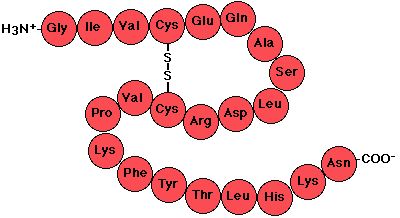
Proteins are involved in nearly all cellular functions. Their specific function depends on their structure, which is determined by the sequence and folding of amino acids.
Monomer: Amino acid (20 types, e.g., proline, serine).
Peptide Bond: The bond linking two amino acids.
Dipeptide: Two amino acids linked together.
Polypeptide: Many amino acids linked together.
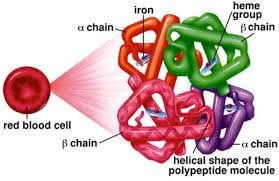
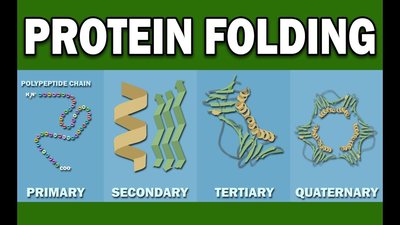
Protein Folding: Proteins fold into four levels:
Primary: Amino acid sequence
Secondary: Pleated sheet/alpha helix
Tertiary: Globular shape
Quaternary: Functional protein (e.g., hemoglobin)
Enzymes
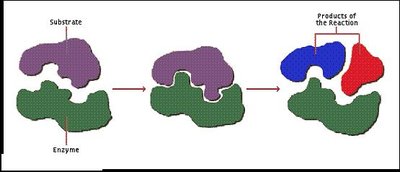
Enzymes are proteins that act as catalysts, speeding up chemical reactions by lowering activation energy. Each enzyme has a specific shape and binds to substrates in a "lock and key" manner.
Substrate: The reactant that binds to the enzyme's active site.
Product: The result of the enzymatic reaction.
Catalyst: A substance that lowers activation energy, often an enzyme.
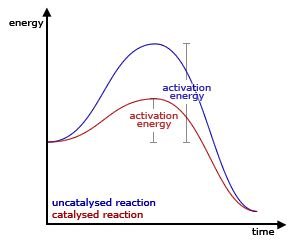
Factors Affecting Enzyme Activity
Enzyme function is influenced by pH, temperature, and concentration. Each enzyme operates optimally within specific ranges.
pH: Enzymes function within a narrow pH range.
Temperature: Enzymes function best within a certain temperature range.
Concentration: The amount of enzyme and substrate affects reaction rate.
Nucleic Acids
Structure and Function
Nucleic acids store and transmit genetic information. They are composed of carbon, hydrogen, oxygen, nitrogen, and phosphorus.
Types:
DNA (Deoxyribonucleic Acid): Genetic material in cells.
RNA (Ribonucleic Acid): Involved in protein synthesis.
ATP (Adenosine Triphosphate): Energy molecule.
Nucleotide: The monomer of nucleic acids, consisting of a sugar, phosphate, and base.
DNA Nucleotides: Adenine (A), Thymine (T), Cytosine (C), Guanine (G); A-T, C-G pairing.
RNA Nucleotides: Adenine (A), Uracil (U), Cytosine (C), Guanine (G); A-U, C-G pairing.
Nutrient Cycling
Earth's Spheres and Biogeochemical Cycles
Life depends on the cycling of essential elements through Earth's spheres: geosphere, hydrosphere, biosphere, and atmosphere. The main elements involved are carbon, hydrogen, oxygen, nitrogen, phosphorus, and sulfur (CHONPS).
Carbon/Oxygen Cycle: Movement of carbon and oxygen through photosynthesis, respiration, and decomposition.
Water Cycle: Movement of water through evaporation, condensation, precipitation, and runoff.
Nitrogen Cycle: Conversion of nitrogen between atmospheric, biological, and soil forms.
Phosphorus Cycle: Movement of phosphorus through rocks, soil, water, and living organisms.
Sulfur Cycle: Movement of sulfur through the environment, affecting soil and atmospheric chemistry.
Additional info: The biogeochemical cycles ensure the availability of essential nutrients for all living organisms, supporting cellular processes and ecosystem health.
