 뒤로
뒤로Buffers, pH, and the Chemical Context of Life: General Biology Lab Study Notes
스터디 가이드 - 스마트 노트
 자료에 맞춘 맞춤형 노트, 핵심 정의, 예시, 맥락을 확장해 제공합니다.
Buffers and pH in Biological Systems
Safety and Laboratory Practice
Working with strong acids and bases in the laboratory requires careful attention to safety protocols to prevent injury and chemical accidents.
Eye protection and gloves: Always wear these to prevent burns and exposure.
Mixing chemicals: Only mix as instructed; improper combinations can cause dangerous reactions.
Spill management: Neutralize and clean spills immediately.
Glassware safety: Handle glassware carefully and report any breakage.

Water: Structure and Properties
Water is the universal solvent in biological systems, and its unique properties are essential for life. The polarity of water molecules enables them to form hydrogen bonds with other polar molecules.
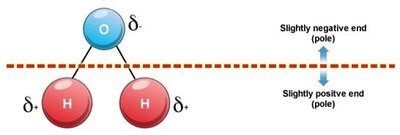
Polarity: Oxygen is highly electronegative, creating a partial negative charge on the oxygen atom and partial positive charges on the hydrogen atoms.
Hydrogen bonding: Water's polarity allows it to interact with many solutes, stabilizing biological molecules.
Dissociation of Water and Ion Formation
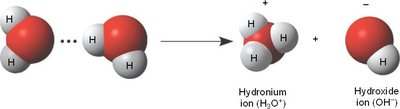
Water molecules can dissociate, forming hydronium (H3O+) and hydroxide (OH-) ions. This process is rare but fundamental to understanding pH.
Dissociation equation:
Ion concentrations: In pure water, [H+] = [OH-] = M, resulting in a neutral solution.
The pH Scale and Its Calculation
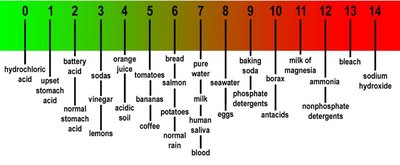
The pH scale measures the concentration of hydrogen ions in solution, ranging from 0 (very acidic) to 14 (very basic). Each unit change represents a tenfold change in acidity.
pH definition:
Neutral pH: Pure water has a pH of 7.
Acidic solutions: pH < 7; basic solutions: pH > 7.
Example: If [H+] = M, then pH = 6.
Acids, Bases, and Buffers
Acids increase the concentration of H+ in solution, while bases decrease it. Buffers are mixtures of weak acids and bases that resist changes in pH when strong acids or bases are added.
Acid: Releases H+ into solution.
Base: Removes H+ from solution.
Buffer: Maintains stable pH by absorbing or releasing H+.
Biological importance: Buffers are critical in maintaining homeostasis, such as blood pH.
Bicarbonate buffer system:
Experimental Investigation of Buffers
Testing Buffer Capacity
The experiment tested the ability of four solutions (water, milk, phosphate solution, sodium chloride) to resist pH changes when NaOH was added.
Hypothesis: Phosphate solution would be the best buffer.
Procedure: pH was measured after incremental additions of NaOH.
Results: Buffer Effectiveness
Data was collected on the volume of NaOH required to change the pH by 3 units for each solution.
Solution | Volume of NaOH for 3 pH units (mL) |
|---|---|
Water | 5 |
Phosphate Solution | 15 |
NaCl Solution | 2 |
Milk | 18.5 |
Interpretation: The phosphate solution and milk showed the greatest resistance to pH change, indicating strong buffer capacity.
Conclusions and Biological Relevance
Best buffer: Phosphate solution, followed by milk.
Buffer function: Buffers maintain constant pH, essential for biological function.
Blood buffers: Critical for maintaining pH within a narrow range to support life.
Key Calculations
pH calculation: For [H+] = 0.0001 M ( M),
OH- concentration: For pH = 11,
Summary Table: Buffer Capacity
Solution | Buffer Capacity |
|---|---|
Phosphate Solution | High |
Milk | Moderate-High |
Water | Low |
NaCl Solution | Very Low |
Definitions
pH: Measure of hydrogen ion concentration.
Acid: Substance that increases H+ concentration.
Base: Substance that decreases H+ concentration.
Buffer: Substance that resists changes in pH.
Neutral: Equal concentrations of H+ and OH-.
Additional info: The experiment reinforces the importance of buffers in biological systems, especially in maintaining homeostasis and supporting molecular interactions dependent on stable pH.
