뒤로
Carbon and the Molecular Diversity of Life: Study Notes
스터디 가이드 - 스마트 노트
 자료에 맞춘 맞춤형 노트, 핵심 정의, 예시, 맥락을 확장해 제공합니다.
Carbon and the Molecular Diversity of Life
The Importance of Carbon
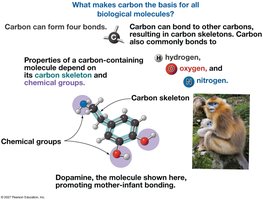
Carbon is the foundational element for all biological molecules due to its unique electron configuration, which allows it to form a wide variety of stable, complex, and diverse organic compounds. The versatility of carbon is essential for the molecular diversity observed in living organisms.
Electron Configuration: Carbon has four valence electrons, enabling it to form four covalent bonds with other atoms, including hydrogen, oxygen, and nitrogen.
Bonding Capacity: Carbon can bond to other carbon atoms, creating long chains, branched structures, and rings, which serve as the backbone for organic molecules.
Properties of Carbon Molecules: The characteristics of a carbon-containing molecule depend on its carbon skeleton and the chemical groups attached to it.
Example: Dopamine, a molecule with a carbon skeleton and specific chemical groups, is involved in mother-infant bonding.
Organic Chemistry and the Origin of Life
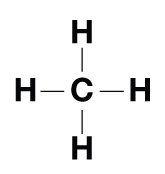
Organic chemistry is the study of compounds containing carbon, regardless of their origin. Organic compounds range from simple molecules, such as methane, to large macromolecules like proteins and nucleic acids.
Organic Compounds: Include molecules essential for life, such as carbohydrates, lipids, proteins, and nucleic acids.
Complexity: The ability of carbon to form diverse structures is key to the complexity of biological molecules.
Formation of Bonds with Carbon
Carbon's four valence electrons allow it to form four covalent bonds, resulting in a variety of molecular shapes and sizes. The geometry of these bonds is crucial for the function of organic molecules.
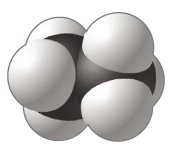
Tetrahedral Shape: When carbon forms four single bonds, the molecule adopts a tetrahedral geometry.
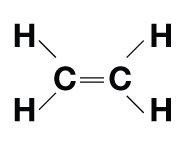
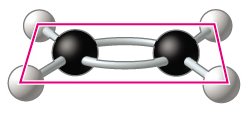
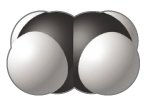
Double Bonds: When two carbons are joined by a double bond, the atoms attached to them lie in the same plane.
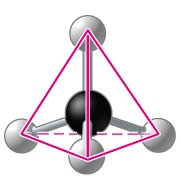
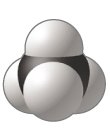
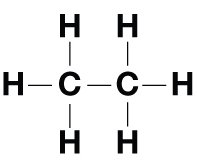
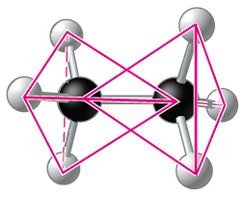
Valences of Major Elements in Organic Molecules
The valence of an atom is determined by the number of unpaired electrons in its valence shell, which dictates the number of covalent bonds it can form. This is fundamental for understanding how atoms combine to form molecules.
Hydrogen: Valence of 1
Oxygen: Valence of 2
Nitrogen: Valence of 3
Carbon: Valence of 4




Variation in Carbon Skeletons
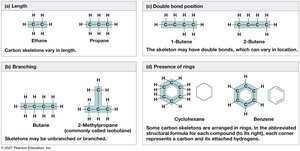
Carbon skeletons can vary in length, branching, double bond position, and the presence of rings. This variation is a major source of molecular diversity in organic compounds.
Length: Carbon chains can be short or long.
Branching: Skeletons may be unbranched or branched.
Double Bond Position: Double bonds can vary in location along the carbon chain.
Rings: Some carbon skeletons form rings, such as cyclohexane and benzene.
Hydrocarbons
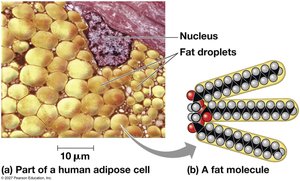
Hydrocarbons are organic molecules composed only of carbon and hydrogen. They are hydrophobic and serve as important energy sources in biological systems.
Hydrophobic Nature: Hydrocarbons do not dissolve in water due to their nonpolar bonds.
Energy Storage: Hydrocarbons can undergo reactions that release large amounts of energy, such as in fats.
Example: Fat molecules contain hydrocarbon chains that store energy.
Isomers
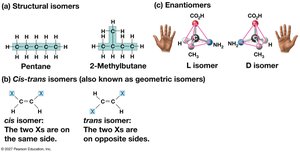
Isomers are compounds with the same molecular formula but different structures and properties. There are three main types: structural, geometric (cis-trans), and enantiomers.
Structural Isomers: Differ in the covalent arrangement of atoms.
Geometric Isomers (cis-trans): Differ in spatial arrangement around a double bond.
Enantiomers: Are mirror images of each other and differ in their biological activity.
Chemical Groups Most Important in Life Processes
The distinctive properties of organic molecules depend on the carbon skeleton and the chemical groups attached to it. Functional groups are the components most commonly involved in chemical reactions.
Functional Groups: Groups of atoms that confer specific chemical properties to molecules.
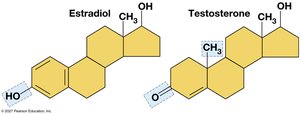
Example: Estradiol and testosterone are steroids with a common carbon skeleton but differ in their functional groups, resulting in different biological effects.
Major Chemical Groups in Organic Molecules
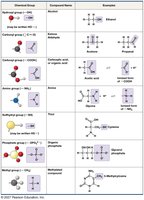
Several chemical groups are commonly found in organic molecules, each with distinct structures and properties. These groups play critical roles in the function and reactivity of biomolecules.
Hydroxyl Group (–OH): Found in alcohols; polar and can form hydrogen bonds.
Carbonyl Group (C=O): Found in ketones and aldehydes; contributes to reactivity.
Carboxyl Group (–COOH): Found in acids; acts as a proton donor.
Amino Group (–NH2): Found in amines; acts as a proton acceptor.
Sulfhydryl Group (–SH): Found in thiols; can form disulfide bonds.
Phosphate Group (–PO4): Found in organic phosphates; involved in energy transfer.
Methyl Group (–CH3): Found in methylated compounds; affects gene expression.
Chemical Group | Compound Name | Example |
|---|---|---|
Hydroxyl (–OH) | Alcohol | Ethanol |
Carbonyl (C=O) | Ketone/Aldehyde | Acetone, Propanal |
Carboxyl (–COOH) | Carboxylic acid | Acetic acid |
Amino (–NH2) | Amine | Glycine |
Sulfhydryl (–SH) | Thiols | Cysteine |
Phosphate (–PO4) | Organic phosphate | Glycerol phosphate |
Methyl (–CH3) | Methylated compound | 5-Methyl cytosine |
ATP: The Primary Energy Transfer Molecule
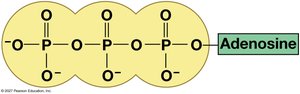
ATP (adenosine triphosphate) is the main energy currency of the cell. It consists of adenosine attached to three phosphate groups and stores potential energy for cellular processes.
Structure: ATP is composed of an adenosine molecule and three phosphate groups.
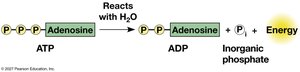
Energy Storage: The bonds between phosphate groups store energy that can be released during hydrolysis.
Function: ATP provides energy for cellular activities by transferring a phosphate group to other molecules.
Equation: The hydrolysis of ATP to ADP releases energy: