 뒤로
Cell Communication and Signaling: Mechanisms and Responses
스터디 가이드 - 스마트 노트
 자료에 맞춘 맞춤형 노트, 핵심 정의, 예시, 맥락을 확장해 제공합니다.
Cell Communication
Overview of Cell Signaling
Cell communication is essential for the coordination of activities within multicellular organisms and between different species. Cells use various mechanisms to transmit, receive, and respond to signals, ensuring proper physiological function and adaptation to environmental changes.
Cell signaling involves the transmission of information from one cell to another via signaling molecules.
Organisms communicate using chemical signals, which can be local or distant.
Cell communication is fundamental for processes such as growth, differentiation, metabolism, and immune responses.
Main Steps in Cell Signaling
Cell signaling typically occurs in four main steps, each crucial for the accurate transmission and interpretation of signals.
Signal Transmission: The signaling cell synthesizes and releases signaling molecules (ligands). If target cells are distant, signals are transported via the circulatory system.
Signal Reception: Target cells possess specific receptors that bind to signaling molecules, initiating the signaling cascade.
Signal Transduction: The signal is converted from an extracellular cue to an intracellular response, often involving second messengers and amplification.
Response: The cell alters its behavior or function in response to the signal, such as gene expression, enzyme activity, or changes in cell shape.
Types of Cell Signaling
Classes of Cell Signaling Molecules
Cells communicate using several types of signaling molecules, each with distinct mechanisms and effects.
Temporary cell-to-cell contact: Direct interaction between cell surfaces.
Electrochemical signals: Transmission of electrical impulses, especially in neurons.
Chemical signals: Molecules released by cells, classified as paracrine (local) or endocrine (distant).
Paracrine vs. Endocrine Signaling
Paracrine signaling: Local regulators act on nearby cells.
Endocrine signaling: Hormones are transported through the bloodstream to distant target cells.
Receptors and Signal Reception
Types of Receptors
Receptors are specialized proteins or glycoproteins that bind to signaling molecules and initiate cellular responses. There are two main classes:
Membrane-bound receptors: Located on the cell surface; bind hydrophilic signaling molecules.
Intracellular receptors: Located within the cell; bind small, hydrophobic molecules that can cross the plasma membrane.
Comparison of Receptor Classes
Type | Location | Ligand Type | Example |
|---|---|---|---|
Membrane-bound | Plasma membrane | Hydrophilic | GPCRs, ion channels |
Intracellular | Cytoplasm/nucleus | Hydrophobic | Steroid hormone receptors |
Hydrophilic molecules bind to protein receptors on the cell surface, while hydrophobic molecules move through the membrane and bind to intracellular receptors.
Examples of Membrane-bound Receptors
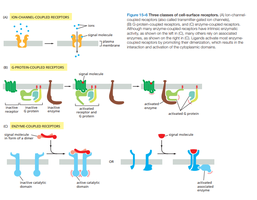
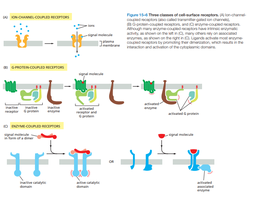
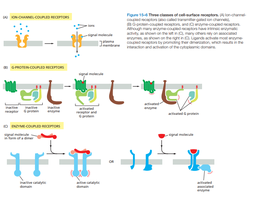
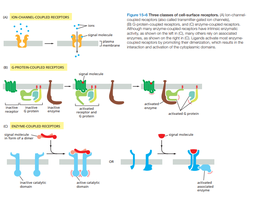
Ion-channel coupled receptors: Open or close ion channels in response to ligand binding.
G-protein coupled receptors (GPCRs): Activate G proteins, which regulate other molecules.
Enzyme-coupled receptors: Activate enzymatic activity upon ligand binding.
Regulation of Receptor Numbers
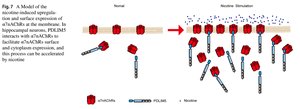
Cells can regulate their sensitivity to signals by adjusting the number of receptors.
Receptor up-regulation: Increases the number of receptors, amplifying the cell's response.
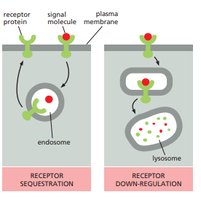
Receptor down-regulation: Decreases the number of receptors, often by internalizing and degrading them in lysosomes.
Signal Transduction and Amplification
Signal Transduction Pathways
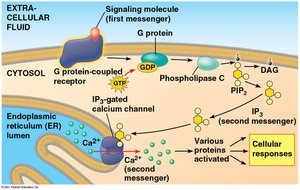
Signal transduction is the process by which an extracellular signal is converted into an intracellular response. This often involves a cascade of molecules, including second messengers such as cAMP, Ca2+, and IP3.
Second messengers: Small molecules that relay signals inside the cell.
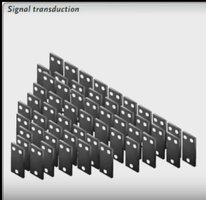
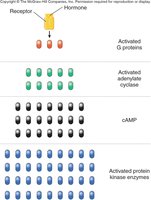
Amplification: Each step in the cascade increases the number of activated molecules, resulting in a large cellular response from a single signaling event.
Role of Amplification in Cell Signaling
Amplification ensures that a small number of signaling molecules can produce a significant cellular response. For example, one hormone molecule can activate many G proteins, which in turn activate many enzymes, leading to the production of thousands of second messenger molecules.
Importance: Allows cells to respond rapidly and efficiently to external signals.
Example: The release of calcium ions in response to a signal can trigger multiple cellular processes.
Cellular Responses to Signals
Types of Cellular Responses
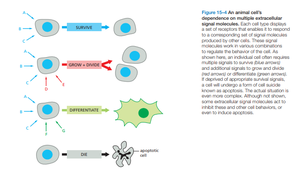
The final step in cell signaling is the cellular response, which can vary depending on the signal and the cell type.
Stimulation of neurons
Muscle contraction
Activation or inhibition of specific genes
Alteration of enzyme activity
Changes in metabolism
Modification of cell shape or movement
After the signaling molecule has acted, mechanisms exist to terminate the signal and restore the cell to its baseline state.
Summary Table: Cell Signaling Steps and Key Features
Step | Description | Key Molecules | Example |
|---|---|---|---|
Transmission | Release of signaling molecules | Ligands, hormones | Insulin secretion |
Reception | Binding to receptors | Membrane/intracellular receptors | GPCRs, steroid receptors |
Transduction | Relay and amplification of signal | Second messengers (cAMP, Ca2+) | Signal cascade |
Response | Cellular change | Enzymes, transcription factors | Gene expression, muscle contraction |
Additional info:
Cell signaling is covered in General Biology Chapter 11: Cell Communication.
Amplification is a critical feature of signal transduction, allowing cells to respond robustly to minimal stimuli.
Regulation of receptor numbers is a mechanism for cells to adapt to changing environments and maintain homeostasis.
