 뒤로
Cell Communication: Mechanisms and Pathways (Chapter 11 Study Notes)
스터디 가이드 - 스마트 노트
 자료에 맞춘 맞춤형 노트, 핵심 정의, 예시, 맥락을 확장해 제공합니다.
Cell Communication
Cellular Messaging
Cells must communicate to respond to their environment, find nutrients, defend against danger, reproduce, and coordinate with other cells. Even unicellular organisms utilize cell-signaling mechanisms, which are conserved across diverse species and biological processes.
Cell-signaling mechanisms: Fundamental for survival and function in all living organisms.
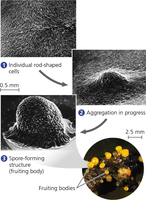
Examples: Bacteria use signaling molecules to sense population density (quorum sensing), leading to biofilm formation.
Application: Disrupting quorum sensing can be an alternative to antibiotics.
Types of Cell Communication Pathways
Direct Contact
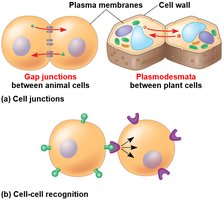
Direct contact allows cells to communicate through physical connections or recognition of surface proteins. This is essential in processes such as immune response and development.
Cell junctions: Gap junctions (animal cells) and plasmodesmata (plant cells) connect cytoplasm of adjacent cells, allowing free passage of signaling molecules.
Cell-cell recognition: Surface protein receptors on adjacent cells facilitate recognition and signaling.
Local Signaling
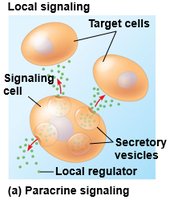
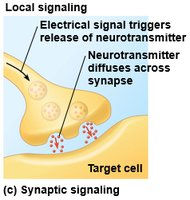
Local signaling involves the release of signaling molecules that affect nearby cells. This includes paracrine and autocrine signaling, as well as synaptic signaling in the nervous system.
Paracrine signaling: Signaling cell releases local regulators that affect nearby target cells.
Autocrine signaling: Cell releases signals that act on itself.
Synaptic signaling: Neurotransmitters released at synapses affect target cells in the nervous system.
Long-Distance Signaling
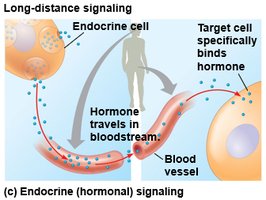
Long-distance signaling is mediated by hormones, which are released by specialized cells and travel through the circulatory system to reach distant target cells. This is a key function of the endocrine system in animals.
Hormones: Chemical messengers that regulate physiological processes across the body.
Endocrine signaling: Hormones travel via bloodstream to target cells.
Signal Processing: Steps in Cell Signaling
Three Steps of Signal Processing
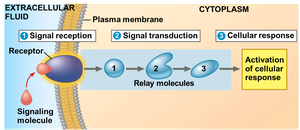
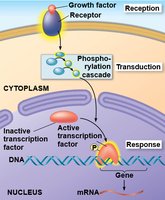
Cell signaling involves three main steps: reception, transduction, and response. Each step is crucial for the cell to interpret and react to external signals.
Reception: Signal molecule binds to a specific receptor.
Transduction: Relay molecules transmit the signal through a pathway, often amplifying it.
Response: Cellular activity is altered, such as gene expression or protein function.
Signal Reception: Types of Receptors
Categories of Cell Surface and Intracellular Receptors
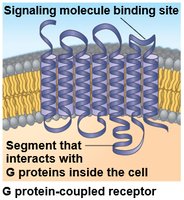
Receptors are proteins that specifically bind signaling molecules (ligands). Most are located in the plasma membrane, but some are intracellular. The four main categories are:
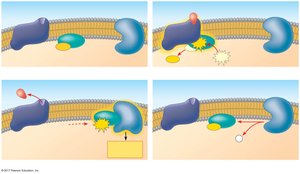
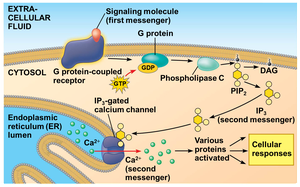
G protein-coupled receptors (GPCR): Multi-protein complexes that activate G proteins upon ligand binding.
Receptor enzymes (Tyrosine kinases): Enzymatic receptors that phosphorylate proteins upon activation.
Ion channel receptors: Ligand binding opens or closes channels for ion passage.
Intracellular receptors: Located in cytoplasm or nucleus; activated by hydrophobic ligands like steroids.
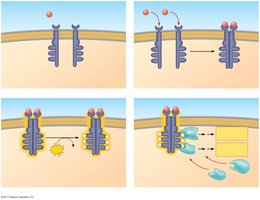
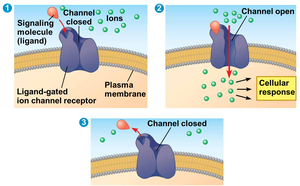
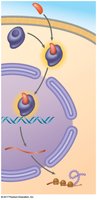
Signal Transduction
Transduction Pathways and Amplification
Signal transduction involves a cascade of molecular interactions, often amplifying the signal. Protein kinases and phosphatases regulate these pathways through phosphorylation and dephosphorylation.
Phosphorylation: Addition of phosphate groups to proteins by kinases.
Dephosphorylation: Removal of phosphate groups by phosphatases.
Phosphorylation cascade: Sequential activation of multiple kinases amplifies the signal.
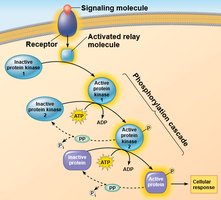
Second Messengers
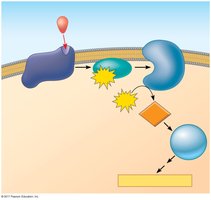
Second messengers are small molecules or ions that relay signals inside the cell. They amplify the response and allow for rapid signaling.
Cyclic AMP (cAMP): Produced from ATP by adenylyl cyclase; activates protein kinase A.
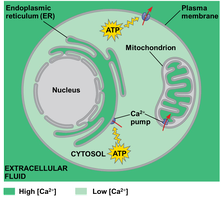
Calcium ions (Ca2+): Stored in the endoplasmic reticulum; released upon signaling to activate various proteins.

Cellular Response
Types of Cellular Responses
The final step in cell signaling is the cellular response, which can occur in the cytosol or nucleus. Responses include gene regulation, protein synthesis, cytoskeletal changes, and cell division.
Gene regulation: Activation or repression of specific genes.
Protein activity: Modification or synthesis of proteins.
Other responses: Exocytosis, endocytosis, biomolecule production, cytoskeletal rearrangement, cell division.
Regulation of Cell Signaling
Four Aspects of Signal Regulation
Cell signaling is tightly regulated to ensure appropriate responses. The four main aspects are:
Amplification: Second messengers and cascades increase signal strength.
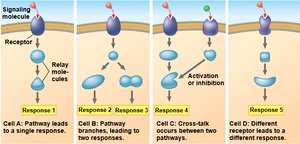
Specificity: Different cell types respond differently to the same signal due to unique proteins and pathways.
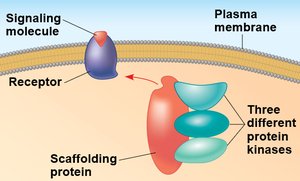
Efficiency: Scaffolding proteins organize relay proteins for efficient signaling.
Termination: Signals are terminated by diffusion, enzymatic destruction, endocytosis, or resetting membrane potential.
Apoptosis: Programmed Cell Death
Mechanism and Importance of Apoptosis
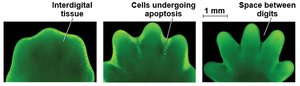
Apoptosis is a form of programmed cell death that prevents damage to neighboring cells. It is essential for development, maintenance, and disease prevention.
Mechanism: Cell components are packaged into vesicles and digested by scavenger cells.
Importance: Prevents enzyme leakage, shapes tissues during development (e.g., formation of fingers and toes), and is involved in disease processes.
Chapter 11 Key Terms and Concepts
Surface protein receptors: Proteins on cell surface that bind signaling molecules.
Exocytosis: Process by which cells release molecules into extracellular space.
Paracrine signaling: Local signaling to nearby cells.
Autocrine signaling: Cell signals to itself.
Synaptic signaling: Neurotransmitter-mediated signaling at synapses.
Hormones: Long-distance signaling molecules.
Ligands: Molecules that bind to receptors.
GPCR: G protein-coupled receptor.
RTK: Receptor tyrosine kinase.
Signal transduction: Relay and amplification of signals inside the cell.
Scaffolding proteins: Organize signaling components for efficiency.
Apoptosis: Programmed cell death.
Summary Table: Types of Cell Communication
Type | Mechanism | Example |
|---|---|---|
Direct Contact | Cell junctions, cell-cell recognition | Immune response, development |
Local Signaling | Paracrine, autocrine, synaptic | Neurotransmitter release, tissue repair |
Long-Distance Signaling | Hormonal (endocrine) | Growth regulation, metabolism |
Additional info:
Cell communication is fundamental to multicellular life, enabling coordination and specialization.
Disruption of signaling pathways can lead to diseases such as cancer and neurodegeneration.
