 뒤로
Cell Cycle and Mitosis: Study Guide for General Biology
스터디 가이드 - 스마트 노트
 자료에 맞춘 맞춤형 노트, 핵심 정의, 예시, 맥락을 확장해 제공합니다.
Cell Division: Purposes and Overview
Reasons for Cell Division
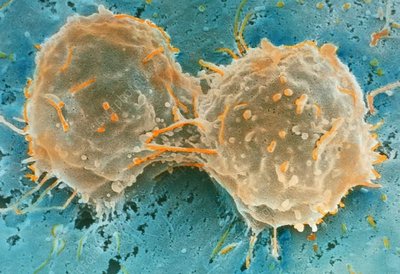
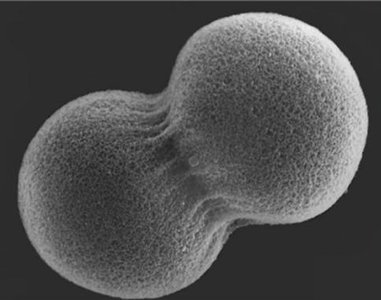
Cell division is a fundamental process required for the continuity of life. It occurs in all organisms and serves several essential purposes:
Reproduction: Cell division enables organisms to reproduce, either asexually (as in prokaryotes and some eukaryotes) or sexually (in multicellular eukaryotes).
Growth and Repair: In multicellular eukaryotes, cell division is necessary for organismal growth, tissue repair, and maintenance.
Example: Bacteria reproduce by binary fission, while human cells divide for tissue repair.
Characteristics of Cells Undergoing Division
Universal Requirements for Cell Division
All cells that undergo division share several key characteristics:
Cell Growth: Cells must increase in size and produce more cellular molecules before division.
DNA Replication: All DNA in a cell must be copied prior to division.
Distribution of DNA: The replicated DNA must be accurately distributed to each new cell.
Example: If cells did not grow before division, they would become progressively smaller.
Comparing Prokaryotic and Eukaryotic Cell Division
Structural Differences Affecting Division
Prokaryotic and eukaryotic cells differ in their structure, which impacts their division processes:
Prokaryotic Cells: Have a single, circular chromosome not wound around proteins; lack organelles; all are single-celled.
Eukaryotic Cells: Possess multiple, linear chromosomes wrapped around proteins; chromosomes are located in a nucleus; can be single-celled or multicellular.
Example: Binary fission in prokaryotes vs. mitosis in eukaryotes.
Prokaryotic Cell Division: Binary Fission
Process and Outcome
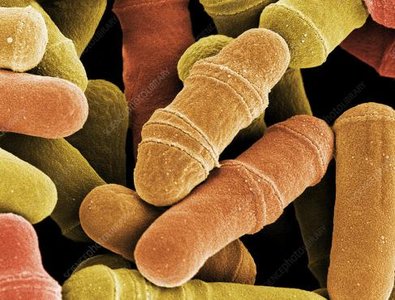
Prokaryotes reproduce by binary fission, a process distinct from mitosis:
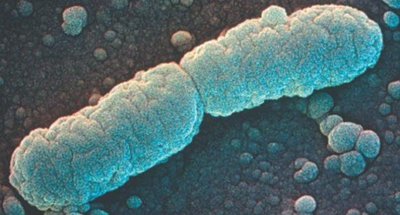
Binary Fission: The cell grows, replicates its DNA, and divides in half, producing two genetically identical daughter cells.
No Mitosis: Binary fission does not involve mitosis, as prokaryotes lack a nucleus and mitotic spindle.
Example: Bacterial cell division.
The Eukaryotic Cell Cycle
Phases of the Cell Cycle
The eukaryotic cell cycle consists of several distinct phases:
G1 Phase: Cell grows and produces cellular molecules.
S Phase: DNA is replicated.
G2 Phase: Cell prepares for division, ensuring DNA replication is complete.
M Phase (Mitosis): Chromosomes are separated and the cell divides.
Example: Altering any stage can affect cell structure or fate; checkpoints prevent abnormalities.
Control of the Cell Cycle
Cell-Cycle Checkpoints
Cell-cycle checkpoints are regulatory mechanisms that ensure proper cell division:
G1 Checkpoint: Ensures cell is large enough and has sufficient nutrients; p53 protein can trigger apoptosis if DNA is damaged.
G2 Checkpoint: Ensures DNA replication is complete and undamaged before mitosis.
M (Metaphase) Checkpoint: Ensures all chromosomes are attached to the spindle via kinetochores.
Checkpoint Table:
Checkpoint | What Happens? | How Is It Controlled? |
|---|---|---|
G1 | Cell size, nutrients, DNA integrity checked | p53 protein triggers apoptosis if DNA is damaged |
G2 | Completion and integrity of DNA replication checked | Prevents entry into mitosis with damaged DNA |
M | Chromosome attachment to spindle checked | Ensures proper chromosome segregation |
Molecular Regulation of the Cell Cycle
Key Regulators: Cyclins and Cdks
The cell cycle is regulated by molecular signals, primarily cyclins and cyclin-dependent kinases (Cdks):
Mitosis-Promoting Factor (MPF): A dimer consisting of a cyclin and a Cdk; initiates mitosis.
Cyclin: Concentration fluctuates throughout the cell cycle; regulates MPF formation.
Cdk: Functional only when bound to cyclin; catalyzes phosphorylation of proteins to start M phase.
Negative Feedback: MPF triggers destruction of its own cyclin, turning itself off.
Summary Table:
Component | Function |
|---|---|
Cyclin | Regulates MPF formation; concentration varies |
Cdk | Phosphorylates proteins; active only with cyclin |
MPF | Initiates mitosis; triggers chromosomal condensation and spindle formation |
Equation:
Mitosis: Stages and Key Events
Sequence of Mitosis
Mitosis is the process by which eukaryotic cells divide their chromosomes. The stages are:
Prophase: Chromatin condenses into visible chromosomes; mitotic spindle begins to form.
Prometaphase: Nuclear envelope breaks down; spindle microtubules attach to kinetochores.
Metaphase: Chromosomes align at the cell's equator; sister chromatids are attached to spindle microtubules from opposite poles.
Anaphase: Sister chromatids separate and move to opposite poles.
Telophase: Nuclear envelope reforms; chromosomes decondense; spindle disassembles.
Example: Failure of sister chromatids to separate results in abnormal chromosome numbers in daughter cells.
Cancer and Cell Cycle Regulation
Genetic Control and Consequences
Cancer arises from uncontrolled cell division due to mutations in genes regulating the cell cycle:
Tumor Suppressor Genes: Encode proteins that halt cell division ("brakes").
Proto-Oncogenes: Encode proteins that promote cell division ("gas pedal").
Oncogenes: Mutated proto-oncogenes that drive nonstop cell growth.
BRCA1: Human tumor suppressor gene involved in DNA repair and suppression of uncontrolled growth.
Example: Mutations in BRCA1 increase cancer risk.
Follow-Up Questions
Compare the purposes of cell division in prokaryotes and eukaryotes.
Describe the process of prokaryotic cell division (binary fission).
Explain why it’s necessary for eukaryotic chromosomes to condense prior to mitosis.
Describe the steps of mitosis. Draw and label pictures to illustrate your description.
Humans have twenty-three pairs of chromosomes. During division of a human skin cell, the two sister chromatids of one replicated chromosome fail to separate. How many individual chromosomes will each of the daughter cells have?
