 뒤로
Cell Cycle, Chromosome Structure, and Genetics Study Guide – Step-by-Step Guidance
스터디 가이드 - 스마트 노트
 자료에 맞춘 맞춤형 노트, 핵심 정의, 예시, 맥락을 확장해 제공합니다.
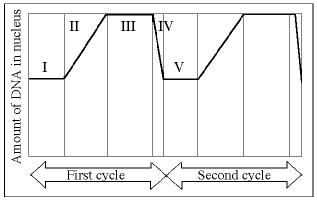
Q1. What are phase I, II, III, IV, and V in this diagram (see Lab on cell reproduction)?
Background
Topic: Cell Cycle and DNA Replication
This question tests your understanding of the cell cycle phases and how the amount of DNA in the nucleus changes during each phase. The diagram shows the progression of DNA content through two cycles, which is key to understanding mitosis and meiosis.
Key Terms:
Interphase: Includes G1, S, and G2 phases where the cell grows and DNA is replicated.
Mitosis/Meiosis: Cell division processes that follow interphase.
DNA Replication: Occurs during S phase, doubling the DNA content.
Cytokinesis: Division of the cytoplasm, returning DNA content to normal.
Step-by-Step Guidance
Examine the diagram and note the changes in DNA content across each labeled phase (I–V).
Recall that DNA content increases during the S phase (synthesis) and decreases after cell division (mitosis or meiosis).
Associate each phase with a specific stage of the cell cycle: G1 (growth), S (DNA synthesis), G2 (preparation for division), M (mitosis/meiosis), and cytokinesis.
Match the DNA content changes to the cell cycle events: a rise indicates DNA replication, a drop indicates cell division.
Use your lab notes or textbook to confirm which cell cycle stage corresponds to each phase in the diagram.
Try solving on your own before revealing the answer!
Final Answer:
Phase I: G1 phase (cell growth, DNA content is normal)
Phase II: S phase (DNA synthesis, DNA content increases)
Phase III: G2 phase (post-replication, DNA content is doubled)
Phase IV: M phase (mitosis or meiosis, DNA content decreases as cells divide)
Phase V: G1 phase of the next cycle (DNA content returns to normal after division)
The diagram visually represents how DNA content changes as cells progress through the cell cycle, with increases during S phase and decreases after cell division.
