 뒤로
Cell Cycle, Mitosis, and Meiosis: Core Concepts in General Biology
스터디 가이드 - 스마트 노트
 자료에 맞춘 맞춤형 노트, 핵심 정의, 예시, 맥락을 확장해 제공합니다.
The Cell Cycle and Mitosis
Introduction to the Cell Cycle
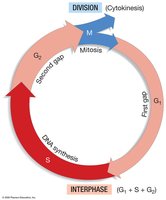
The cell cycle is the sequence of events that cells undergo as they grow and divide. It is fundamental to the development, maintenance, and repair of multicellular organisms. The cell cycle consists of two main phases: Interphase and Division (M phase).
Interphase: The period of cell growth and DNA replication, subdivided into G1 (first gap), S (DNA synthesis), and G2 (second gap) phases.
M phase: Includes mitosis (division of nuclear material) and cytokinesis (division of cytoplasm).
Cells spend most of their time in interphase.
Chromosomes and Cell Replication
Chromosomes are structures composed of DNA and proteins that carry genetic information. Each chromosome is replicated before mitosis, resulting in two sister chromatids joined at a centromere.
Gene: A segment of DNA that codes for a specific protein.
Chromatid: One of two identical halves of a replicated chromosome.
Centromere: The region where sister chromatids are joined.
Phases of Mitosis
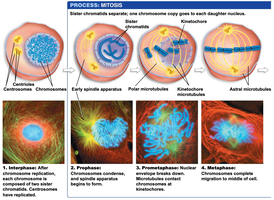
Mitosis is a continuous process divided into five subphases: prophase, prometaphase, metaphase, anaphase, and telophase. It ensures equal distribution of chromosomes to daughter cells.
Prophase: Chromatin condenses into visible chromosomes.
Prometaphase: Nuclear envelope breaks down; spindle fibers attach to chromosomes.
Metaphase: Chromosomes align at the cell's equator.
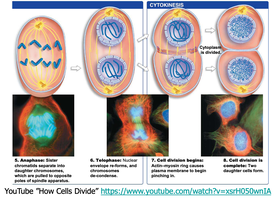
Anaphase: Sister chromatids separate and move to opposite poles.
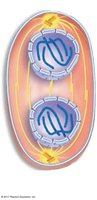
Telophase: Nuclear envelope reforms around chromosomes.
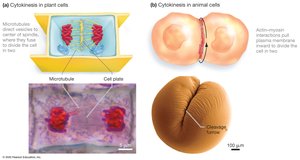
Cytokinesis: Division of cytoplasm, resulting in two daughter cells.
Cytokinesis: Plant vs. Animal Cells
Cytokinesis differs between plant and animal cells due to structural differences.
Plant cells: Form a cell plate that develops into a new cell wall.
Animal cells: Use an actin-myosin ring to pinch the cell membrane, creating two cells.
Binary Fission in Bacteria
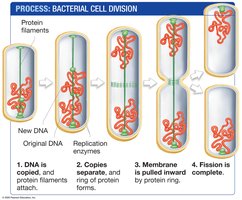
Bacterial cell division occurs by binary fission, a simpler process than mitosis.
DNA is copied.
Copies separate as the cell elongates.
Membrane is pulled inward by a protein ring.
Fission completes, producing two identical cells.
Cell Cycle Regulation and Checkpoints
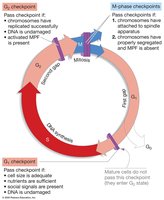
The cell cycle is tightly regulated by checkpoints that ensure proper division and prevent errors.
G1 checkpoint: Checks for cell size, nutrients, and DNA integrity.
G2 checkpoint: Ensures DNA replication is complete and undamaged.
M-phase checkpoints: Confirm chromosome attachment to spindle and proper segregation.
Cancer and Loss of Cell Cycle Control
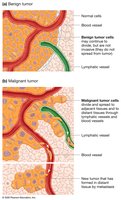
Cancer cells arise when cell cycle regulation fails, leading to uncontrolled growth and division.
Benign tumors: Cells divide abnormally but do not invade other tissues.
Malignant tumors: Cells invade surrounding tissues and can spread (metastasize).
Meiosis: The Basis of Sexual Reproduction
Introduction to Meiosis
Meiosis is a specialized type of cell division that reduces the chromosome number by half, producing gametes (sperm and egg) for sexual reproduction. It promotes genetic diversity through recombination and independent assortment.
Haploid: Cells with one set of chromosomes (n).
Diploid: Cells with two sets of chromosomes (2n).
Homologous chromosomes: Chromosome pairs with the same genes but possibly different alleles.
Phases of Meiosis
Meiosis occurs in two sequential phases: Meiosis I and Meiosis II.
Meiosis I: Homologous chromosomes separate, reducing chromosome number.
Meiosis II: Sister chromatids separate, similar to mitosis.
Genetic Variation in Meiosis
Meiosis increases genetic variation through two main mechanisms:
Crossing over: Exchange of genetic material between homologous chromosomes during prophase I.
Independent assortment: Random distribution of homologous chromosomes during metaphase I.
These processes ensure that each gamete is genetically unique.
DNA Synthesis and Replication
Structure and Function of DNA
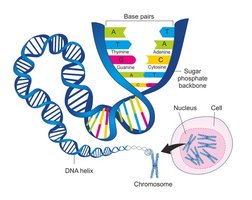
DNA (deoxyribonucleic acid) is the hereditary material in cells. Its double helix structure allows for accurate replication and transmission of genetic information.
Complementary base pairing: Adenine pairs with thymine, cytosine pairs with guanine.
Antiparallel strands: Two strands run in opposite directions.
Double helix: Twisted ladder structure.
DNA Replication Mechanisms
DNA replication is semi-conservative, meaning each new DNA molecule contains one old and one new strand. The process involves several enzymes:
Helicase: Unwinds the DNA helix.
DNA polymerase: Synthesizes new DNA strands.
Primase: Adds RNA primers.
Ligase: Joins Okazaki fragments on the lagging strand.
Leading strand: Synthesized continuously. Lagging strand: Synthesized discontinuously in Okazaki fragments.
Proofreading and repair mechanisms ensure high fidelity in DNA replication.
Mendelian Genetics: Principles of Inheritance
Gregor Mendel and Model Systems
Gregor Mendel used pea plants to study inheritance, establishing the principles of segregation and independent assortment. Model organisms are chosen for their ease of use and relevance to broader biological questions.
Allele: Different versions of a gene.
Genotype: Genetic makeup of an organism.
Phenotype: Observable traits.
Loci: Location of a gene on a chromosome.
Monohybrid and Dihybrid Crosses
Monohybrid crosses illustrate the principle of segregation, while dihybrid crosses demonstrate independent assortment.
Principle of Segregation: Each parent passes one allele for each gene to offspring.
Principle of Independent Assortment: Genes for different traits are inherited independently.
Extensions of Mendel’s Rules
Inheritance patterns can be more complex than Mendel described, including linkage, sex-linkage, multiple allelism, codominance, and incomplete dominance.
Linkage: Genes located close together on the same chromosome tend to be inherited together.
Sex-linkage: Traits associated with sex chromosomes.
Multiple allelism: More than two alleles for a gene (e.g., blood type).
Codominance: Both alleles are expressed equally.
Incomplete dominance: Heterozygotes show intermediate phenotype.
Summary: The cell cycle, mitosis, meiosis, DNA replication, and Mendelian genetics are foundational concepts in biology, explaining how cells divide, how genetic information is transmitted, and how variation arises in populations.
