 뒤로
Cell Division and the Cell Cycle: Structure, Function, and Regulation
스터디 가이드 - 스마트 노트
 자료에 맞춘 맞춤형 노트, 핵심 정의, 예시, 맥락을 확장해 제공합니다.
Cell Division: The Basis of Life Continuity
Functions and Importance of Cell Division
Cell division is a fundamental process that enables organisms to reproduce, grow, and maintain their tissues. It distinguishes living things from nonliving matter by allowing the continuity of life through the reproduction of cells.
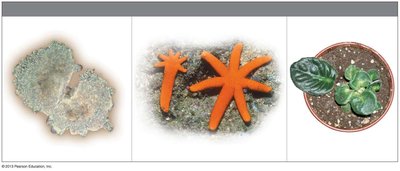
Asexual Reproduction: In unicellular organisms, division of one cell reproduces the entire organism. Some multicellular organisms, such as sea stars, can regenerate new individuals from fragments. Plants can grow new individuals from clippings.
Tissue Renewal: Multicellular organisms depend on cell division to replace damaged or lost cells.
Growth and Development: Cell division permits growth from a single cell to a multicellular organism.
Genetic Continuity: Most cell division results in genetically identical daughter cells, ensuring the preservation of genetic information.
Example: Regeneration of a sea star, division of an amoeba, and growth of a plant from a clipping.
Types of Cell Division
Mitosis and Meiosis
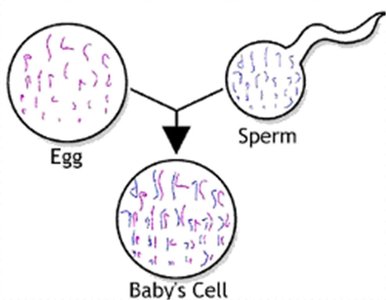
Eukaryotic cell division consists of two main processes: mitosis and meiosis. Mitosis produces genetically identical daughter cells, while meiosis generates gametes with half the chromosome number.
Mitosis: Division of the genetic material in the nucleus, resulting in identical daughter cells.
Cytokinesis: Division of the cytoplasm, completing the process of cell division.
Meiosis: Specialized cell division that produces gametes (sperm and eggs) with half the chromosome number (haploid).
Example: Human somatic cells have 46 chromosomes (diploid), while gametes have 23 (haploid).
Chromosomes and the Genome
Structure and Organization
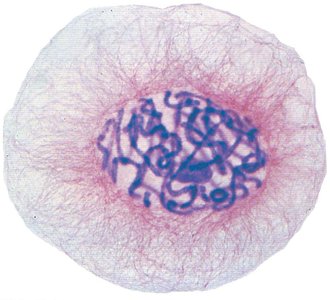
All the DNA in a cell constitutes its genome. Eukaryotic chromosomes are composed of chromatin, a complex of DNA and protein, which condenses into chromosomes prior to cell division.
Genome: The complete set of DNA in a cell, inherited from parents.
Chromatin: The uncondensed form of DNA and protein in the nucleus.
Chromosomes: Condensed structures formed from chromatin during cell division.
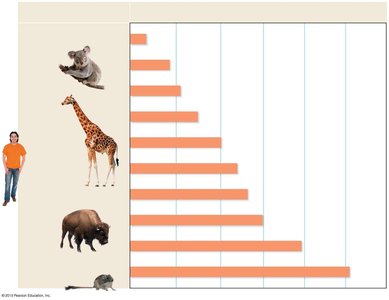
Example: Human cells contain 46 chromosomes; other species have characteristic chromosome numbers.
The Cell Cycle
Phases and Regulation
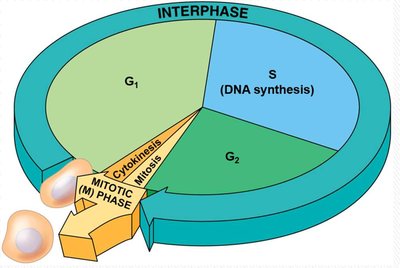
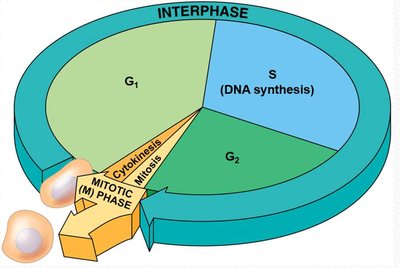
The cell cycle is an orderly sequence of stages from one cell division to the next. It consists of interphase (G1, S, G2) and the mitotic phase (mitosis and cytokinesis).
Interphase: The cell performs its usual functions and prepares for division. It is divided into G1 (growth), S (DNA synthesis), and G2 (preparation for mitosis).
Mitotic Phase: Includes mitosis (nuclear division) and cytokinesis (cytoplasmic division).
Example: Most of the cell cycle is spent in interphase (about 90%).

Stages of Mitosis
Prophase, Prometaphase, Metaphase, Anaphase, Telophase
Mitosis is broken down into five stages, each characterized by specific changes in the nucleus and cytoplasm.
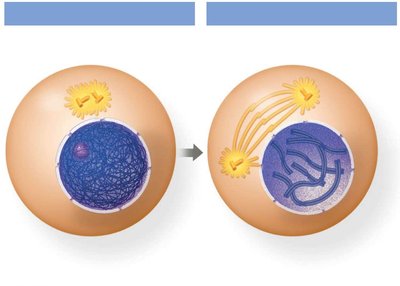
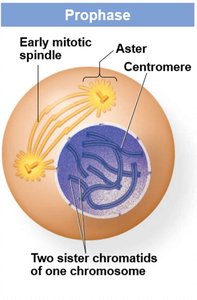
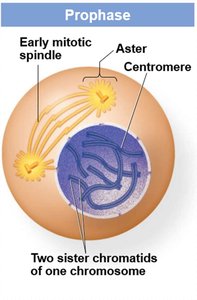
Prophase: Chromatin condenses into visible chromosomes; the nuclear envelope fragments; the mitotic spindle begins to form.
Prometaphase: Nuclear envelope fragments; spindle fibers attach to kinetochores on chromosomes.
Metaphase: Chromosomes align at the metaphase plate, midway between spindle poles.
Anaphase: Sister chromatids separate and move toward opposite poles.
Telophase: Nuclear envelope reforms; chromosomes uncoil; cytokinesis begins.
Example: The mitotic spindle guides chromosome separation in animal cells.
Cytokinesis: Division of the Cytoplasm
Differences in Plant and Animal Cells
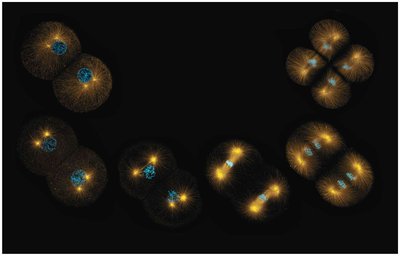
Cytokinesis is the process that divides the cytoplasm, resulting in two daughter cells. The mechanism differs between plant and animal cells.
Animal Cells: Cytokinesis occurs via cleavage, forming a cleavage furrow.
Plant Cells: Cytokinesis occurs via cell plate formation, where vesicles fuse to form a new cell wall.
Example: Cleavage furrow in animal cells; cell plate in plant cells.
Regulation of the Cell Cycle
Checkpoints and Molecular Control
The cell cycle is regulated by a molecular control system with checkpoints that ensure proper division. Internal and external signals influence progression through the cycle.
Checkpoints: G1, G2, and M checkpoints monitor DNA integrity, spindle assembly, and proper chromosome alignment.
Cyclin-dependent kinases (Cdks): Regulate cell cycle transitions by activating substrates when bound to cyclins.
MPF (Maturation-Promoting Factor): Cyclin-Cdk complex that triggers passage past the G2 checkpoint into M phase.
Example: If DNA is damaged at G1, the cell may undergo apoptosis.
Checkpoint | Main Function | Outcome if Failed |
|---|---|---|
G1 | Checks for DNA damage, cell size, nutrients | Apoptosis or G0 phase |
G2 | Checks for DNA replication completion | Apoptosis if DNA is damaged |
M | Checks for proper chromosome alignment | Mitosis halted |
Apoptosis and Cancer
Programmed Cell Death and Loss of Regulation
Apoptosis is programmed cell death, balancing cell division. Cancer arises when cells escape normal regulatory mechanisms, leading to uncontrolled growth.
Apoptosis: Involves nuclear fragmentation, membrane blistering, and engulfment of cell fragments by enzymes called caspases.
Cancer: Cells lack differentiation, have abnormal nuclei, do not undergo apoptosis, and can form tumors that invade tissues and metastasize.
Example: Cancer treatments target actively dividing cells; recent advances allow personalized therapies based on tumor DNA sequencing.
Normal Cells | Cancer Cells |
|---|---|
Specialized, undergo apoptosis | Non-specialized, immortal, avoid apoptosis |
Normal nuclei | Abnormal nuclei, extra chromosomes |
Regulated division | Unregulated division, form tumors |
Summary
Cell division is essential for life, enabling reproduction, growth, and tissue maintenance. The cell cycle is tightly regulated, and disruptions can lead to diseases such as cancer. Understanding these processes is fundamental to biology and medicine.
