 뒤로
Cell Membrane Structure and Function: General Biology Study Notes
스터디 가이드 - 스마트 노트
 자료에 맞춘 맞춤형 노트, 핵심 정의, 예시, 맥락을 확장해 제공합니다.
Cell Membrane Structure
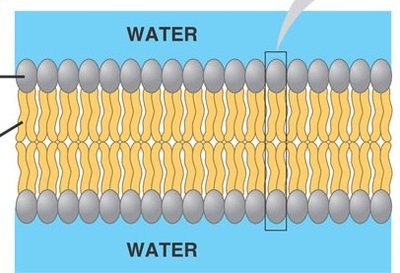
Phospholipid Bilayer
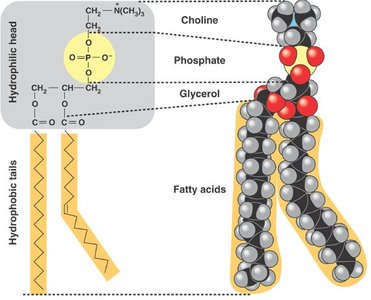
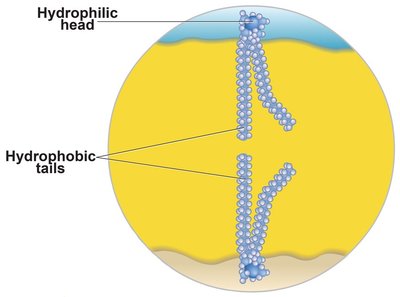
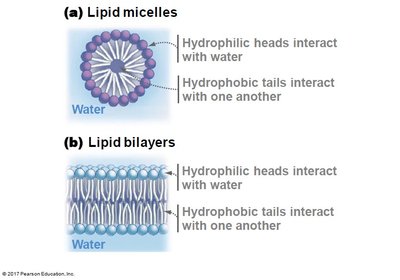
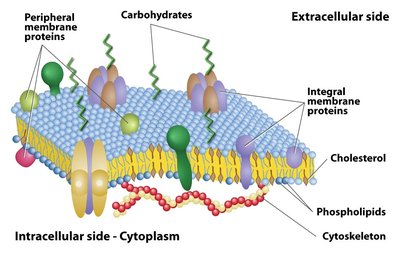
The cell membrane is primarily composed of a phospholipid bilayer, which forms the fundamental structure of all biological membranes. Phospholipids are amphipathic molecules, meaning they have both hydrophilic (water-loving) heads and hydrophobic (water-foo0earing) tails. The hydrophilic heads face outward toward the aqueous environments, while the hydrophobic tails face inward, away from water, creating a stable barrier.
Hydrophilic head: Contains a phosphate group and interacts with water.
Hydrophobic tails: Composed of fatty acids, repel water.
Bilayer formation: Tails face each other, heads face water on both sides.
Membrane Components
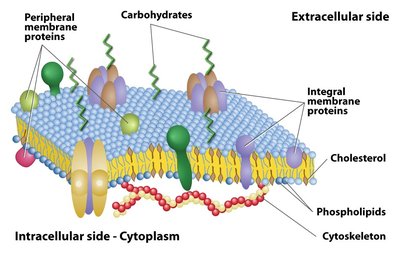
In addition to phospholipids, cell membranes contain cholesterol, proteins, and carbohydrates. These components contribute to membrane function and structure.
Cholesterol: Interspersed among phospholipids, modulates membrane fluidity.
Proteins: Integral (transmembrane) and peripheral proteins serve various functions.
Carbohydrates: Attached to proteins (glycoproteins) or lipids (glycolipids), important for cell recognition.
Fluid-Mosaic Model
Membrane Fluidity and Mosaic Nature
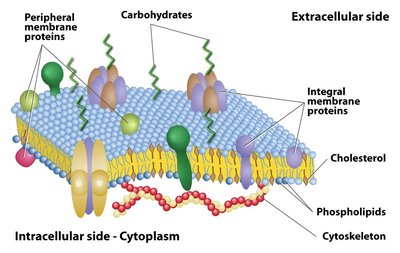
The Fluid-Mosaic Model describes the cell membrane as a dynamic structure where lipids and proteins move laterally within the bilayer. The membrane is 'fluid' because components are not static, and 'mosaic' due to the diverse proteins and other molecules embedded within.
Lateral movement: Lipids and proteins move side-to-side; 'flip-flop' between layers is rare.
Asymmetry: Outer and inner leaflets of the bilayer have different compositions.
Regulation of Membrane Fluidity
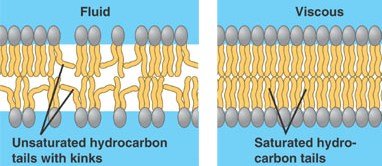
Membrane fluidity is regulated by the composition of fatty acid tails and the presence of cholesterol. Unsaturated fatty acids (with double bonds) increase fluidity, while saturated fatty acids decrease it. Cholesterol acts as a temperature buffer.
Unsaturated fatty acids: Increase fluidity due to kinks in tails.
Saturated fatty acids: Decrease fluidity by allowing tight packing.
Cholesterol: Reduces fluidity at high temperatures, prevents solidification at low temperatures.
Membrane Proteins
Types and Functions
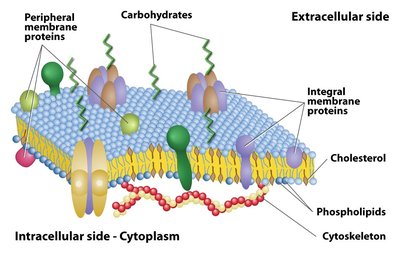
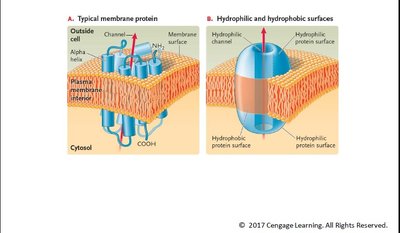
Membrane proteins are essential for various cellular functions. They are classified as integral (transmembrane) or peripheral proteins. Integral proteins span the membrane, while peripheral proteins are attached to the membrane surface.
Integral proteins: Embedded in the membrane, often involved in transport.
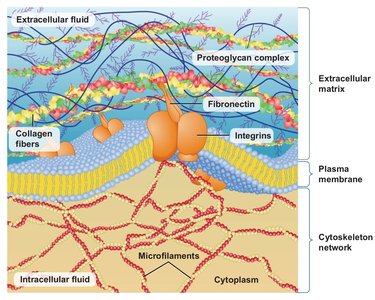
Peripheral proteins: Loosely attached to the membrane, may be anchored to cytoskeleton or extracellular matrix.
Functions: Transport, enzymatic activity, signal transduction, cell-cell recognition, cell attachment, and anchoring.
Carbohydrates in the Membrane
Glycoproteins and Glycolipids
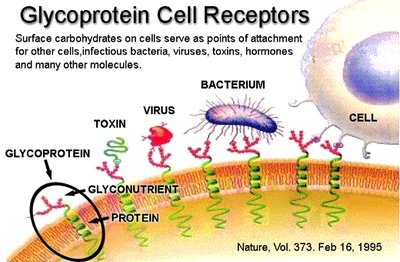
Carbohydrates are always bound to proteins (glycoproteins) or lipids (glycolipids) in the membrane. They serve as cell 'tags' for recognition and signaling, varying by cell type and individual. For example, blood types (A, B, O) are determined by carbohydrate markers on red blood cells.
Cell recognition: Carbohydrates allow cells to identify each other and interact.
Immune response: Glycoproteins are important for immune system function.
Membrane Permeability
Selective Permeability
Cell membranes exhibit selective permeability, allowing certain substances to cross while restricting others. Permeability depends on the lipid composition, polarity, concentration, and size of solutes.
Small non-polar molecules: (e.g., O2, CO2, hydrocarbons) can diffuse directly through the bilayer.
Small polar molecules and ions: Require transport proteins (channels, carriers).
Large molecules: Require vesicle-mediated transport (endocytosis, exocytosis).
Transport Mechanisms
Substances move across membranes by different mechanisms:
Diffusion: Passive movement down concentration gradient (no energy required).
Facilitated diffusion: Passive movement via transport proteins (channels/carriers).
Active transport: Movement against concentration gradient, requires energy (ATP).
Vesicle-mediated transport: For large molecules (endocytosis, exocytosis).
Osmosis and Osmoregulation
Osmosis
Osmosis is the diffusion of water across a selectively permeable membrane. Water moves from areas of high concentration to low concentration, seeking equilibrium.
Hypotonic solution: Lower solute concentration outside cell; water enters cell.
Isotonic solution: Equal solute concentration; no net water movement.
Hypertonic solution: Higher solute concentration outside cell; water leaves cell.
Osmoregulation
Osmoregulation is the control of water balance within cells and organisms. Cells must maintain proper osmotic conditions to prevent lysis (bursting) or shriveling.
Turgid: Plant cells in hypotonic solution; cell wall prevents bursting.
Plasmolyzed: Plant cells in hypertonic solution; cell membrane pulls away from wall.
Flaccid: Plant cells in isotonic solution; no net water movement.
Summary Table: Membrane Transport Types
Size | Polarity | Concentration Gradient | Type of Transport |
|---|---|---|---|
Small | Non-polar | Down | Diffusion |
Small | Non-polar | Up | Active Transport |
Small | Polar | Down | Facilitated Diffusion |
Small | Polar | Up | Active Transport |
Big | Polar or Non-polar | Down or Up | Vesicle-mediated |
Key Equations
Diffusion and Osmosis
Diffusion and osmosis are governed by concentration gradients:
Fick's Law of Diffusion:
Osmotic Pressure:
J = flux, D = diffusion coefficient, C = concentration, x = distance, i = van't Hoff factor, M = molarity, R = gas constant, T = temperature.
Practice Questions
How do you regulate the fluidity of the cell membrane?
Which molecules can pass directly through the lipid bilayer?
What is the role of glycoproteins in cell membranes?
Describe the difference between diffusion, facilitated diffusion, and active transport.
Explain osmosis and its importance in cell function.
Additional info:
Some context and explanations were expanded for clarity and completeness, including definitions, examples, and equations relevant to General Biology students.
