 뒤로
Cellular Respiration and Fermentation: Energy Processing in Cells
스터디 가이드 - 스마트 노트
 자료에 맞춘 맞춤형 노트, 핵심 정의, 예시, 맥락을 확장해 제공합니다.
Cellular Respiration and Fermentation
Overview of Cellular Energy Processing
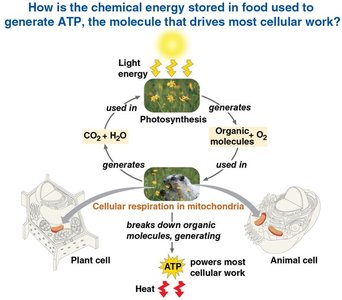
Cellular respiration and fermentation are essential metabolic pathways by which living organisms extract energy from food molecules. These processes are central to the functioning of all cells, enabling the production of ATP, the universal energy currency. There is a reciprocal relationship between chemoheterotrophic nutrition (cellular respiration) and photoautotrophic nutrition (photosynthesis), with the inputs of one serving as the outputs of the other.
Chemoheterotrophs obtain energy by oxidizing organic molecules.
Photoautotrophs use light energy to synthesize organic molecules from CO2 and H2O.
ATP is the main product of cellular respiration, powering most cellular work.
Metabolic reactions are tightly controlled in multi-step pathways.
Redox Reactions in Cellular Respiration
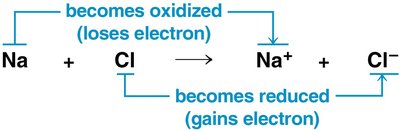
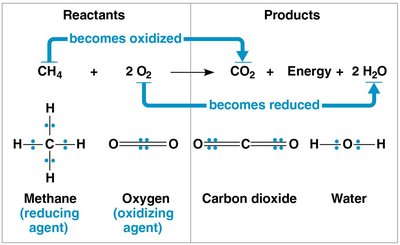
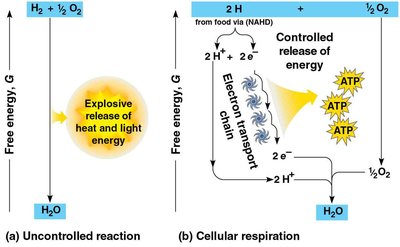
Cellular respiration is fundamentally a series of redox reactions, where electrons are transferred from one molecule to another. These reactions are crucial for the controlled release of energy from food molecules.
Oxidation: Loss of electrons from a molecule.
Reduction: Gain of electrons by a molecule.
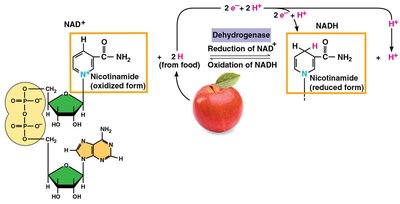
Electron shuttles (e.g., NAD+, FAD) carry electrons and protons to different parts of the cell.
Control of Energy Release
Cells decouple the oxidation of glucose from the reduction of oxygen, allowing for a controlled release of energy. This prevents explosive energy release and enables efficient ATP production.
Electron transport chains facilitate stepwise energy release.
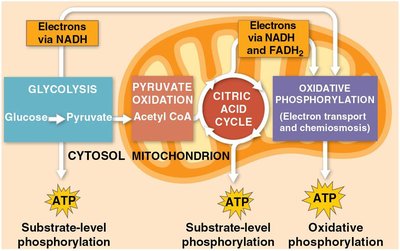
ATP is produced at multiple stages, primarily through substrate-level and oxidative phosphorylation.
Stages of Cellular Respiration
Glycolysis
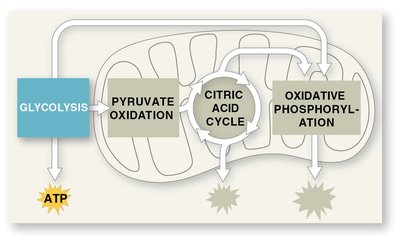
Glycolysis is the first step in cellular respiration, occurring in the cytoplasm of all cells. It is an ancient pathway, present in all organisms, and involves the breakdown of glucose into pyruvate.
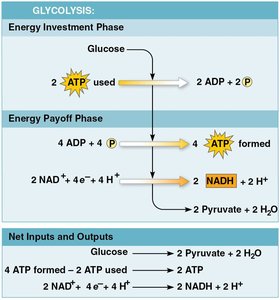
Glucose (6C) is split into two pyruvate (3C) molecules.
Requires 2 ATP, produces 4 ATP (net gain of 2 ATP).
2 NAD+ are reduced to 2 NADH.
ATP is produced by substrate-level phosphorylation.
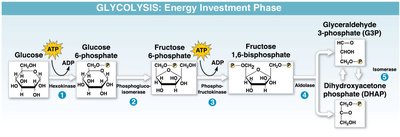
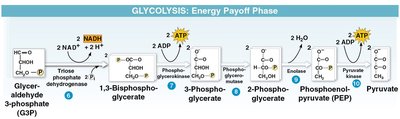
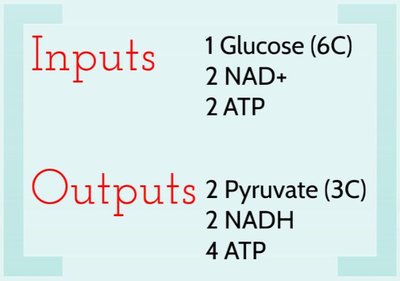
Glycolysis: Inputs and Outputs
Inputs | Outputs |
|---|---|
1 Glucose (6C) | 2 Pyruvate (3C) |
2 NAD+ | 2 NADH |
2 ATP | 4 ATP |
Fermentation (Anaerobic Respiration)
When oxygen is not available, cells undergo fermentation to regenerate NAD+ and allow glycolysis to continue. Fermentation occurs in the cytoplasm and produces waste products such as ethanol or lactate.
NADH is oxidized back to NAD+.
Pyruvate is reduced to either ethanol (in yeast) or lactate (in animals).
Fermentation enables ATP production without oxygen.
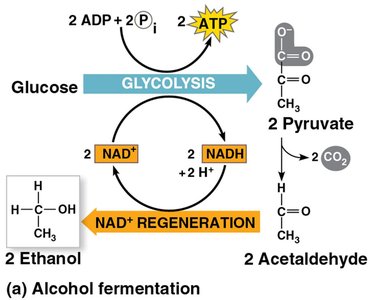
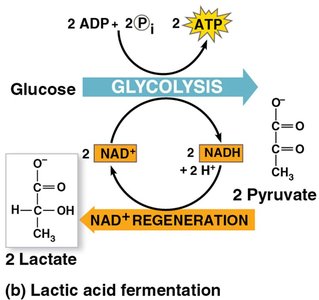
Fermentation Pathways
Type | Organism | Product |
|---|---|---|
Alcohol fermentation | Yeast | Ethanol + CO2 |
Lactic acid fermentation | Animals (muscle cells) | Lactate |
Aerobic Respiration: Mitochondrial Processes
In the presence of oxygen, eukaryotic cells transport glycolysis products into mitochondria, where further energy extraction occurs via the citric acid cycle and oxidative phosphorylation.
Pyruvate is converted to acetyl-CoA, releasing CO2 and reducing NAD+ to NADH.
The citric acid cycle oxidizes acetyl-CoA, producing NADH, FADH2, ATP, and CO2.
Each glucose molecule results in two turns of the citric acid cycle.
Citric Acid Cycle: Inputs and Outputs
Per Glucose | Product |
|---|---|
2 Acetyl-CoA | 4 CO2 |
6 NAD+ | 6 NADH |
2 FAD | 2 FADH2 |
2 ADP | 2 ATP |
Oxidative Phosphorylation and Chemiosmosis
Oxidative phosphorylation is the final stage of aerobic respiration, occurring in the inner mitochondrial membrane. It involves the electron transport chain and chemiosmosis, resulting in the bulk of ATP production.
NADH and FADH2 are oxidized, transferring electrons to the electron transport chain.
Electrons flow through protein complexes, releasing energy to pump protons (H+) into the intermembrane space.
Oxygen acts as the terminal electron acceptor, forming water.
The proton gradient drives ATP synthesis via ATP synthase (chemiosmosis).
ATP Yield from Cellular Respiration
Stage | ATP Produced |
|---|---|
Glycolysis | 2 |
Citric Acid Cycle | 2 |
Oxidative Phosphorylation | ~28-34 |
Total | ~32-36 |
Aerobic respiration is about 19 times more efficient than anaerobic respiration, with a maximum theoretical yield of 38 ATP per glucose.
Versatility of Cellular Respiration
All macromolecules (carbohydrates, fats, proteins) can serve as substrates for cellular respiration. Different molecules enter the pathway at different points, depending on their structure.
Carbohydrates are used first, followed by fats, then proteins (in starvation).
Metabolic flexibility allows organisms to adapt to varying nutrient availability.
Control and Regulation of Cellular Respiration
Cellular respiration is tightly regulated to ensure efficient energy production and prevent wasteful reactions. Key regulatory points include glycolysis, pyruvate oxidation, and the citric acid cycle.
Feedback inhibition and allosteric regulation control enzyme activity.
ATP, ADP, NADH, and other metabolites act as signals for pathway regulation.
Summary Table: Cellular Respiration Pathways
Pathway | Location | Main Products | ATP Production |
|---|---|---|---|
Glycolysis | Cytoplasm | Pyruvate, NADH | 2 (substrate-level) |
Fermentation | Cytoplasm | Ethanol or Lactate, NAD+ | 0 (allows glycolysis to continue) |
Citric Acid Cycle | Mitochondrial Matrix | CO2, NADH, FADH2 | 2 (substrate-level) |
Oxidative Phosphorylation | Inner Mitochondrial Membrane | ATP, H2O | ~28-34 (chemiosmosis) |
Additional info: Glycolysis is considered the most ancient metabolic pathway, present in all living organisms. The citric acid cycle is also known as the Krebs cycle, named after Hans Krebs. Chemiosmosis, proposed by Peter Mitchell, is the major mechanism for ATP production in both cellular respiration and photosynthesis.
