 뒤로
Cellular Respiration and Fermentation: Energy Production in Cells
스터디 가이드 - 스마트 노트
 자료에 맞춘 맞춤형 노트, 핵심 정의, 예시, 맥락을 확장해 제공합니다.
Cellular Respiration and Fermentation
Overview of Cellular Respiration
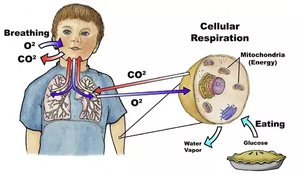
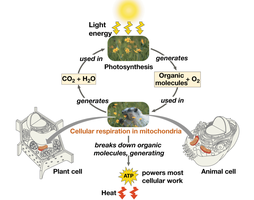
Cellular respiration is a fundamental process by which cells extract energy from organic molecules, primarily glucose, to produce ATP, the energy currency of the cell. This process involves a series of metabolic pathways that occur in different regions of the cell and is essential for both plant and animal life.
Cellular respiration occurs in the mitochondria of eukaryotic cells.
It transforms chemical energy stored in food into ATP, releasing some energy as heat.
Oxygen is required for aerobic respiration, and carbon dioxide is released as a waste product.
Glucose is the primary fuel, but other molecules like fats and proteins can also be used.
ATP produced powers most cellular work.
Fermentation is an alternative pathway that occurs without oxygen, yielding less ATP.
Redox Reactions in Cellular Respiration
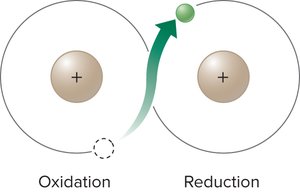
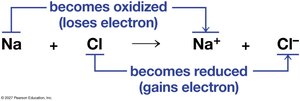
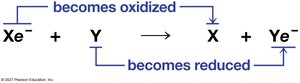
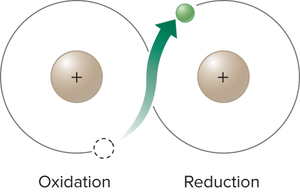
Cellular respiration relies on oxidation-reduction (redox) reactions, where electrons are transferred between molecules. These reactions release energy that is harnessed to synthesize ATP.
Oxidation: Loss of electrons from a molecule.
Reduction: Gain of electrons by a molecule.
Redox reactions are central to energy exchanges in cells.
Dehydrogenation involves the loss of hydrogen atoms (electrons and protons).
Decarboxylation involves the removal of carbon, releasing CO2.
Electron Carriers and the Electron Transport Chain
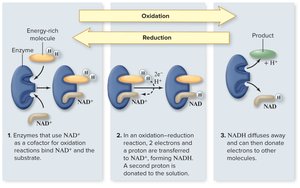
Electron carriers such as NAD+ play a crucial role in cellular respiration by shuttling electrons to the electron transport chain, where most ATP is produced.
NAD+ is a coenzyme that acts as an electron acceptor.
When NAD+ accepts electrons and a proton, it becomes NADH, storing energy.
Enzymes called dehydrogenases facilitate these transfers.
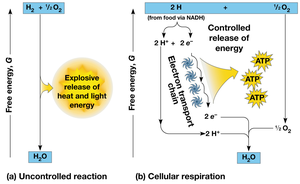
The electron transport chain is located in the inner mitochondrial membrane.
Electrons are passed through a series of proteins, releasing energy in steps.
Stages of Cellular Respiration
Three Main Stages
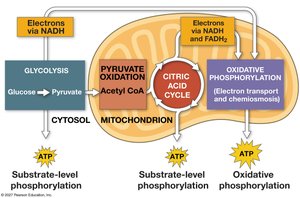
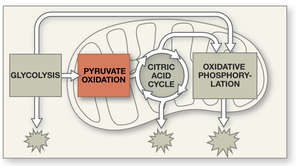
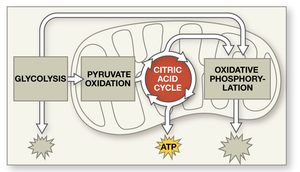
Cellular respiration consists of three main stages, each occurring in specific regions of the cell:
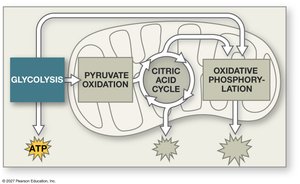
Glycolysis: Occurs in the cytosol; breaks down glucose into pyruvate.
Pyruvate Oxidation and Citric Acid Cycle: Occurs in the mitochondria; completes the breakdown of glucose.
Oxidative Phosphorylation: Occurs in the mitochondria; includes the electron transport chain and chemiosmosis, producing most ATP.
Substrate-Level vs. Oxidative Phosphorylation
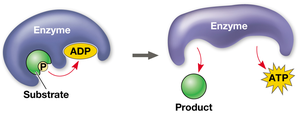
ATP is produced by two mechanisms:
Substrate-level phosphorylation: Direct transfer of a phosphate group to ADP by an enzyme.
Oxidative phosphorylation: ATP synthesis powered by the electron transport chain and chemiosmosis.
Glycolysis
Process and Phases
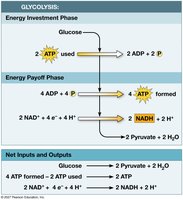
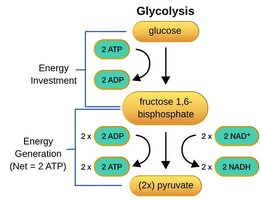
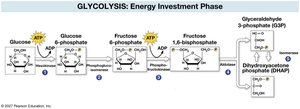
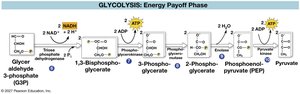
Glycolysis is the first stage of cellular respiration, occurring in the cytoplasm. It consists of two phases:
Energy Investment Phase: 2 ATP are used to split glucose into two three-carbon molecules.
Energy Payoff Phase: 4 ATP are produced, 2 NAD+ are reduced to NADH, and pyruvate is formed.
Net yield: 2 ATP and 2 NADH per glucose.
Pyruvate Oxidation and Citric Acid Cycle
Pyruvate Oxidation
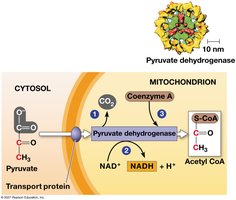
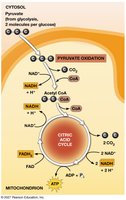
After glycolysis, pyruvate is transported into the mitochondria and converted to acetyl CoA, linking glycolysis to the citric acid cycle.
Pyruvate dehydrogenase catalyzes the conversion.
CO2 is released, NAD+ is reduced to NADH, and acetyl CoA is formed.
Citric Acid Cycle (Krebs Cycle)
The citric acid cycle completes the oxidation of glucose, generating ATP, NADH, and FADH2.
Each turn produces 1 ATP, 3 NADH, and 1 FADH2.
CO2 is released as a waste product.
The cycle runs twice per glucose molecule.
Summary Equations and Key Concepts
Summary Equation for Cellular Respiration
The overall chemical equation for cellular respiration is:
This equation represents the degradation of glucose and the production of ATP, water, and carbon dioxide.
Key Terms and Concepts
ATP (Adenosine Triphosphate): The main energy carrier in cells.
NAD+ and FAD: Electron carriers involved in redox reactions.
Oxidative phosphorylation: ATP production via the electron transport chain.
Substrate-level phosphorylation: Direct ATP production in glycolysis and the citric acid cycle.
Fermentation: Anaerobic process yielding less ATP.
Example: ATP Yield from Glucose
Glycolysis: 2 ATP (net), 2 NADH
Citric Acid Cycle: 2 ATP, 6 NADH, 2 FADH2
Oxidative Phosphorylation: Up to 28 ATP
Total: Up to 32 ATP per glucose molecule
Additional info: These notes cover the essential concepts of cellular respiration and fermentation, including the biochemical pathways, redox reactions, and energy production mechanisms relevant to General Biology college students.
