 뒤로
Cellular Respiration and Fermentation: Study Notes for General Biology
스터디 가이드 - 스마트 노트
 자료에 맞춘 맞춤형 노트, 핵심 정의, 예시, 맥락을 확장해 제공합니다.
Cellular Respiration and Fermentation
Catabolic Pathways Yield Energy by Oxidizing Organic Fuels
Catabolic pathways are essential for breaking down organic compounds to release energy stored in their chemical bonds. These exergonic reactions provide fuel for cellular activities and generate heat as a byproduct.
Catabolism: Large molecules are broken down into smaller ones, releasing energy.
Organic Compounds: Serve as sources of potential energy due to their high-energy bonds.
Energy Utilization: Energy released from catabolic reactions is used for cellular work and dissipated as heat.
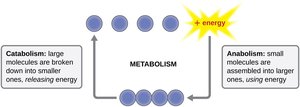
Types of Catabolic Pathways
Cells utilize different catabolic pathways depending on the presence or absence of oxygen.
Fermentation: Anaerobic process that does not require oxygen.
Cellular Respiration: Can be aerobic (with oxygen) or anaerobic (without oxygen).
Overall Equation for Aerobic Respiration:
Redox Reactions: Oxidation and Reduction
Principles of Redox Reactions
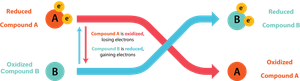
Redox reactions involve the transfer of electrons between molecules, which is fundamental to energy release in cellular respiration.
Oxidation: Loss of electrons from a substance.
Reduction: Gain of electrons by a substance.
OIL RIG: Oxidation Is Loss, Reduction Is Gain.
Reducing Agent: Donates electrons and is oxidized.
Oxidizing Agent: Accepts electrons and is reduced.
Oxidation During Cellular Respiration
Glucose is oxidized to carbon dioxide, and oxygen is reduced to water, releasing energy for cellular use.
Glucose Oxidation: is oxidized to .
Oxygen Reduction: is reduced to .
Energy Release: Electrons lose potential energy as they are transferred, releasing energy.
Stepwise Energy Release and Electron Carriers
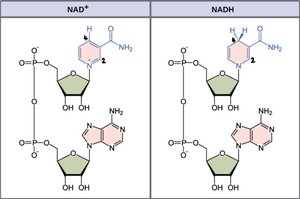
Energy from glucose is released in multiple steps, allowing efficient capture of energy. Electron carriers like NAD+ play a crucial role.
NAD+: Accepts electrons and hydrogen ions to become NADH.
NADH: Transfers electrons to the electron transport chain, facilitating ATP production.
Equation:
Overview of Cellular Respiration
Main Stages of Cellular Respiration
Cellular respiration consists of three main stages, each contributing to ATP production.
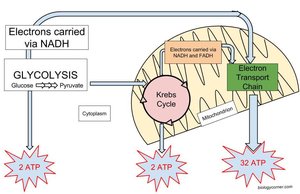
Glycolysis: Occurs in the cytoplasm; breaks glucose into pyruvate.
Pyruvate Oxidation and Citric Acid Cycle (Krebs Cycle): Occurs in mitochondria; further oxidizes pyruvate.
Oxidative Phosphorylation: Includes electron transport chain and chemiosmosis; produces most ATP.
9.2---------------------------------------------------------------------------------------------------------------------------------------
Glycolysis: Harvesting Chemical Energy
Process and Products of Glycolysis
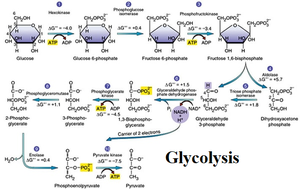
Glycolysis is the first step in cellular respiration, splitting glucose into two pyruvate molecules.
Glucose (6C): Split into two 3-carbon pyruvates.
ATP Yield: 2 ATP used, 4 ATP produced (net gain of 2 ATP).
NADH Production: 2 NADH molecules generated.
Anaerobic: Does not require oxygen.
Pyruvate Oxidation and the Citric Acid Cycle
Pyruvate Oxidation
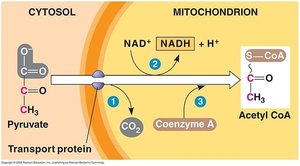
Pyruvate is transported into the mitochondria and converted to Acetyl-CoA, releasing CO2 and generating NADH.
Location: Mitochondria in eukaryotes; cytoplasm in prokaryotes.
Products: Acetyl-CoA, CO2, NADH.
The Citric Acid Cycle (Krebs Cycle)
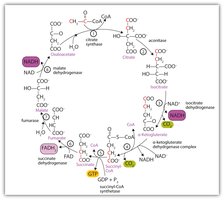
The citric acid cycle completes the breakdown of glucose, generating high-energy electron carriers and ATP.
Steps: 8 steps, each catalyzed by a specific enzyme.
Products per pyruvate: 3 NADH, 1 FADH2, 1 GTP (converted to ATP), 1 CO2.
Purpose: High-energy molecules power the electron transport chain.
Oxidative Phosphorylation: Electron Transport and Chemiosmosis
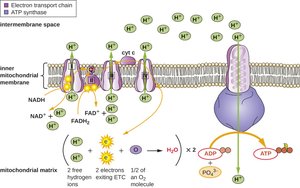
Electron Transport Chain
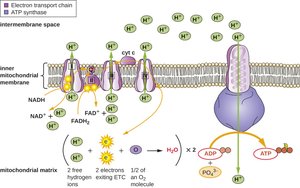
The electron transport chain is a series of redox reactions that transfer electrons from NADH and FADH2 to oxygen, the final electron acceptor.
Location: Inner mitochondrial membrane (eukaryotes), cell membrane (prokaryotes).
Function: Electrons lose energy as they move through the chain; oxygen accepts electrons and forms water.
ATP Production: The chain itself does not directly produce ATP.
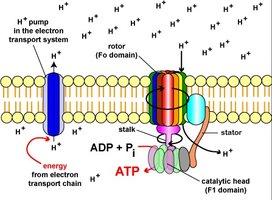
Chemiosmosis and ATP Synthase
Chemiosmosis couples the movement of hydrogen ions across the membrane to ATP synthesis via ATP synthase.
ATP Synthase: Enzyme that synthesizes ATP using the energy from the proton gradient.
Proton-Motive Force: Hydrogen ions are pumped across the membrane, creating a gradient.
Energy Conversion: Movement of ~4 H+ ions through ATP synthase produces 1 ATP.
ATP Yield from Cellular Respiration
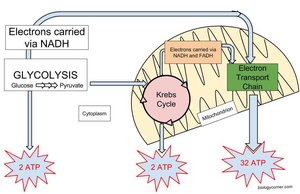
Cellular respiration produces a significant amount of ATP from one molecule of glucose.
Glycolysis: 2 ATP
Citric Acid Cycle: 2 ATP
Electron Transport Chain: 30-32 ATP
Total: 34-36 ATP (about 30% of energy stored in glucose)
Fermentation and Anaerobic Respiration
ATP Production Without Oxygen
Cells can produce ATP in the absence of oxygen through fermentation or anaerobic respiration.
Anaerobic Respiration: Some bacteria use electron transport chains with sulfate as the final electron acceptor.
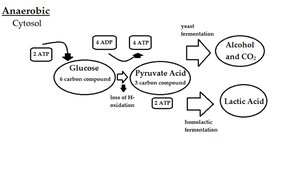
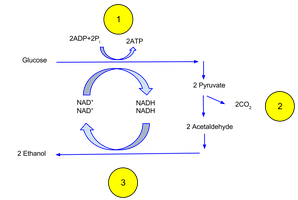
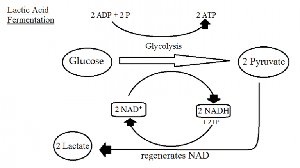
Fermentation: Does not use an electron transport chain; relies on glycolysis and regenerates NAD+.
Types of Fermentation
Fermentation allows glycolysis to continue by regenerating NAD+. There are two main types:
Alcohol Fermentation: Pyruvate is converted to ethanol and CO2 (used by yeast and some bacteria).
Lactic Acid Fermentation: Pyruvate is converted to lactic acid (used by humans, bacteria, and some fungi).
Applications: Brewing, winemaking, baking, cheese, and yogurt production.
Adaptations to Oxygen Availability
Obligate and Facultative Anaerobes
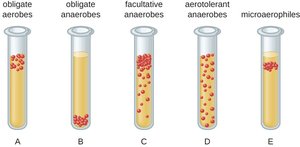
Organisms differ in their ability to survive in the presence or absence of oxygen.
Obligate Anaerobes: Can only survive using fermentation or anaerobic respiration; oxygen is toxic to them.
Facultative Anaerobes: Can survive using either aerobic or anaerobic pathways.
Summary Table: Cellular Respiration Pathways
Pathway | Location | Oxygen Required? | ATP Yield | Key Products |
|---|---|---|---|---|
Glycolysis | Cytoplasm | No | 2 ATP | Pyruvate, NADH |
Pyruvate Oxidation | Mitochondria | Yes | 0 ATP | Acetyl-CoA, NADH, CO2 |
Citric Acid Cycle | Mitochondria | Yes | 2 ATP | NADH, FADH2, CO2 |
Oxidative Phosphorylation | Mitochondria | Yes | 30-32 ATP | ATP, H2O |
Fermentation | Cytoplasm | No | 2 ATP | Alcohol or Lactic Acid, NAD+ |
Key Terms and Concepts
ATP (Adenosine Triphosphate): Main energy currency of the cell.
NAD+ / NADH: Electron carrier involved in redox reactions.
FAD / FADH2: Another electron carrier used in the citric acid cycle.
Substrate-Level Phosphorylation: Direct transfer of phosphate to ADP to form ATP.
Oxidative Phosphorylation: ATP synthesis powered by the electron transport chain and chemiosmosis.
Additional info: Some diagrams and pathways were expanded for clarity and completeness. The citric acid cycle was summarized as per instructions, focusing on overall inputs and outputs rather than memorization of individual steps.
