 뒤로
뒤로Cellular Respiration: Catabolic Pathways and Glycolysis
스터디 가이드 - 스마트 노트
 자료에 맞춘 맞춤형 노트, 핵심 정의, 예시, 맥락을 확장해 제공합니다.
Cellular Respiration and Energy Transformation
Overview of Cellular Respiration
Cellular respiration is a fundamental metabolic process in living cells, enabling the extraction of energy from organic molecules. This process is essential for powering cellular activities and maintaining life.
Energy Requirement: All living cells require energy, which is obtained from external sources such as sunlight (plants) or food (animals).
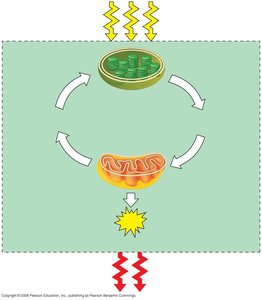
Energy Flow: Energy enters ecosystems as sunlight and leaves as heat. Photosynthesis in chloroplasts generates oxygen and organic molecules, which are then used in cellular respiration within mitochondria.
ATP: Adenosine triphosphate (ATP) is the primary energy currency of the cell, regenerated from ADP and inorganic phosphate (P) during cellular respiration.
Types of Cellular Respiration
Fermentation: Partial degradation of sugars without oxygen.
Aerobic Respiration: Consumes organic molecules and oxygen, yielding ATP.
Anaerobic Respiration: Similar to aerobic, but uses compounds other than oxygen as electron acceptors.
General Equation for Cellular Respiration
The overall chemical equation for aerobic cellular respiration is:
Glucose breakdown:

Redox Reactions in Cellular Respiration
Oxidation and Reduction
Redox reactions are central to cellular respiration, involving the transfer of electrons between molecules.
Oxidation: Loss of electrons from a substance.
Reduction: Gain of electrons by a substance (reducing its positive charge).
Energy Release: Electron transfer releases energy stored in organic molecules, which is used to synthesize ATP.
NAD+ and NADH
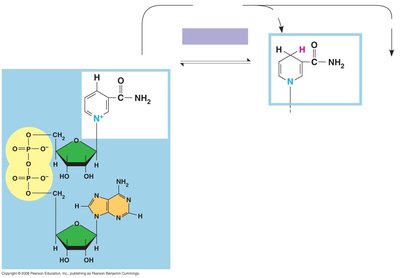
NAD+: A coenzyme that acts as an electron carrier.
NADH: The reduced form, representing stored energy that can be used to generate ATP.
Stages of Cellular Respiration
Three Main Stages
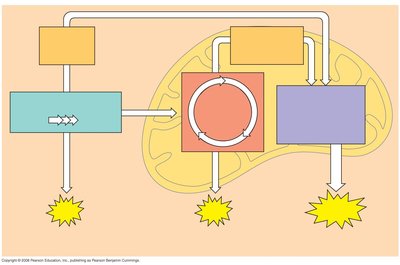
Cellular respiration occurs in three sequential stages:
Glycolysis: Breaks down glucose into two molecules of pyruvate in the cytoplasm.
The Citric Acid Cycle: Completes the breakdown of glucose in the mitochondria.
Oxidative Phosphorylation: Accounts for most ATP synthesis via the electron transport chain and chemiosmosis.
Glycolysis: Harvesting Chemical Energy
Definition and Location
Glycolysis is the metabolic pathway that splits glucose into two pyruvate molecules, occurring in the cytoplasm. It consists of two phases:
Energy Investment Phase: ATP is consumed to phosphorylate glucose and its intermediates.
Energy Payoff Phase: ATP and NADH are produced as glucose is further broken down.
Summary of Glycolysis
Net ATP Gain: 2 ATP molecules per glucose.
Net NADH Gain: 2 NADH molecules per glucose.
End Products: 2 pyruvate and 2 water molecules.
Key Steps and Enzymes in Glycolysis
Glycolysis involves a series of enzyme-catalyzed reactions. The following sequence highlights the main steps:
Hexokinase: Phosphorylates glucose to glucose-6-phosphate.
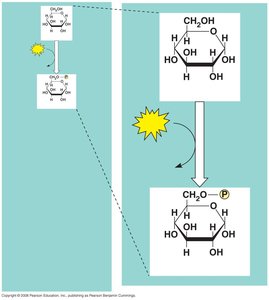
Phosphoglucoisomerase: Converts glucose-6-phosphate to fructose-6-phosphate.
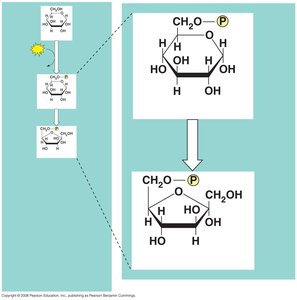
Phosphofructokinase: Adds another phosphate to form fructose-1,6-bisphosphate.
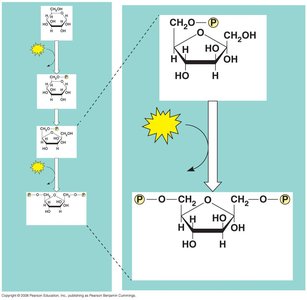
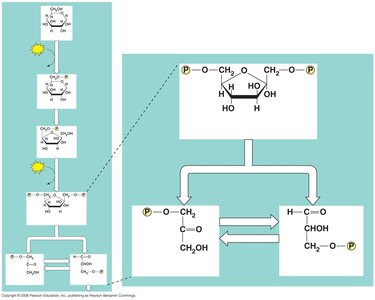
Aldolase and Isomerase: Split fructose-1,6-bisphosphate into two three-carbon sugars: dihydroxyacetone phosphate and glyceraldehyde-3-phosphate.
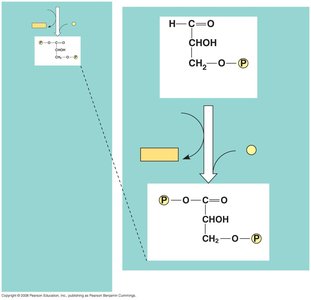
Triose Phosphate Dehydrogenase: Oxidizes glyceraldehyde-3-phosphate, reducing NAD+ to NADH and forming 1,3-bisphosphoglycerate.
Phosphoglycerokinase: Transfers a phosphate to ADP, forming ATP and 3-phosphoglycerate.
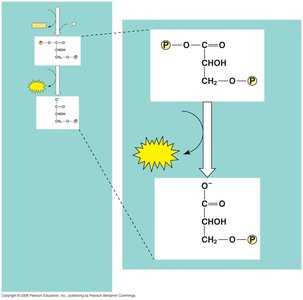
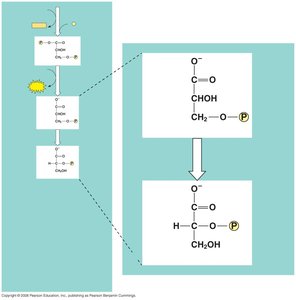
Phosphoglyceromutase: Converts 3-phosphoglycerate to 2-phosphoglycerate.
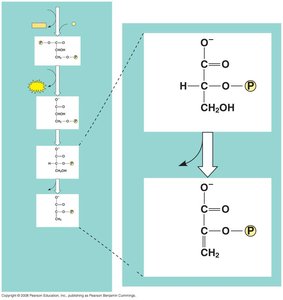
Enolase: Removes water, forming phosphoenolpyruvate (PEP).
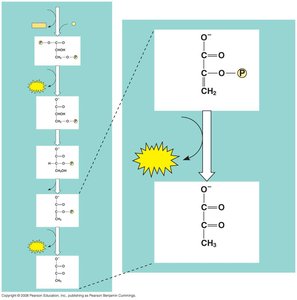
Pyruvate Kinase: Transfers phosphate from PEP to ADP, forming ATP and pyruvate.
Summary Table: Glycolysis Steps and Products
Step | Enzyme | Substrate | Product | ATP/NADH |
|---|---|---|---|---|
1 | Hexokinase | Glucose | Glucose-6-phosphate | -1 ATP |
2 | Phosphoglucoisomerase | Glucose-6-phosphate | Fructose-6-phosphate | |
3 | Phosphofructokinase | Fructose-6-phosphate | Fructose-1,6-bisphosphate | -1 ATP |
4 | Aldolase | Fructose-1,6-bisphosphate | Two 3-carbon sugars | |
5 | Isomerase | Dihydroxyacetone phosphate | Glyceraldehyde-3-phosphate | |
6 | Triose phosphate dehydrogenase | Glyceraldehyde-3-phosphate | 1,3-bisphosphoglycerate | +2 NADH |
7 | Phosphoglycerokinase | 1,3-bisphosphoglycerate | 3-phosphoglycerate | +2 ATP |
8 | Phosphoglyceromutase | 3-phosphoglycerate | 2-phosphoglycerate | |
9 | Enolase | 2-phosphoglycerate | Phosphoenolpyruvate | |
10 | Pyruvate kinase | Phosphoenolpyruvate | Pyruvate | +2 ATP |
Additional Info
Activation Energy: The initial energy required to start a chemical reaction, such as glycolysis, is called activation energy.
Free Energy: The energy available to do work in a system; cellular respiration releases free energy for cellular processes.
Substrate-Level Phosphorylation: ATP is formed directly in glycolysis and the citric acid cycle by transferring a phosphate group from a substrate to ADP.
