 뒤로
뒤로Cellular Respiration: Catabolic Pathways and Glycolysis
스터디 가이드 - 스마트 노트
 자료에 맞춘 맞춤형 노트, 핵심 정의, 예시, 맥락을 확장해 제공합니다.
Cellular Respiration and Energy Flow
Overview of Cellular Respiration
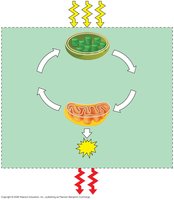
Cellular respiration is a fundamental process in living cells, enabling the extraction of energy from organic molecules. This process is essential for powering cellular activities and maintaining life. Energy enters ecosystems as sunlight, is captured by photosynthesis, and is released as heat during cellular respiration.
Photosynthesis generates O2 and organic molecules, which are used in cellular respiration.
Cellular respiration uses chemical energy stored in organic molecules to regenerate ATP, which powers cellular work.
Energy flows into an ecosystem as sunlight and leaves as heat.
Types of Catabolic Pathways
Catabolic pathways break down organic molecules to release energy. The breakdown of these molecules is exergonic, meaning it releases energy.
Fermentation: Partial degradation of sugars without O2.
Aerobic respiration: Consumes organic molecules and O2, yielding ATP.
Anaerobic respiration: Similar to aerobic respiration but uses compounds other than O2.
Redox Reactions in Cellular Respiration
Oxidation and Reduction
Redox reactions are central to cellular respiration, involving the transfer of electrons between molecules. These reactions release energy stored in organic molecules, which is used to synthesize ATP.
Oxidation: Loss of electrons from a substance.
Reduction: Gain of electrons by a substance (reduces positive charge).

Electron Carriers: NAD+ and NADH
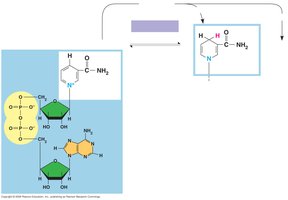
Electrons from organic compounds are usually transferred to NAD+, a coenzyme. The reduced form, NADH, stores energy that is later used to synthesize ATP.
NAD+: Accepts electrons and becomes NADH.
NADH: Represents stored energy for ATP synthesis.
Stages of Cellular Respiration
Three Main Stages
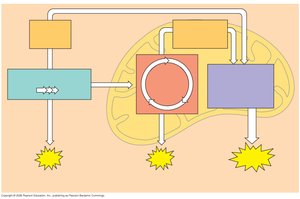
Cellular respiration occurs in three main stages, each contributing to the breakdown of glucose and the production of ATP.
Glycolysis: Breaks down glucose into two molecules of pyruvate (occurs in cytoplasm).
Citric Acid Cycle: Completes the breakdown of glucose (occurs in mitochondria).
Oxidative Phosphorylation: Accounts for most ATP synthesis (electron transport and chemiosmosis).
Overall Equation for Cellular Respiration
The overall chemical equation for aerobic cellular respiration is:
Glycolysis: Harvesting Chemical Energy
Definition and Location
Glycolysis is the process of splitting glucose into two molecules of pyruvate. It occurs in the cytoplasm and is the first step in cellular respiration.
Two major phases: Energy investment phase and Energy payoff phase.
Net yield: 2 ATP and 2 NADH per glucose molecule.
Energy Investment and Payoff Phases
During glycolysis, ATP is used in the early steps (investment), and more ATP is produced in later steps (payoff).
Energy investment phase: 2 ATP are used.
Energy payoff phase: 4 ATP are produced, 2 NADH are formed.
Net gain: 2 ATP, 2 NADH, 2 pyruvate, and 2 H2O.
Stepwise Breakdown of Glucose
Glycolysis consists of a series of enzyme-catalyzed reactions, each transforming the substrate and producing intermediates.
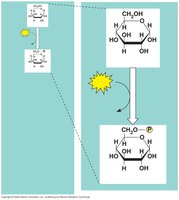
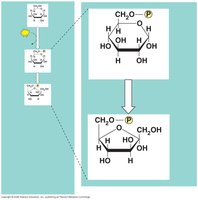
Hexokinase: Phosphorylates glucose to glucose-6-phosphate.
Phosphoglucoisomerase: Converts glucose-6-phosphate to fructose-6-phosphate.
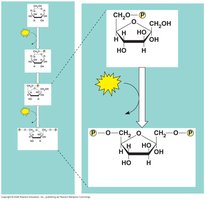
Phosphofructokinase: Adds another phosphate, forming fructose-1,6-bisphosphate.
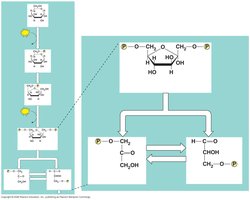
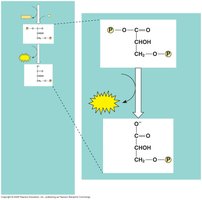
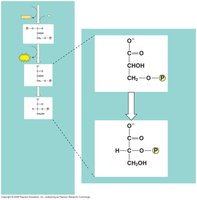
Aldolase and Isomerase: Split and rearrange the molecule into two three-carbon sugars.
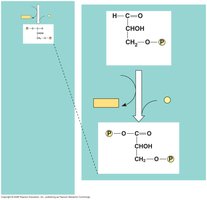
Triose phosphate dehydrogenase: Oxidizes and phosphorylates the three-carbon sugars, producing NADH.
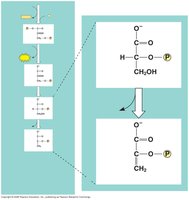
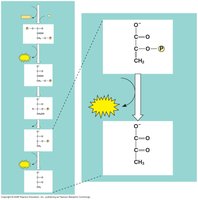
Phosphoglycerokinase, Phosphoglyceromutase, Enolase, Pyruvate kinase: Catalyze further steps, producing ATP and pyruvate.
Activation Energy and Free Energy
Concept of Activation Energy
Activation energy is the minimum energy required to initiate a chemical reaction. In biological systems, enzymes lower the activation energy, allowing reactions to proceed efficiently at cellular temperatures.
Activation energy: Required to break bonds in reactants.
Enzymes: Biological catalysts that lower activation energy.
Free Energy (G)
Free energy, denoted as G, is the energy available to do work in a system. Changes in free energy determine whether a reaction is spontaneous.
Exergonic reactions: Release free energy; spontaneous.
Endergonic reactions: Require input of free energy; non-spontaneous.
ATP: The Energy Currency of the Cell
Structure and Function of ATP
ATP (adenosine triphosphate) is the primary energy carrier in cells. It consists of adenine, ribose, and three phosphate groups. Hydrolysis of ATP releases energy for cellular work.
ATP hydrolysis: ATP → ADP + Pi + energy
Regeneration: Cells regenerate ATP from ADP and Pi using energy from catabolic reactions.
Summary Table: Stages of Cellular Respiration
Stage | Location | Main Products | ATP Yield |
|---|---|---|---|
Glycolysis | Cytoplasm | 2 Pyruvate, 2 NADH | 2 ATP (net) |
Citric Acid Cycle | Mitochondrial Matrix | CO2, NADH, FADH2 | 2 ATP |
Oxidative Phosphorylation | Inner Mitochondrial Membrane | ATP, H2O | ~26-28 ATP |
Additional info: The notes above expand on the original content by providing definitions, context, and stepwise explanations of glycolysis and cellular respiration, as well as including relevant images for each step of glycolysis and the overall process.
