 뒤로
뒤로Cellular Respiration: Mechanisms and Pathways
스터디 가이드 - 스마트 노트
 자료에 맞춘 맞춤형 노트, 핵심 정의, 예시, 맥락을 확장해 제공합니다.
Cellular Respiration: Overview
Energy Flow in Living Systems
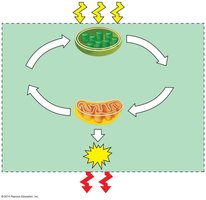
Living cells require energy to perform work, which they obtain from external sources such as sunlight (for plants) or organic molecules (for animals). The process of cellular respiration allows cells to convert energy stored in organic molecules into ATP, the main energy currency of the cell.
Photosynthesis in chloroplasts converts light energy into chemical energy stored in glucose.
Cellular respiration in mitochondria breaks down glucose, releasing energy as ATP and heat.
ATP powers most cellular work, while heat energy is lost to the environment.
Cellular Respiration: Chemical Equation
Overall Reaction
Cellular respiration is the process by which cells extract energy from glucose in the presence of oxygen. The overall equation is:
Glucose is oxidized, and oxygen is reduced.
The products are carbon dioxide, water, and energy (ATP + heat).

Redox Reactions in Cellular Respiration
Oxidation and Reduction
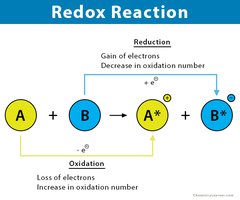
Cellular respiration involves a series of redox reactions, where electrons are transferred from one molecule to another.
Oxidation: Loss of electrons, increase in oxidation number.
Reduction: Gain of electrons, decrease in oxidation number.
Glucose is oxidized, and oxygen is reduced during respiration.
Stepwise Energy Harvest: NAD+ and Electron Transport Chain
Role of Electron Carriers
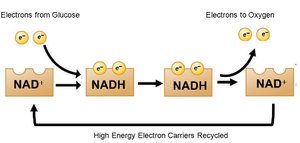
The breakdown of glucose occurs in a series of steps, with electrons transferred to NAD+, a coenzyme.
NAD+ acts as an oxidizing agent, accepting electrons and becoming NADH.
NADH stores energy and later donates electrons to the electron transport chain, which is used to synthesize ATP.
Stages of Cellular Respiration
Three Main Stages
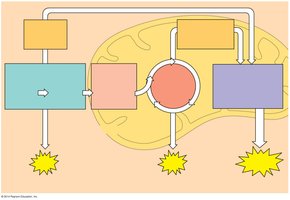
Cellular respiration consists of three main stages:
Glycolysis: Breaks down glucose into two molecules of pyruvate in the cytoplasm.
Pyruvate Oxidation and Citric Acid Cycle (Krebs Cycle): Completes the breakdown of glucose in the mitochondrion.
Oxidative Phosphorylation: Accounts for most ATP synthesis via the electron transport chain and chemiosmosis.
Glycolysis
Harvesting Chemical Energy
Glycolysis is the first step in cellular respiration, occurring in the cytoplasm and consisting of two phases:
Energy Investment Phase: 2 ATP are used to phosphorylate glucose.
Energy Payoff Phase: 4 ATP are produced (net gain of 2 ATP), and 2 NADH are generated.
Glycolysis produces 2 pyruvate molecules and occurs with or without oxygen.
Pyruvate Oxidation and Citric Acid Cycle
Completing Glucose Breakdown
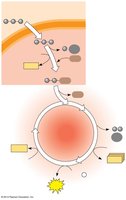
In the presence of oxygen, pyruvate enters the mitochondrion and is converted to acetyl CoA, which enters the citric acid cycle.
The citric acid cycle (Krebs cycle) oxidizes acetyl CoA, producing 2 ATP, 6 NADH, and 2 FADH2 per glucose.
CO2 is released as a waste product.
Oxidative Phosphorylation
Electron Transport Chain and Chemiosmosis
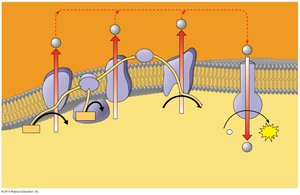
NADH and FADH2 donate electrons to the electron transport chain in the inner mitochondrial membrane.
Electrons are passed through protein complexes, ultimately reducing O2 to H2O.
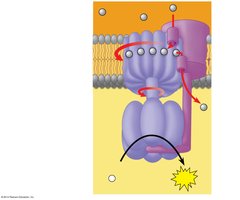
The energy released pumps H+ ions across the membrane, creating a proton gradient (proton-motive force).
ATP synthase uses this gradient to synthesize ATP from ADP and Pi.
Oxidative phosphorylation produces up to 32 ATP per glucose.
Fermentation and Anaerobic Respiration
ATP Production Without Oxygen
When oxygen is unavailable, cells use fermentation or anaerobic respiration to produce ATP.
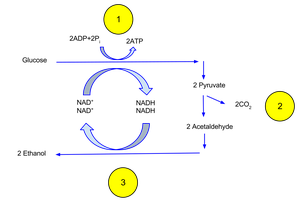
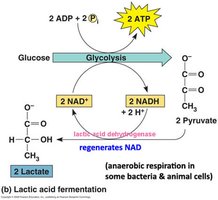
Glycolysis continues, but NAD+ must be regenerated.
Fermentation consists of glycolysis plus reactions that regenerate NAD+.
Types of Fermentation
Alcohol Fermentation: Pyruvate is converted to ethanol and CO2. Used by yeast in brewing and baking.
Lactic Acid Fermentation: Pyruvate is reduced to lactate. Used by bacteria in yogurt production and by muscle cells during intense exercise.
Catabolic Pathways and Metabolic Versatility
Funneling Electrons from Various Molecules
Glycolysis accepts a wide range of carbohydrates.
Proteins are digested to amino acids, which enter glycolysis or the citric acid cycle after removal of amino groups.
Fats are broken down to glycerol (used in glycolysis) and fatty acids (converted to acetyl CoA via beta oxidation).
Fats yield more ATP per gram than carbohydrates.
Summary Table: Entry Points for Catabolic Pathways
Macromolecule | Entry Point | ATP Yield |
|---|---|---|
Carbohydrates | Glycolysis | Moderate |
Proteins | Amino acids → Glycolysis/Citric Acid Cycle | Moderate |
Fats | Glycerol → Glycolysis; Fatty acids → Acetyl CoA | High |
Key Terms and Concepts
ATP (Adenosine Triphosphate): Main energy currency of the cell.
NAD+: Electron carrier, oxidizing agent in cellular respiration.
Glycolysis: First stage of cellular respiration, occurs in cytoplasm.
Citric Acid Cycle (Krebs Cycle): Completes glucose breakdown in mitochondria.
Oxidative Phosphorylation: ATP synthesis via electron transport chain and chemiosmosis.
Fermentation: Anaerobic process regenerating NAD+ for glycolysis.
Additional info: The notes expand on the original slides by providing definitions, context, and a summary table for catabolic pathway entry points, ensuring completeness and academic quality for exam preparation.
