 뒤로
Cellular Respiration: Pathways, Regulation, and Metabolic Diversity
스터디 가이드 - 스마트 노트
 자료에 맞춘 맞춤형 노트, 핵심 정의, 예시, 맥락을 확장해 제공합니다.
Cellular Respiration
Overview of Cellular Respiration
Cellular respiration is the process by which cells extract energy from organic molecules, primarily glucose, to produce ATP, the main energy currency of the cell. This process involves a series of metabolic pathways that utilize oxygen and release carbon dioxide.
ATP: Adenosine triphosphate, the primary energy carrier in cells.
Respiration: Refers to both the cellular process and the organismal exchange of gases (O2 and CO2).
Energy Storage: Chemical bonds in molecules like glucose store energy, which is released during respiration.

ATP Production Mechanisms
Cells produce ATP through two main mechanisms:
Substrate-level phosphorylation: Direct transfer of a phosphate group to ADP to form ATP.
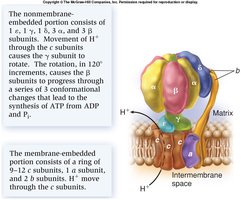
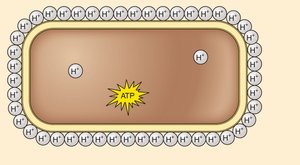
Chemiosmosis: Utilizes a proton (H+) gradient across a membrane to drive ATP synthesis via ATP synthase.
Regulation of Metabolic Pathways
Metabolic pathways are regulated to ensure efficient energy production and utilization:
Enzyme production: Some individuals lack certain enzymes (e.g., lactase in lactose intolerance).
Physical environment: Enzyme activity depends on conditions like pH (e.g., pepsin works in the stomach, not the intestine).
Biochemical control: Inhibitors, coenzymes, and cofactors modulate enzyme activity.
Major Steps of Cellular Respiration
Stepwise Breakdown of Glucose
Cellular respiration consists of four major steps, each occurring in specific cellular locations and yielding distinct products.
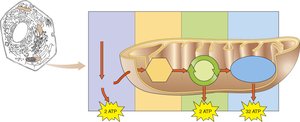
Summary Table of Aerobic Respiration
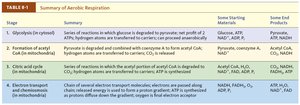
The following table summarizes the four major steps, their locations, reactants, products, and ATP yield per glucose molecule:
Stage | Summary | Starting Materials | End Products |
|---|---|---|---|
Glycolysis | Glucose is degraded to pyruvate; net yield of 2 ATP | Glucose, ATP, NAD+ | Pyruvate, ATP, NADH |
Formation of Acetyl CoA | Pyruvate is degraded and combined with coenzyme A | Pyruvate, NAD+, CoA | Acetyl CoA, CO2, NADH |
Citric Acid Cycle | Acetyl CoA is oxidized; ATP, NADH, FADH2 produced | Acetyl CoA, H2O, NAD+, FAD, ADP | CO2, NADH, FADH2, ATP |
Electron Transport & Chemiosmosis | Electrons transferred to O2; ATP synthesized | NADH, FADH2, O2, ADP | ATP, H2O |
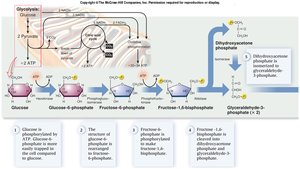
Detailed Pathway: Glycolysis
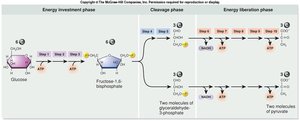
Glycolysis is the first step, occurring in the cytosol, where glucose is split into two pyruvate molecules. This process requires an initial investment of ATP and produces a net gain of 2 ATP and 2 NADH.
Location: Cytosol
Reactants: Glucose, ATP, NAD+
Products: Pyruvate, ATP, NADH
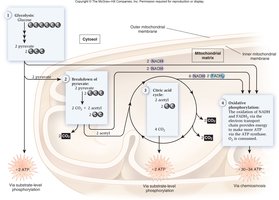
Formation of Acetyl Coenzyme A
Pyruvate produced in glycolysis is transported into the mitochondria, where it is converted to acetyl CoA. This step releases CO2 and produces NADH, but no ATP.
Location: Mitochondrial matrix
Reactants: Pyruvate, NAD+, CoA
Products: Acetyl CoA, CO2, NADH
Citric Acid Cycle (Krebs Cycle)
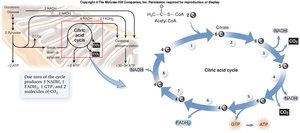
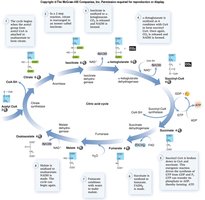
The acetyl CoA enters the citric acid cycle, where it is oxidized, producing ATP, NADH, FADH2, and CO2. The cycle regenerates oxaloacetate, allowing continuous operation.
Location: Mitochondrial matrix
Reactants: Acetyl CoA, NAD+, FAD, ADP
Products: CO2, NADH, FADH2, ATP
Electron Transport Chain and Chemiosmosis
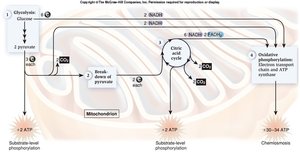
NADH and FADH2 produced in earlier steps donate electrons to the electron transport chain in the inner mitochondrial membrane. The energy released pumps H+ ions, creating a gradient used by ATP synthase to produce ATP.
Location: Inner mitochondrial membrane
Reactants: NADH, FADH2, O2, ADP
Products: ATP, H2O
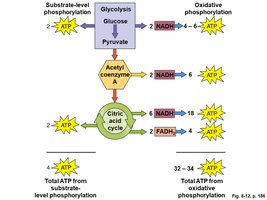
Yield: 32–34 ATP per glucose
Metabolism of Other Substances
Alternative Energy Sources
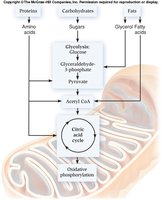
Cells can metabolize fats and proteins for energy, entering the pathway at different points. Nucleic acids are not typically used for energy production.
Summary of ATP Yield
Most ATP is produced during oxidative phosphorylation. The following diagram summarizes ATP yields from each step:
Anaerobic Respiration and Fermentation
Anaerobic Respiration
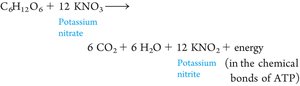
When oxygen is unavailable, some bacteria use alternative electron acceptors, such as nitrate, in anaerobic respiration. This process is less efficient than aerobic respiration.
Fermentation
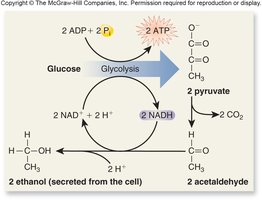
Fermentation occurs in the absence of oxygen, allowing glycolysis to continue by regenerating NAD+. Two main types are lactic acid fermentation (in mammals) and alcoholic fermentation (in yeast).
Lactic acid fermentation: Pyruvate is reduced to lactic acid.
Alcoholic fermentation: Pyruvate is converted to ethanol and CO2.
ATP yield: Only 2 ATP per glucose (from glycolysis).
Comparison of Metabolic Pathways
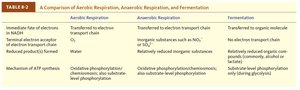
The following table compares aerobic respiration, anaerobic respiration, and fermentation:
Aerobic Respiration | Anaerobic Respiration | Fermentation | |
|---|---|---|---|
Electron acceptor | Oxygen | Inorganic substances (e.g., NO3-) | Organic molecules |
ATP synthesis | Oxidative phosphorylation | Oxidative phosphorylation/chemiosmosis | Substrate-level phosphorylation |
ATP yield | High (34–38 ATP/glucose) | Moderate | Low (2 ATP/glucose) |
End products | CO2, H2O | CO2, H2O, reduced inorganic substances | Lactic acid or ethanol |
Primary Metabolism
Essential Metabolic Reactions
Primary metabolism includes all reactions necessary for life, such as the synthesis and breakdown of lipids, proteins, and carbohydrates. These pathways are conserved across all life forms.
