 뒤로
Chapter 13: Meiosis – Mechanisms and Significance in Genetic Variation
스터디 가이드 - 스마트 노트
 자료에 맞춘 맞춤형 노트, 핵심 정의, 예시, 맥락을 확장해 제공합니다.
Meiosis: Introduction and Overview
Sexual Reproduction and Gametes
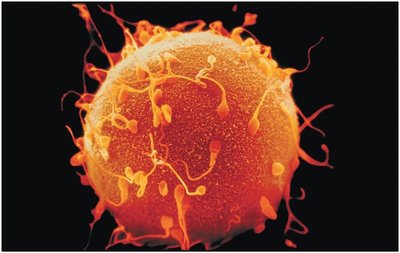
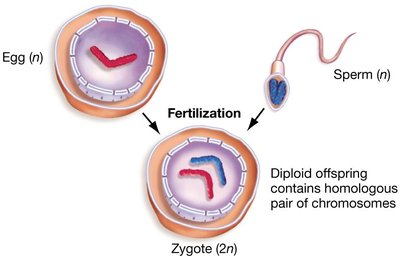
Sexual reproduction involves the union of reproductive cells—sperm and egg—to form a new individual. These reproductive cells are called gametes. The process of their union is known as fertilization. Meiosis is a specialized type of nuclear division that reduces the chromosome number by half, ensuring gametes contain only one set of chromosomes. Upon fertilization, the full chromosome number is restored in the zygote.
Meiosis in Different Organisms
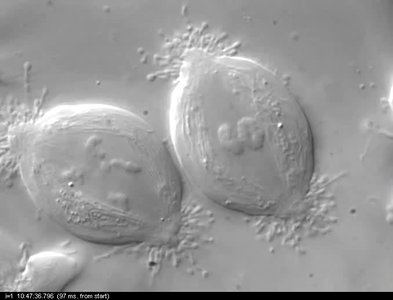
Meiosis occurs in a wide range of organisms, including insects like the Tiger Crane Fly, demonstrating its evolutionary importance in generating genetic diversity.
Chromosome Structure and Types
Chromosome Number and Types
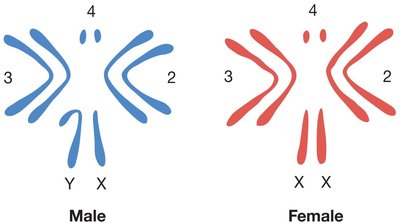
Each organism has a characteristic number of chromosomes. For example, fruit flies have eight chromosomes. Chromosomes are classified as sex chromosomes (determining an individual's sex) and autosomes (non-sex chromosomes). In humans, females have two X chromosomes, while males have one X and one Y chromosome.
Homologous Chromosomes and Alleles
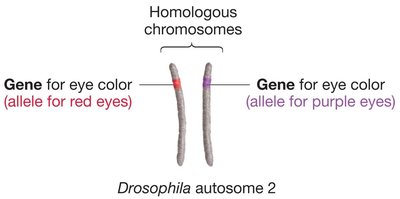
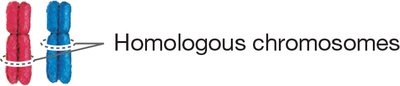
Chromosomes of the same type are called homologous chromosomes or homologs. Homologous pairs contain the same genes in the same positions but may have different versions (alleles) of those genes. A gene is a DNA segment influencing a trait, and alleles are different versions of a gene.
Ploidy and Chromosome Sets
Concept of Ploidy
A karyotype identifies the number and types of chromosomes in a species. Diploid organisms have two homologs of each chromosome (2n), while haploid organisms have only one of each type (n). Polyploid organisms have three or more sets (3n, 4n, etc.). In humans, n = 23, so diploid cells have 46 chromosomes.
Wild Type Chromosomes
The term wild type refers to the most commonly observed phenotype or genotype in nature. Human chromosomes are classified as autosomes (chromosomes 1–22) and sex chromosomes (X and Y).
Key Chromosome Terms
Term | Definition | Example or Comment |
|---|---|---|
Chromosome | Structure made up of DNA and proteins; carries hereditary information | Eukaryotes have linear chromosomes; bacteria and archaea have circular chromosomes |
Sex chromosome | Chromosome associated with sex | X and Y in humans; Z and W in birds |
Autosome | Non-sex chromosome | Chromosomes 1–22 in humans |
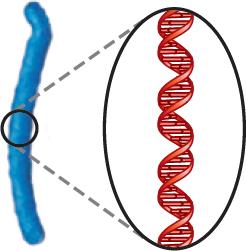
Unreplicated chromosome | One double-helical DNA molecule | Single chromatid |
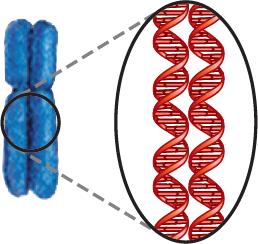
Replicated chromosome | Two identical chromatids | After DNA replication |
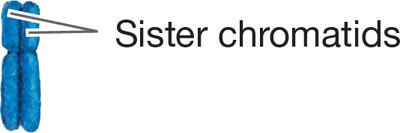
Sister chromatids | Identical chromatids in a replicated chromosome | Result of DNA replication |
Homologous chromosomes | Same genes, same position, same size/shape | Not identical due to different alleles |
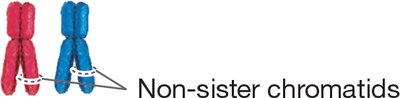
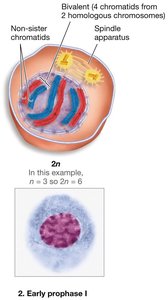
Non-sister chromatids | Chromatids on different homologs | One from each homolog |
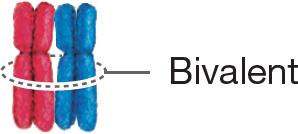
Bivalent | Paired, replicated homologs during prophase I and metaphase I | Structure formed during synapsis |
Haploid number (n) | Number of chromosome types | Humans: n = 23 |
Diploid number (2n) | Number of chromosomes in diploid cell | Humans: 2n = 46 |
Ploidy | Number of each chromosome type | 2n, 3n, etc. |
Haploid | One of each chromosome type | Gametes, bacteria |
Diploid | Two of each chromosome type | Most animals/plants |
Polyploid | More than two of each chromosome type | Bananas (3n), wheat (6n) |
Meiosis: Mechanism and Phases
Overview of Meiosis
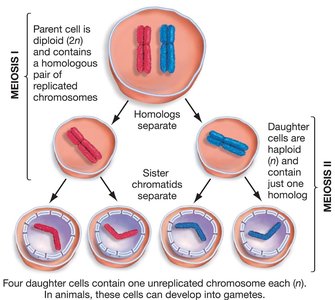
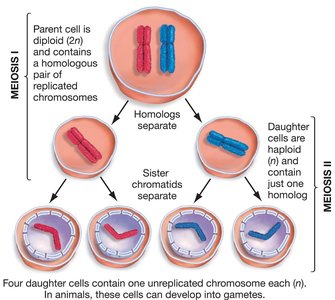
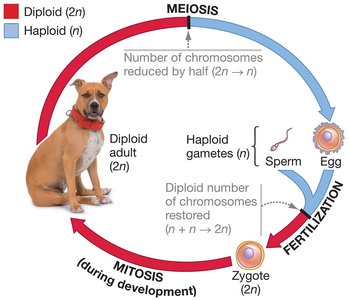
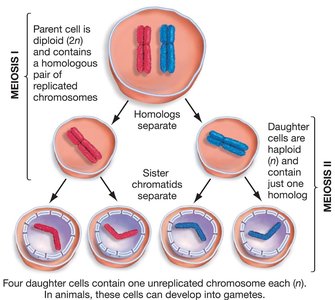
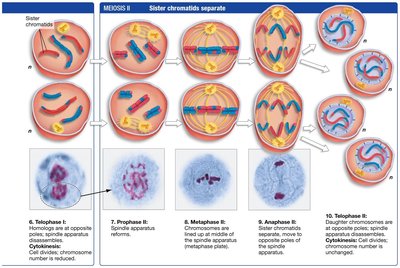
Meiosis consists of two consecutive cell divisions: Meiosis I and Meiosis II. Prior to meiosis, chromosomes are replicated, resulting in two identical sister chromatids per chromosome. Meiosis I separates homologous chromosomes, producing two haploid cells. Meiosis II separates sister chromatids, resulting in four haploid cells.
Reduction Division and Fertilization
Meiosis I is a reduction division, halving the chromosome number. Fertilization restores diploidy, forming a zygote. The zygote undergoes mitosis to develop into an adult.
Phases of Meiosis I
Meiosis I is a continuous process with five phases:
Early Prophase I: Nuclear envelope breaks down, chromosomes condense, spindle forms, homologs pair via synapsis to form bivalents.
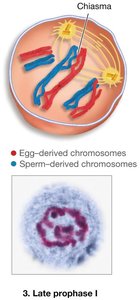
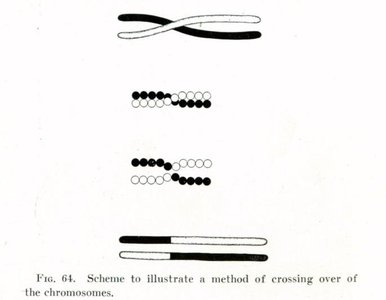
Late Prophase I: Homologs attach to spindle microtubules, begin to separate but remain joined at chiasmata, where crossing over occurs.
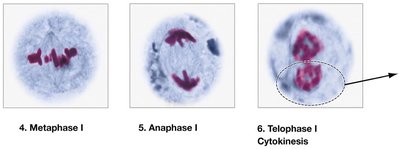
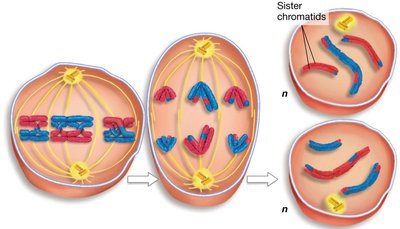
Metaphase I: Paired homologs align at metaphase plate, alignment is random.
Anaphase I: Homologs separate and migrate to opposite poles.
Telophase I: Homologs finish migrating, cell divides via cytokinesis.
Meiosis I Recap
Meiosis I produces haploid cells with replicated chromosomes and a random assortment of egg- and sperm-derived chromosomes due to crossing over and independent alignment.
Phases of Meiosis II
Meiosis II does not involve chromosome replication. It consists of four phases:
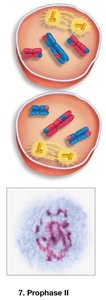
Prophase II: Spindle apparatus forms, microtubules attach to kinetochores.
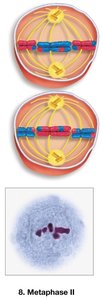
Metaphase II: Chromosomes align at metaphase plate.
Anaphase II: Sister chromatids separate and move to opposite poles.
Telophase II: Chromosomes arrive at poles, nuclear envelope forms, cytokinesis occurs.
Mitosis Versus Meiosis
Key Differences
Mitosis and meiosis differ fundamentally:
Homologs pair in meiosis but not in mitosis.
Mitosis produces two diploid, genetically identical daughter cells.
Meiosis produces four haploid, genetically distinct daughter cells.
Feature | Mitosis | Meiosis |
|---|---|---|
Number of cell divisions | One | Two |
Chromosome number in daughter cells | Same as parent | Half of parent |
DNA content in daughter cells | Reduced to one half | Reduced to one fourth |
Synapsis of homologs | No | Yes |
Spindle fiber attachment | Individual chromatids attach to different poles | Both chromatids attach to same pole (meiosis I) |
Number of chiasmata | None | One or more per homolog pair |
Chromosome makeup in daughter cells | Identical | Different combinations |
Role in life cycle | Growth, repair, asexual reproduction | Halving chromosome number for gametes |
Meiosis and Genetic Variation
Mechanisms Promoting Variation
Meiosis generates gametes with unique chromosome compositions due to:
Independent assortment: Random alignment and separation of homologs during meiosis I.
Crossing over: Exchange of genetic material between homologous non-sister chromatids.
Fertilization: Combination of haploid sets from two parents.
Possible combinations of chromosomes in humans:
With recombination, more than 25 billion possible combinations per gamete, and even more for each fertilization event.
Errors in Meiosis
Consequences of Meiotic Errors
Errors in meiosis are common and can lead to genetic disorders. For example, Down syndrome (trisomy 21) is caused by an extra copy of chromosome 21. Such errors are called nondisjunction, resulting in abnormal chromosome numbers (aneuploidy).
Causes and Frequency of Errors
Meiotic errors are random but are influenced by the age of the egg-producing parent. Human egg development involves primary oocytes entering meiosis I during embryonic development and arresting in prophase I until ovulation, which may occur years later. The frequency of trisomy increases with parental age.
Summary
Meiosis is essential for sexual reproduction, halving chromosome number and promoting genetic diversity through independent assortment, crossing over, and fertilization. Errors in meiosis can lead to genetic disorders, highlighting the importance of proper chromosome segregation.
