 뒤로
Chapter 32: An Overview of Animal Diversity
스터디 가이드 - 스마트 노트
 자료에 맞춘 맞춤형 노트, 핵심 정의, 예시, 맥락을 확장해 제공합니다.
Chapter 32: An Overview of Animal Diversity
Overview: Kingdom of Consumers
The animal kingdom is characterized by immense diversity, with over 1.3 million living species identified and estimates suggesting many more exist. This diversity is reflected in a wide range of morphological adaptations and ecological roles.
Animals are multicellular, heterotrophic eukaryotes that ingest their food.
They exhibit a vast array of body forms and adaptations, allowing them to occupy nearly every habitat on Earth.
Many animals are highly specialized predators, such as chameleons, which use unique adaptations to capture prey.
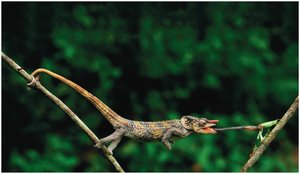
Concept 32.1: Animals are Multicellular, Heterotrophic Eukaryotes with Tissues from Embryonic Layers
Animals are distinguished from other life forms by a combination of characteristics, though exceptions exist for nearly every criterion.
Multicellularity: Animals are composed of multiple cells held together by extracellular proteins, especially collagen (unique to animals).
Heterotrophy: Animals ingest and internally digest food, unlike fungi (which absorb nutrients) and plants (which are autotrophic).
Lack of Cell Walls: Animal cells do not have cell walls, unlike plants and fungi.
Specialized Cells: Only animals have nerve cells (for impulse conduction) and muscle cells (for movement), organized into nervous and muscle tissues.
Sexual Reproduction: Most animals reproduce sexually, with a dominant diploid stage. Fertilization produces a zygote, which undergoes cleavage to form a blastula, then gastrulation to form a gastrula.
Larval Stages and Metamorphosis: Many animals have distinct larval stages that undergo metamorphosis to become adults.
Hox Genes: Animals share a unique family of homeobox-containing genes (Hox genes) that regulate development and body plan formation. Sponges lack Hox genes but have other homeobox genes.
Example: The development of both flies and humans is regulated by similar sets of Hox genes, despite their evolutionary distance.
Concept 32.2: The History of Animals Spans More Than Half a Billion Years
The animal kingdom includes both living and extinct species, with over 99% of all animal species believed to be extinct. Animal diversity originated over the last billion years, with key evolutionary milestones in several geological eras.
Neoproterozoic Era (1 Billion–542 Million Years Ago)
The oldest accepted animal fossils (Ediacara biota) date from 565–550 million years ago.
Some fossils resemble sponges and cnidarians; others are unrelated to modern groups.
Microfossils from China show early animal embryo organization.
Paleozoic Era (542–251 Million Years Ago)
Cambrian Explosion (535–525 million years ago): Rapid diversification; origin of most extant animal phyla, including arthropods, chordates, and echinoderms.
First animals with hard skeletons appear.
Possible causes: predator-prey dynamics, increased oxygen, and genetic/developmental innovations (e.g., Hox genes).
Vertebrates and arthropods colonize land; insects and plants co-evolve.
Mesozoic Era (251–65.5 Million Years Ago)
Animal phyla spread into new habitats; first coral reefs form.
Reptiles adapt to aquatic life; flight evolves in pterosaurs and birds.
Dinosaurs dominate; first mammals appear.
Insects and flowering plants diversify.
Cenozoic Era (65.5 Million Years Ago to Present)
Mass extinctions (e.g., nonflying dinosaurs) open ecological niches.
Mammals diversify; primates adapt to new habitats, leading to human ancestors.
Concept 32.3: Animals Can Be Characterized by “Body Plans”
Despite their diversity, animals can be grouped by a limited number of major body plans—sets of morphological and developmental traits that form a functional whole.
Symmetry
Asymmetry: Sponges lack symmetry.
Radial Symmetry: Body parts arranged around a central axis (e.g., sea anemones); suited for sessile or planktonic lifestyles.
Bilateral Symmetry: Two axes (front-back, top-bottom); associated with active movement and cephalization (concentration of sensory organs at the anterior end).
Tissues
True Tissues: Collections of specialized cells separated by membranes; absent in sponges.
Germ Layers: Ectoderm (outer), endoderm (inner), and mesoderm (middle, in triploblasts).
Diploblastic: Two germ layers (e.g., cnidarians).
Triploblastic: Three germ layers (e.g., arthropods, vertebrates).
Body Cavities
Coelom: Fluid- or air-filled body cavity derived from mesoderm; animals with a true coelom are coelomates.
Pseudocoelom: Body cavity derived from mesoderm and endoderm; animals are pseudocoelomates.
Acoelomates: Lack a body cavity; have a solid body.
Body cavities cushion organs, act as hydrostatic skeletons, and allow organ growth independent of the body wall.
Coelomate and pseudocoelomate are grades (not clades); these features evolved multiple times.
Developmental Modes
Protostome Development: Spiral, determinate cleavage; coelom forms from split mesoderm; mouth develops from blastopore.
Deuterostome Development: Radial, indeterminate cleavage; coelom forms from mesodermal outpocketings; anus develops from blastopore.
Indeterminate cleavage allows for identical twins in humans.
Concept 32.4: Views of Animal Phylogeny Continue to Be Shaped by New Molecular and Morphological Data
Animal phylogeny is continually refined as new molecular and morphological data become available. Modern systematics aims to group organisms into clades based on shared derived characters.
Metazoa: All animals share a common ancestor and form a monophyletic clade.
Sponges: Basal animals; recent evidence supports their monophyly.
Eumetazoa: Clade of animals with true tissues (all except sponges and a few others).
Bilateria: Most animal phyla; characterized by bilateral symmetry and three germ layers.
Deuterostomia: Includes chordates and some other phyla; defined by developmental mode and molecular data.
Ecdysozoa: Clade defined by molting (ecdysis) of exoskeletons; includes nematodes and arthropods.
Lophotrochozoa: Clade defined by presence of a lophophore (feeding structure) or trochophore larva; includes annelids, molluscs, and others.
Phylogenetic trees are constructed using both morphological and molecular data to reconstruct evolutionary history.
Additional info: The basal position of acoel flatworms suggests that the earliest bilaterians were simple, with a saclike gut and no excretory system.
