 뒤로
Chapter 41: Animal Nutrition – Study Guide
스터디 가이드 - 스마트 노트
 자료에 맞춘 맞춤형 노트, 핵심 정의, 예시, 맥락을 확장해 제공합니다.
Animal Nutrition
Overview: The Need to Feed
Animals are heterotrophs, meaning they depend on a regular supply of food for energy and nutrients. They are classified based on their dietary habits:
Herbivores: Eat mainly autotrophs (plants and algae).
Carnivores: Eat other animals.
Omnivores: Consume both animals and plants or algal matter.
An adequate diet must satisfy three needs:
Fuel for cellular work
Organic raw materials for biosynthesis
Essential nutrients that cannot be synthesized by the animal
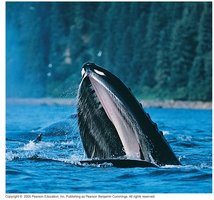
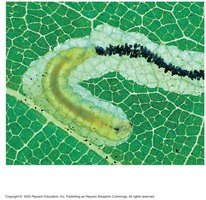
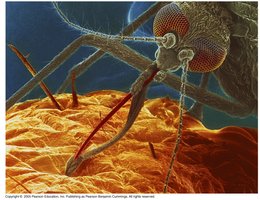
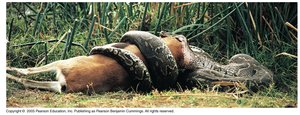
Main feeding mechanisms include suspension feeding, substrate feeding, fluid feeding, and bulk feeding.
Suspension feeders: Filter small food particles from water.
Substrate feeders: Live in or on their food source.
Fluid feeders: Suck nutrient-rich fluid from a host.
Bulk feeders: Eat large pieces of food.
Concept 41.1: Homeostatic Mechanisms Manage an Animal’s Energy Budget
Energy Budget and ATP Generation
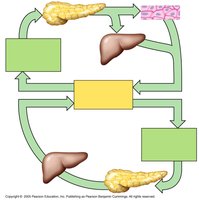
Animals generate ATP primarily through the oxidation of carbohydrates, proteins, and fats. ATP powers basal metabolism, activity, and thermoregulation.
Excess calories are stored as glycogen (in liver and muscles) and as fat.
Glucose is a major cellular fuel, regulated by hormones.
When intake is less than expenditure, stored fuel is mobilized and oxidized.
Caloric Imbalance
Undernourishment: Chronic deficiency in calories leads to depletion of glycogen and fat, breakdown of proteins, muscle loss, and brain impairment.
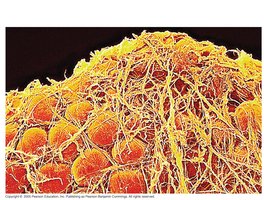
Overnourishment (Obesity): Excessive intake results in fat storage and health risks.
Obesity as a Human Health Problem
Obesity is recognized as a major global health issue, contributing to diabetes, cardiovascular disease, and certain cancers. It is a factor in hundreds of thousands of deaths annually in the US.
Regulation of Body Weight
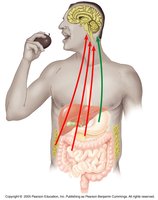
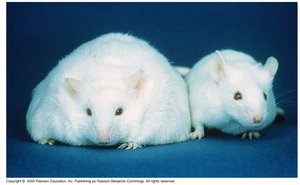
Body weight is regulated by homeostatic feedback circuits controlling fat storage and metabolism. Hormones such as leptin, PYY, insulin, and ghrelin affect appetite by acting on the brain's satiety center.
Obesity and Evolution
Fat hoarding was advantageous in evolutionary history. Some animals, like petrel chicks, become obese to survive periods of high energy demand.
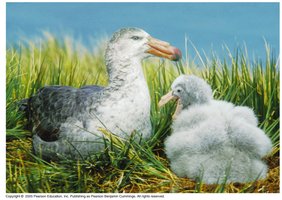
Concept 41.2: An Animal’s Diet Must Supply Carbon Skeletons and Essential Nutrients
Essential Nutrients
Animals require carbon skeletons for biosynthesis and must obtain essential nutrients in preassembled form. Malnutrition results from missing essential nutrients, even if caloric intake is adequate.
Herbivores may suffer mineral deficiencies if grazing on plants in poor soil.
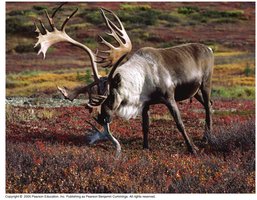
Four classes of essential nutrients:
Essential amino acids
Essential fatty acids
Vitamins
Minerals
Essential Amino Acids
Animals require 20 amino acids; about half can be synthesized, while the rest must be obtained from food. Eight amino acids (nine in infants) are essential. Protein deficiency, such as kwashiorkor, results from insufficient essential amino acids.
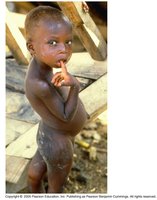
Animal products are reliable sources; plant proteins are often incomplete, requiring a varied diet for vegetarians.
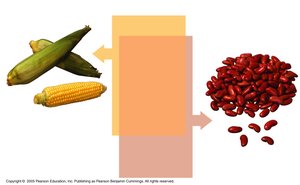
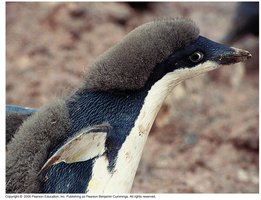
Some animals, like penguins, use muscle protein for amino acids during periods of high demand.
Essential Fatty Acids
Most fatty acids can be synthesized, but certain unsaturated fatty acids (e.g., linoleic acid) must be obtained from the diet. Deficiencies are rare.
Vitamins
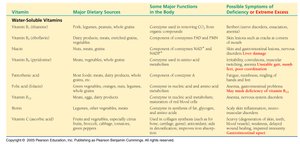
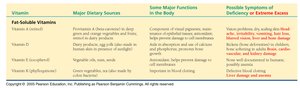
Vitamins are organic molecules required in small amounts. Humans need 13 essential vitamins, grouped as water-soluble and fat-soluble. Water-soluble vitamins are excreted in urine if overdosed; fat-soluble vitamins can be toxic if overconsumed.
Vitamin | Major Dietary Sources | Major Functions | Deficiency/Excess Symptoms |
|---|---|---|---|
Water-soluble | Fruits, grains, vegetables | Coenzymes, metabolic functions | Scurvy, anemia, nervous disorders |
Fat-soluble | Fish, dairy, vegetables | Vision, bone health, antioxidant | Vision problems, bone deformities, liver damage |
Additional info: | See images for detailed vitamin tables |
Minerals
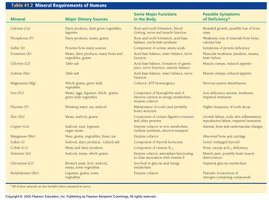
Minerals are inorganic nutrients required in small amounts. Excessive intake, especially of sodium, can be harmful.
Mineral | Major Dietary Sources | Major Functions | Deficiency Symptoms |
|---|---|---|---|
Calcium | Dairy, greens | Bone health | Impaired growth, loss of bone mass |
Iron | Meat, legumes | Hemoglobin synthesis | Anemia |
Additional info: | See image for full mineral table |
Malnutrition Studies
Neural tube defects are linked to folic acid deficiency. Supplementation and fortification of grains with folic acid have reduced these defects.
Concept 41.3: Main Stages of Food Processing
Stages of Food Processing
Food processing involves four main stages:
Ingestion: Act of eating
Digestion: Breakdown of food into absorbable molecules (mechanical and enzymatic hydrolysis)
Absorption: Uptake of nutrients by body cells
Elimination: Removal of undigested material
Digestive compartments prevent self-digestion by isolating food from body tissues.
Intracellular vs. Extracellular Digestion
Intracellular digestion: Food particles are engulfed and digested within food vacuoles (e.g., sponges).
Extracellular digestion: Breakdown occurs in compartments continuous with the outside (e.g., stomach, intestines).
Concept 41.4: Specialized Food-Processing Functions in Mammals
Mammalian Digestive System
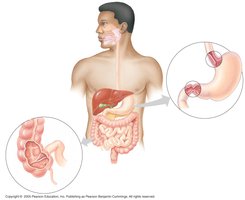
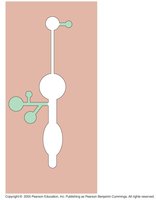
The mammalian digestive system consists of an alimentary canal and accessory glands (salivary glands, pancreas, liver, gallbladder). Food is moved by peristalsis and regulated by sphincters.
Oral Cavity, Pharynx, and Esophagus
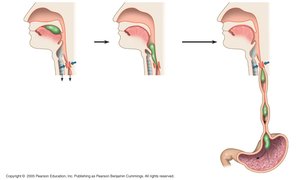
Food is lubricated and digestion begins in the oral cavity. Saliva contains amylase, buffers, and antibacterial agents. The tongue shapes food into a bolus. The pharynx connects to the esophagus and trachea, with the epiglottis preventing food from entering the windpipe. Peristalsis moves food to the stomach.
The Stomach
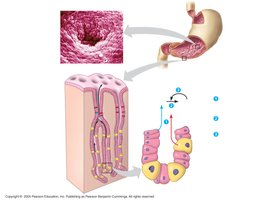
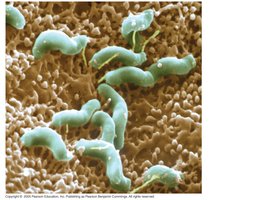
The stomach stores food and secretes gastric juice (hydrochloric acid and pepsin). Pepsin is activated by acid and begins protein hydrolysis. Mucus protects the stomach lining. Gastric ulcers are caused mainly by Helicobacter pylori.
The Small Intestine
The small intestine is the major organ of digestion and absorption. The duodenum receives chyme and digestive juices from the pancreas, liver, gallbladder, and its own glands.
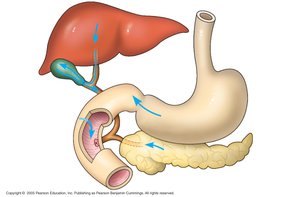
The pancreas produces proteases (trypsin, chymotrypsin) and alkaline solution. The liver produces bile, stored in the gallbladder, which aids fat digestion. The brush border of the duodenum produces digestive enzymes.
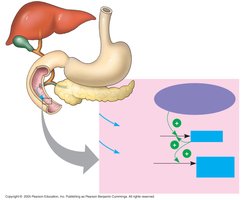
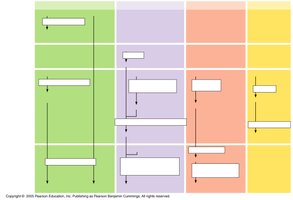
Enzymatic digestion is completed as chyme moves through the small intestine. Jejunum and ileum are sites of nutrient absorption.
Hormonal Regulation of Digestion
Hormones coordinate digestive juice secretion:
CCK: Stimulates release of enzymes and bile
Enterogastrone: Inhibits peristalsis and acid secretion
Gastrin: Stimulates gastric juice production
Secretin: Stimulates pancreas to release bicarbonate
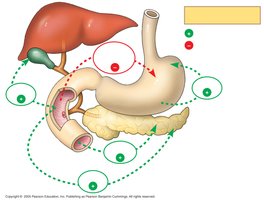
Absorption of Nutrients
The small intestine has a large surface area due to villi and microvilli, increasing absorption efficiency. Each villus contains blood vessels and a lacteal for nutrient transport.
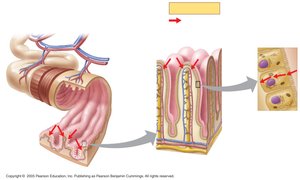
Amino acids and sugars enter the bloodstream via active transport. Fats are absorbed, recombined, and transported as chylomicrons into lacteals.
The Large Intestine
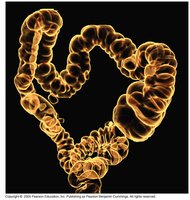
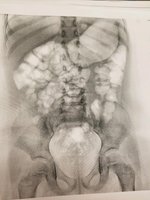
The colon recovers water and solidifies waste. It houses Escherichia coli bacteria, which produce vitamins and gases. Feces exit via the anus, controlled by sphincters.
Critical Thinking Questions
Why aren’t all 20 amino acids considered essential?
How does food reach the stomach in zero gravity?
How can people become obese with low dietary fat intake?
Additional info: Essential amino acids are those that cannot be synthesized by the body and must be obtained from the diet. Peristalsis, not gravity, moves food to the stomach. Excess carbohydrate intake can be converted to fat, leading to obesity.
