 뒤로
Chapter 8: An Introduction to Metabolism – The Energy of Life
스터디 가이드 - 스마트 노트
 자료에 맞춘 맞춤형 노트, 핵심 정의, 예시, 맥락을 확장해 제공합니다.
Metabolism and the Energy of Life
Overview of Metabolism
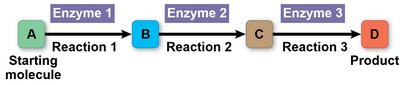
Metabolism encompasses all chemical reactions occurring within a living organism, enabling the transformation of matter and energy. These reactions are organized into metabolic pathways, each catalyzed by specific enzymes, and are essential for cellular function and survival.
Metabolism: The sum of all chemical reactions in an organism.
Metabolic Pathways: Series of reactions where the product of one reaction becomes the substrate for the next.
Catabolic Pathways: Break down complex molecules, releasing energy (e.g., cellular respiration).
Anabolic Pathways: Build complex molecules from simpler ones, consuming energy (e.g., protein synthesis).
Bioenergetics: Study of how energy flows through living organisms.
Forms of Energy
Types and Properties of Energy
Energy is the capacity to cause change and exists in various forms, each with distinct properties and roles in biological systems.
Kinetic Energy: Energy of motion.
Thermal Energy: Kinetic energy associated with random movement of atoms or molecules.
Heat: Transfer of thermal energy between objects.
Potential Energy: Energy due to location or structure.
Chemical Energy: Potential energy available for release in a chemical reaction.

The Laws of Thermodynamics
Energy Transformation in Biological Systems
Biological systems obey the laws of thermodynamics, which govern energy transfer and transformation.
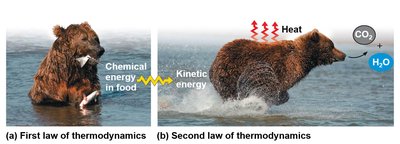
First Law of Thermodynamics: Energy can be transferred and transformed, but cannot be created or destroyed (principle of conservation of energy).
Second Law of Thermodynamics: Every energy transfer increases the entropy (disorder) of the universe; some energy is lost as heat.
Entropy: Measure of molecular disorder or randomness.
Organisms are open systems, exchanging energy and matter with their surroundings.
Biological Order and Disorder
Maintaining Order in Living Systems
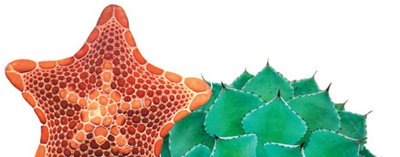
Organisms create ordered structures from less organized forms of energy and matter, but overall, the entropy of the universe increases.
Animals consume complex molecules and release smaller, lower-energy molecules and heat.
The evolution of complexity does not violate the second law, as local decreases in entropy are offset by increases elsewhere.

Free Energy and Spontaneity
Free-Energy Change (ΔG) and Reaction Spontaneity
The change in free energy (ΔG) determines whether a reaction occurs spontaneously. Free energy is the energy available to do work in a system at constant temperature and pressure.
ΔG = ΔH − TΔS (where ΔH is change in enthalpy, ΔS is change in entropy, T is temperature in Kelvin).
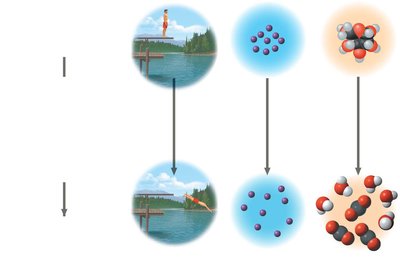
Spontaneous processes have ΔG < 0; nonspontaneous processes have ΔG ≥ 0.
Spontaneous changes increase stability and decrease free energy.
Exergonic and Endergonic Reactions
Energy Release and Requirement in Metabolic Reactions
Metabolic reactions are classified based on their energy profiles.
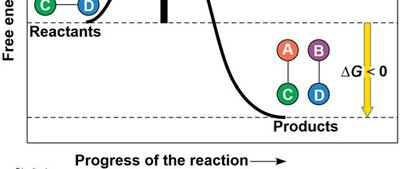
Exergonic Reaction: Releases free energy; spontaneous (ΔG < 0).
Endergonic Reaction: Absorbs free energy; nonspontaneous (ΔG > 0).
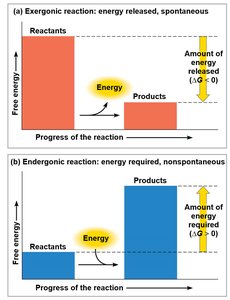
Equilibrium and Metabolism
Metabolic Pathways and Cellular Equilibrium
Cells avoid equilibrium by maintaining a constant flow of materials, allowing continuous metabolic activity.
Closed systems reach equilibrium and can do no work.
Cells are open systems; metabolism is never at equilibrium.
Catabolic pathways release free energy in a series of reactions.
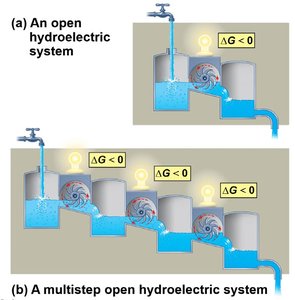
ATP and Cellular Work
ATP Structure and Function
ATP (adenosine triphosphate) is the primary energy carrier in cells, mediating energy coupling between exergonic and endergonic reactions.
ATP consists of ribose, adenine, and three phosphate groups.
Hydrolysis of ATP releases energy by breaking the terminal phosphate bond.
Energy release is due to the change to a lower free energy state.
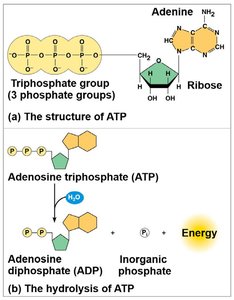
ATP Hydrolysis and Cellular Work
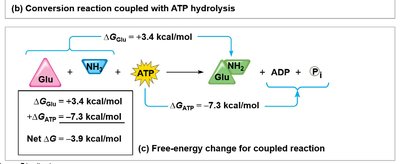
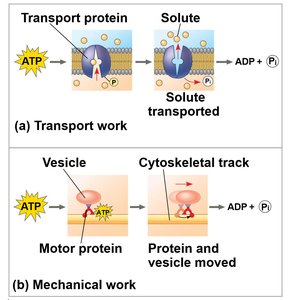
ATP hydrolysis powers chemical, transport, and mechanical work in cells by transferring a phosphate group to other molecules (phosphorylation).
Phosphorylated intermediates are more reactive.
Coupled reactions are overall exergonic.
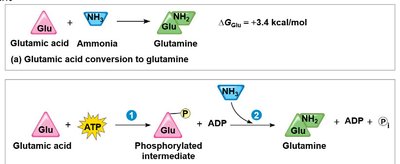
ATP Cycle
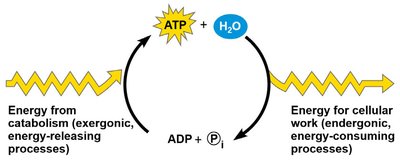
ATP is regenerated from ADP and inorganic phosphate using energy from catabolic reactions. This cycle is essential for continuous cellular work.
Energy from catabolism is used to phosphorylate ADP.
ATP is consumed in cellular work and regenerated.
Enzymes and Metabolic Reactions
Enzyme Function and Catalysis
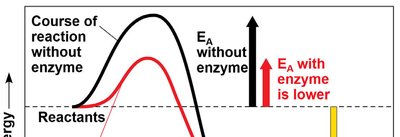
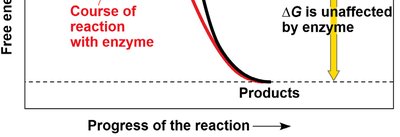
Enzymes are catalytic proteins that speed up metabolic reactions by lowering activation energy barriers without being consumed.
Catalyst: Speeds up a reaction without being consumed.
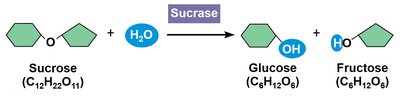
Enzyme: Protein catalyst (e.g., sucrase catalyzes sucrose hydrolysis).
Activation Energy
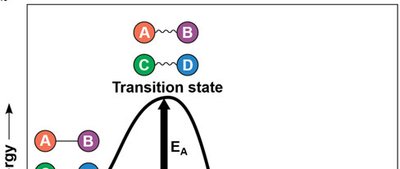
Activation energy (EA) is the initial energy required to start a chemical reaction, often supplied as thermal energy.
Enzymes lower the activation energy, facilitating faster reactions.
How Enzymes Work
Enzymes lower the activation energy barrier, speeding up reactions without affecting the overall change in free energy (ΔG).
Enzymes hasten reactions that would occur eventually.
Substrate Specificity and Active Site
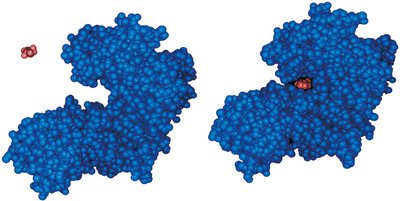
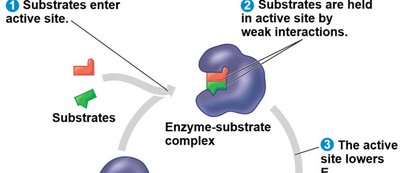
Each enzyme is specific to its substrate, binding at the active site to form an enzyme-substrate complex. Induced fit enhances catalysis.
Substrate: Reactant acted upon by an enzyme.
Active Site: Region where substrate binds.
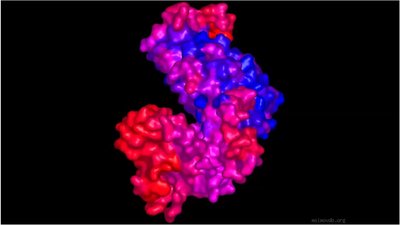
Induced Fit: Active site changes shape to enhance catalysis.
Catalysis in the Active Site
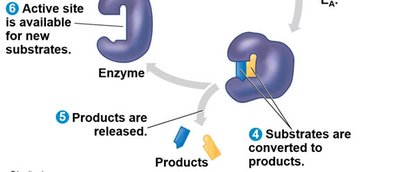
Enzymes facilitate reactions by orienting substrates, straining bonds, providing a favorable environment, or forming covalent bonds.
Enzymes are fast acting and reusable.
Reaction rate increases with substrate concentration until saturation.
Factors Affecting Enzyme Activity
Environmental Effects
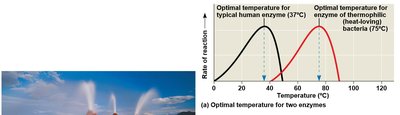
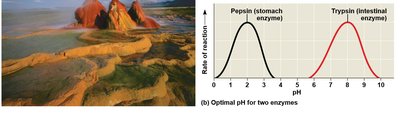
Enzyme activity is influenced by temperature, pH, and specific chemicals. Each enzyme has optimal conditions for function.
Optimal temperature and pH favor the most active enzyme shape.
Cofactors and Coenzymes
Cofactors are nonprotein helpers required for enzyme function. Organic cofactors are called coenzymes, including vitamins.
Inorganic cofactors: Metal ions.
Organic cofactors: Coenzymes (e.g., vitamins).
Enzyme Inhibition
Types of Inhibitors
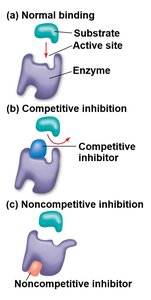
Enzyme inhibitors reduce enzyme activity by binding to the enzyme. Competitive inhibitors bind to the active site, while noncompetitive inhibitors bind elsewhere, altering enzyme shape.
Competitive Inhibitors: Compete with substrate for active site.
Noncompetitive Inhibitors: Bind to another site, changing enzyme shape.
Examples: Toxins, poisons, pesticides, antibiotics.
Evolution and Regulation of Enzymes
Enzyme Evolution
Enzymes are encoded by genes. Mutations can alter enzyme activity or substrate specificity, and beneficial changes are favored by natural selection.
Mutations in active site can result in novel activity.
Example: β-galactosidase in E. coli adapted to new substrates.
Regulation of Enzyme Activity
Cells regulate metabolism by controlling enzyme activity and gene expression. Allosteric regulation and feedback inhibition are key mechanisms.
Allosteric Regulation: Regulatory molecule binds at one site, affecting function at another.
Enzyme complexes have active and inactive forms; activators stabilize active form, inhibitors stabilize inactive form.
Cooperativity: Substrate binding at one active site enhances activity at others.
Feedback Inhibition: End product of pathway inhibits an earlier step, preventing overproduction.
Localization of Enzymes Within the Cell
Cellular Organization of Metabolic Pathways
Cell structures help organize metabolic pathways. Some enzymes are structural components of membranes, while others are localized in specific organelles (e.g., mitochondria for cellular respiration).
Enzyme localization enhances metabolic efficiency and regulation.
